 ARCHIVE
5 minutes - Associação Salvador | Clapboard Ad Archive
Associação Salvador’s 5 minutes campaign, created by Havas and launched in Portugal in 2016, set a...
AMCV Doctor Confronts Gender Based Violence in Portugal
AMCV's Doctor is a public interest film campaign produced by Fuel and directed by Fred Oliveira, launched in Portugal in December 2016, using a social experiment documentary format to expose the normalisation of gender based violence through the lens of a medical consultation.
AMCV, the Associação de Mulheres Contra a Violência, is a Portuguese nonprofit dedicated to combating violence against women and girls in Portugal. The organisation has sustained a consistent creative strategy across multiple years, commissioning film and print work that moves beyond awareness to provoke genuine discomfort in its audience. Doctor sits within that lineage as a 2016 entry point designed to surface the ways in which domestic and gender based violence is minimised, even by those in positions of professional authority.
The campaign consists of a single film asset, produced by Krypton and released in December 2016. Its format blends documentary observation with constructed scenario, placing viewers inside what appears to be a real clinical exchange. The objective is to demonstrate, rather than simply assert, how violence against women is routinely downplayed. By framing the subject within a medical context, AMCV and Fuel move the conversation from the domestic sphere into an institutional one, widening the scope of accountability. The geographic focus is Portugal, and the campaign speaks directly to Portuguese audiences navigating a cultural and legal landscape in which gender based violence remained a pressing public concern in 2016. The Clapboard Score for Doctor is 66 out of 100, reflecting its creative specificity and strategic clarity within the public service category.
AMCV identifies institutional silence as a core barrier to addressing gender based violence in Portugal. Rather than directing its message solely at perpetrators or survivors, the Doctor campaign implicates systems and the professionals who operate within them, using the authority of a medical setting to dramatise how violence is normalised through omission and misdirection.
This strategic choice reflects a broader creative philosophy that AMCV has pursued across its campaigns. As documented in its archive, the organisation moved from addressing physical violence directly in earlier work to examining the conditions that allow it to persist. The 2019 print campaign First Signs, also created by Fuel, examined abusive language as an early indicator of physical violence. Doctor, released three years earlier in December 2016, can be read as a precursor to that approach, locating the problem within the responses of those who encounter it rather than the act itself.
The timing of the campaign carries institutional weight. According to Rm Coe Int, Portugal's Ministry of Justice and the Secretary of State for Citizenship and Equality signed a three-year protocol with AMCV in December 2016 to establish a crisis-support pilot programme. That simultaneous governmental commitment gives the Doctor film additional resonance, situating it within a moment of genuine policy movement rather than isolated advocacy. According to safecommunitiesportugal.com, gender based violence was a documented and ongoing concern in Portugal at this time, reinforcing the urgency of AMCV's public interest communication. The campaign does not compete in a commercial sense, but it operates within a crowded attention environment in which public service film must work harder than ever to generate sustained engagement.
Fred Oliveira directs Doctor for AMCV, working from a creative framework developed by creative directors Marcelo Lourenço and Pedro Bexiga at Fuel, Lisbon. The copywriting is credited to Marcelo Lourenço, with art direction by Pedro Bexiga. The film is produced by Krypton, edited by Zé Barreiro, and scored by Pedro Macedo Camacho, whose music shapes the emotional register of the piece alongside the visual and narrative architecture.
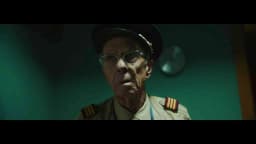
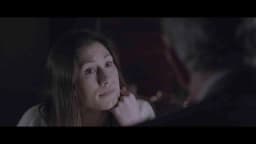
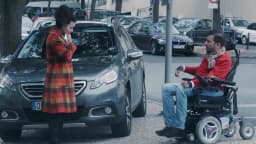
On screen, the film places a woman in what appears to be a medical consultation, a setting that carries inherent authority and trust. The scenario unfolds as the clinical exchange reveals, through the doctor's responses and framing, how signs of gender based violence are minimised or redirected rather than addressed. The construction is deliberate: by situating the action inside a profession associated with care, the film forces the viewer to confront not just the violence itself but the institutional failure that surrounds it. The social experiment format, documented in the campaign's classification, gives the work the texture of observed reality rather than scripted drama, heightening its impact.
Pedro Macedo Camacho's score performs a specific function in a film of this kind, holding emotional tension without resolving it. Zé Barreiro's editing sustains the sense of unease that the scenario generates. Together, the production team at Krypton delivers a single media asset that is built for concentration rather than scale, designed to be watched closely and to leave a residue. The craft serves the strategy: restraint in production amplifies the discomfort of what is being shown, and the documentary aesthetic prevents the audience from retreating into the comfort of fiction.
No verified performance data for Doctor is publicly available. No published figures exist for views, donations, referral volume, behavioural change metrics, or media reach generated by the campaign. Across Cannes Lions, the Effies, The One Show, D&AD, the Clios, the Webby Awards, and WARC Awards, no verified wins or finalist placements for Doctor have been recorded, as confirmed by bestadsontv.com listings, which function as catalogue records rather than editorial reviews of effectiveness.
In the absence of measurable outcomes, the structural effectiveness of Doctor can be assessed on its own terms. The film's decision to locate gender based violence within a medical institution rather than a domestic setting is a strategically differentiated choice that expands the frame of public accountability. The social experiment format, produced with the discipline of a Krypton production and directed by Fred Oliveira, gives the work credibility as a document rather than a polemic. For AMCV, an organisation operating with the resources of a nonprofit, a single film asset that generates genuine discomfort and conversation represents a proportionate and coherent deployment of creative investment. The campaign's place within AMCV's broader creative lineage, running from First Time in 2013 through to First Signs in 2019 and beyond, as documented across bestadsontv.com and campaign archives, suggests it functions as one chapter in a sustained public interest argument rather than a standalone intervention. The Clapboard Score of 66 out of 100 reflects that coherence, alongside the inherent difficulty of breaking through in a public service category where emotional subject matter alone is insufficient without formal craft to match it.
Doctor is a public interest film created by Fuel for AMCV in Portugal in December 2016. The film uses a social experiment format set inside a medical consultation to show how gender based violence is minimised by institutional figures, expanding accountability beyond the domestic sphere into professional systems of care.
Fred Oliveira directs the Doctor film for AMCV. He works with creative directors Marcelo Lourenço and Pedro Bexiga at Fuel, Lisbon. The film is produced by Krypton, edited by Zé Barreiro, and features a score by composer Pedro Macedo Camacho, with the full production released in Portugal in December 2016.
Fuel, based in Lisbon, Portugal, creates the Doctor campaign for AMCV. The agency is responsible for creative direction, copywriting, and art direction on the film. Fuel also produces subsequent AMCV campaigns including Today in 2018 and the First Signs print campaign in 2019, establishing a sustained creative partnership with the organisation.
No verified award wins or finalist placements for Doctor have been recorded across major international shows including Cannes Lions, D&AD, the Clios, The One Show, the Webby Awards, or WARC Awards. The campaign appears in advertising directory listings including bestadsontv.com, which serve as catalogue records rather than indicators of recognised achievement.
AMCV uses the medical setting to shift the focus of gender based violence from the home to an institution associated with professional care and authority. This strategic choice implicates systems rather than individuals alone, demonstrating how violence is normalised through the responses of those who encounter survivors, rather than only through the actions of perpetrators.
.webp)
Creative Collaboration Platform: The Backbone of Modern Creative WorkWhat is a creative collaboration platform?Clapboard defines a creative collaboration platform as the operational core for today’s distributed creative teams. This is not a collection of digital collaboration tools stitched together; Clapboard’s system


Understanding the Creative Production MarketplaceWhat is a Creative Production Marketplace?Clapboard defines a creative production marketplace as a structured ecosystem where brands, agencies, and production talent converge to execute video, advertising, and branded content at scale. Unlike the legacy agency or freelanREAD FULL ARTICLE

The Urgent Need for a Creative Production Operating SystemWhy Traditional Creative Production Models Break DownClapboard sees the creative production landscape shifting under pressure. Content velocity is no longer a buzzword—it’s a mandate. Modern advertising demands relentless output across dozens of channels, each wREAD FULL ARTICLE