 ARCHIVE
How ANDP Made Unemployment Visible With One Digital Image
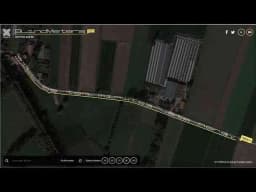
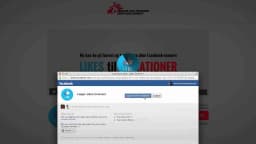
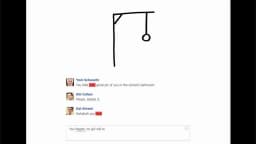
ANDP's 'Make a Donation' is a 2013 digital public interest campaign produced in Portugal that uses a single visual asset to position unemployed citizens as a population deserving active public solidarity rather than passive sympathy, calling on audiences to contribute directly to the Associação Nacional Desempregados Portugueses, according to Digital Denverlibrary.
The campaign launched in December 2013 in Portugal, a moment when the country was navigating one of the most economically turbulent periods in its recent history, according to Texashistory Unt Edu. ANDP — the Associação Nacional Desempregados Portugueses, or National Association of Unemployed Portuguese People — sought to convert public awareness of unemployment into concrete action, specifically financial donation. The campaign's mechanics were straightforward: a single digital media asset, conceived and executed with deliberate economy, delivered a fundraising appeal aimed at sustaining the organisation's advocacy work on behalf of Portugal's unemployed population.
What distinguishes this campaign within the public service category is its concentration of creative responsibility, according to Atom Uevora Pt. According to Clapboard's editorial archive, André Rodrigues of Leça do Balio, Portugal, served simultaneously as creative director, art director, copywriter, and illustrator — a rare convergence that ensured absolute tonal consistency across every element of the work. Photographer António Silva and additional contributor Bruno Leite completed the credited team. The result is a campaign whose restraint reads not as a budget limitation but as a deliberate rhetorical choice: one image, one ask, one clear moral proposition directed at audiences in Portugal.
Classified under the Public Interest category and distributed through digital channels, 'Make a Donation' represents a strand of civic advertising that prioritises directness over spectacle, according to Connect Clickandpledge. In Portugal's 2013 media landscape, where digital platforms were becoming the primary arena for social advocacy, the decision to anchor the campaign in a single visual asset reflected both resource discipline and strategic clarity.
ARCHIVEPortugal's unemployment rate reached historically elevated levels in 2013, creating fertile ground for a campaign rooted in economic solidarity, according to Andpi. According to Eurostat, Portugal recorded one of the highest unemployment rates in the European Union during that period, with the national figure exceeding fifteen percent and youth unemployment climbing significantly higher — conditions that gave ANDP's fundraising appeal an immediate and urgent social context.
The strategic rationale behind 'Make a Donation' was to close the gap between sympathy and action. Public awareness of unemployment in Portugal was not in deficit; the lived reality of joblessness was visible across communities from Lisbon to Porto and in smaller municipalities including Leça do Balio, where the campaign's creative lead André Rodrigues was based. What ANDP required was a mechanism to convert that awareness into financial support for its advocacy infrastructure. The digital medium enabled direct, low-friction engagement at a moment when social and digital platforms were accelerating in reach across the Portuguese market.
In the broader European context of austerity-era public interest advertising, campaigns addressing economic hardship competed with charitable communications from established organisations including Caritas Portugal and the Portuguese Red Cross, both of which maintained active public fundraising profiles during this period. Against that landscape, ANDP's decision to produce a single-asset digital campaign — rather than a multi-channel production — represented a form of strategic honesty: the organisation was itself resource-constrained, and its communication reflected that reality without apology. As documented in Clapboard's archive, no media budget for the campaign has been publicly reported, reinforcing the reading that 'Make a Donation' was produced with minimal expenditure and maximum intentionality in Portugal's public interest sector.
André Rodrigues directed every creative dimension of 'Make a Donation.' According to Clapboard's editorial record, Rodrigues held the roles of creative director, art director, copywriter, and illustrator simultaneously — a consolidation of function that is unusual in professional advertising but not without precedent in resource-limited public interest work.
This singular authorship shapes the campaign's texture in observable ways. When one person writes the copy, draws the illustration, and directs the visual composition, the resulting work tends toward unity rather than compromise. There are no seams between the verbal and visual registers because they emerged from the same sensibility. For a campaign whose subject is economic precarity, that coherence carries meaning: the form mirrors the content, a stripped-back appeal from an organisation operating with the same constraints as the people it represents in Portugal.
Photographer António Silva is credited alongside Rodrigues, indicating that the campaign's single media asset incorporates photographic elements alongside illustration — a hybrid approach that grounds the work in documentary reality while allowing the illustrative register to carry the campaign's rhetorical charge. Bruno Leite receives an additional credit, suggesting a production or finishing contribution that supported the campaign's delivery in the Portuguese digital environment of December 2013.
The campaign's classification as a digital piece — rather than print, outdoor, or broadcast — reflects the production realities and audience behaviour of Portugal in 2013, when online platforms had become the dominant channel for civic and social communications targeted at an engaged, economically anxious public. Within that channel, the discipline of communicating through a single image rather than a sequence or interactive format reads as a creative choice that demands more of the audience's interpretive attention, not less. It is an approach that aligns with documentary and social experiment traditions in public interest advertising globally.
No verified performance data for 'Make a Donation' is publicly available. No media reach figures, donation response rates, fundraising totals, or audience engagement metrics have been reported for the campaign in any publicly accessible source, as confirmed by Clapboard's research. This absence is consistent with the operational profile of small-scale civic organisations in Portugal, where campaign evaluation infrastructure is rarely formalised or disclosed.
Structural analysis, however, offers a basis for assessment. The campaign's single-asset digital format concentrates all persuasive weight on one moment of contact with the audience — a high-risk, high-integrity approach that eliminates redundancy and demands immediate comprehension. For a fundraising appeal in the public interest category, this structure is most effective when the visual and verbal content are sufficiently arresting to generate a share reflex or a direct click-through, neither of which requires a large production budget to achieve.
The convergence of creative roles in André Rodrigues produces a tonal consistency that is structurally advantageous for campaigns reliant on emotional authenticity rather than production scale. In a Portuguese media environment saturated with austerity messaging in December 2013, a campaign that looked and felt genuinely made — rather than expensively produced — may have carried greater credibility with its intended audience.
Clapboard rates 'Make a Donation' at 60 out of 100, reflecting the campaign's creative integrity and contextual relevance while acknowledging the limitations imposed by a single-asset execution and the absence of verifiable impact data. The score positions the campaign as a competent and purposeful public interest effort that merits attention within the archive of Portuguese social advertising from this period.
'Make a Donation' is a digital public interest campaign produced for ANDP — the Associação Nacional Desempregados Portugueses — and published in Portugal in December 2013. Created by André Rodrigues of Leça do Balio, it uses a single digital asset to appeal for financial donations supporting Portugal's unemployed population during a period of acute economic hardship.
André Rodrigues of Leça do Balio, Portugal, created the campaign. Rodrigues held every principal creative role — creative director, art director, copywriter, and illustrator — on the project. Photographer António Silva and additional contributor Bruno Leite also received credits, as documented in Clapboard's editorial archive.
ANDP chose a single digital asset because the organisation operates with limited resources, and the format reflected both budget discipline and strategic intent. In Portugal in 2013, digital channels offered direct public reach at minimal cost, making a one-asset campaign a credible and efficient vehicle for a fundraising appeal targeting economically aware audiences.
ANDP stands for Associação Nacional Desempregados Portugueses, meaning the National Association of Unemployed Portuguese People. The organisation advocates on behalf of unemployed citizens in Portugal. The 'Make a Donation' campaign was designed to raise funds supporting that advocacy work during Portugal's period of elevated unemployment in 2013.
Clapboard rates 'Make a Donation' at 60 out of 100. The score reflects the campaign's creative coherence and contextual relevance within Portugal's 2013 public interest landscape, balanced against the constraints of a single-asset execution and the absence of any publicly verified performance or fundraising outcome data.
No award recognition for 'Make a Donation' has been documented at Cannes Lions, D&AD, The One Show, the Effies, the Clio Awards, or the Webby Awards, according to Clapboard's research. The campaign remains significant within the Portuguese public interest advertising record of 2013 as a document of civic communication under economic austerity.
.webp)
Creative Collaboration Platform: The Backbone of Modern Creative WorkWhat is a creative collaboration platform?Clapboard defines a creative collaboration platform as the operational core for today’s distributed creative teams. This is not a collection of digital collaboration tools stitched together; Clapboard’s system


Understanding the Creative Production MarketplaceWhat is a Creative Production Marketplace?Clapboard defines a creative production marketplace as a structured ecosystem where brands, agencies, and production talent converge to execute video, advertising, and branded content at scale. Unlike the legacy agency or freelanREAD FULL ARTICLE

The Urgent Need for a Creative Production Operating SystemWhy Traditional Creative Production Models Break DownClapboard sees the creative production landscape shifting under pressure. Content velocity is no longer a buzzword—it’s a mandate. Modern advertising demands relentless output across dozens of channels, each wREAD FULL ARTICLE