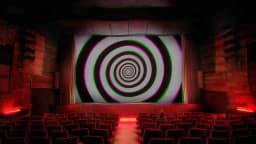
Argentina New Cinema Film Festival's 'Love Story, Stakeout,' created by Conill Saatchi & Saatchi in 2012, turned Hollywood's remake culture into a pointed

How Argentina New Cinema Film Festival Turned Hollywood Remakes Against Itself
Argentina New Cinema Film Festival's 'Love Story, Stakeout' is a two-film campaign created by Conill Saatchi & Saatchi and published in the United States in November 2012, designed to promote the festival's Hollywood edition by contrasting the richness of Argentine originals with the diminished quality of their American remakes.
The campaign operates on a premise that is as sharp as it is simple. Hollywood has long drawn from the well of international cinema, acquiring rights to successful foreign films and recasting them for American audiences. The results, as Argentine filmmakers and cinephiles frequently observe, rarely match the originals in ambition or emotional texture. Conill Saatchi & Saatchi turned that widely held frustration into a creative engine, building two film assets that dramatise the contrast between an Argentine narrative and its Hollywood counterpart with humour and pointed clarity.
Launched in November 2012 in the United States, the campaign targets the Hollywood market directly, positioning Argentine cinema as the authentic source rather than the derivative product. The titles themselves — Love Story and Stakeout — carry immediate cultural resonance within the American entertainment landscape, anchoring the campaign in the vocabulary of Hollywood genre while simultaneously undermining Hollywood's claim to originality. Each film asset presents an Argentine scenario and its imagined American remake version side by side, allowing the gap in storytelling quality and cultural specificity to make the case for attending the festival without requiring a single explicit appeal. The Argentina New Cinema Film Festival's presence in Hollywood thus becomes not merely an event listing but a provocation aimed at the industry that surrounds it.
 ARCHIVE
Hollywood's pattern of remaking foreign films supplied the campaign's strategic foundation. Rather than promoting the Argentina New Cinema Film Festival through conventional cultural programming language, Conill Saatchi & Saatchi identified a tension already alive in the American entertainment conversation: the gap between what international cinema achieves and what Hollywood's remake machine delivers in return.
This strategic choice placed the campaign in direct dialogue with an industry reality that required no explanation for its target audience. Film-literate Americans in the Hollywood market, from industry professionals to engaged cinemagoers, already held opinions about remakes. By 2012, prominent examples had stacked up across decades — American versions of films from France, Spain, South Korea, and Japan had each generated their own cycle of comparison and debate. The campaign did not need to name specific titles to activate that awareness; the structure of each film asset did the work implicitly.
The competitive context is equally instructive. Major international film events such as the Tribeca Film Festival and the Cannes Film Festival and Marché du Film commanded significant industry attention during the same period. According to tribecafilm.com, the 2012 Tribeca Film Festival drew more than 380,000 attendees across nearly 400 screenings and panels, with attendance exceeding ninety-five percent of capacity during its April programme. Against that scale, a festival rooted in a single national cinema needed a sharper point of differentiation than programming breadth alone could provide. Criticising the dominant industry logic of its host city gave the Argentina New Cinema Film Festival a distinctive and memorable stance in a crowded cultural calendar. The campaign's narrative strategy — letting the contrast between original and remake carry the argument — reflects a mature understanding of how persuasion works on an audience that is professionally sceptical of advertising.
The campaign comprises two film assets, each constructed around the contrast between an Argentine story and its imagined Hollywood remake. The creative team brought together executive creative director Ross Ludwig, creative director Mario Granatur, group creative director Veronica Elizondo, art director Martin Donovan, and copywriter Jessica Cuevas, with production services directed by Lourdes Caballero and broadcast production handled by Krysta Rosales, according to Clapboard.
Direction was handled by Dos Ex Maquina, with Sacha Riviere serving as director of photography and Laura Castro producing, as documented by Clapboard. Sound was delivered by Tono Studios with music by Noise Band. The production infrastructure reflects a considered assembly of talent oriented toward precise tonal control — the campaign's effectiveness depends entirely on the films landing the contrast between Argentine specificity and Hollywood genericness with enough comedic precision to avoid becoming a simple polemic.
The narrative approach is disciplined. Each execution establishes its Argentine scenario with enough cultural texture to feel genuinely observed, then pivots to the Hollywood version in a register that is recognisably blander, broader, and less emotionally specific. The humour is structural rather than satirical in a heavy-handed sense; it trusts the audience to complete the argument. This approach connects the 2012 campaign to an earlier Conill Saatchi & Saatchi effort for the same festival in 2010, which used two thirty-second films — 'Lineup' and 'Cuchillo' — to dramatise the journey from Argentina to Los Angeles with comparable comic economy, as reported by Clapboard. Those 2010 films won silver awards in three categories at FIAP, establishing a creative lineage that the 'Love Story, Stakeout' executions extend into new thematic territory. In both cases, humour functions as the primary vehicle for cultural advocacy.
No verified performance data for 'Love Story, Stakeout' is publicly available. The campaign's impact on festival attendance, awareness, or earned media reach in the United States has not been disclosed by the Argentina New Cinema Film Festival or by Conill Saatchi & Saatchi in any publicly accessible record.
Structural analysis, however, supports a credible reading of its effectiveness. The campaign operates in a media environment where film festival promotion competes directly with the marketing weight of studio releases and larger international events. By anchoring its creative argument in a critique that the target audience — film professionals and committed cinemagoers in the Hollywood market — already held in some form, the campaign generates relevance without requiring significant media investment to establish context. The two-film format is economical and scalable, suited to both screened environments and emerging digital distribution channels that were reshaping media consumption patterns in 2012.
The campaign also benefits from the credibility of its creative lineage. The 2010 predecessor campaign from Conill Saatchi & Saatchi, documented by Clapboard, earned recognition at FIAP, lending institutional weight to the approach and suggesting that the festival and its agency had developed a coherent long-term creative strategy rather than a one-off execution. The Clapboard Score for 'Love Story, Stakeout' is 63 out of 100, reflecting a campaign that executes its concept cleanly and with genuine wit but whose reach and verifiable impact remain difficult to assess from public information alone. The score positions it as a competent and strategically coherent piece of work within the Media and Entertainment category.
'Love Story, Stakeout' is a two-film campaign created by Conill Saatchi & Saatchi for the Argentina New Cinema Film Festival, published in the United States in November 2012. It promotes the Hollywood edition of the festival by contrasting Argentine originals with their American remakes, using humour to argue for the superiority of the source material.
Conill Saatchi & Saatchi, based in the United States, created the 2012 campaign. The agency had previously produced the 2010 Argentina New Cinema Film Festival campaign, which also used two film executions and earned silver awards at FIAP, establishing a continuing creative relationship with the festival.
Direction was handled by Dos Ex Maquina, with Sacha Riviere as director of photography and Laura Castro as producer, according to Clapboard. The executive creative director was Ross Ludwig, with Mario Granatur as creative director and Veronica Elizondo as group creative director on the Conill Saatchi & Saatchi team.
The strategy targeted Hollywood's established habit of remaking successful foreign films. Conill Saatchi & Saatchi positioned Argentine cinema as the authentic original by dramatising the contrast between an Argentine narrative and its blander Hollywood counterpart, turning a widely shared industry frustration into a direct argument for attending the festival.
The Clapboard Score for 'Love Story, Stakeout' is 63 out of 100. The score reflects a campaign that executes its satirical concept with clarity and wit but whose verifiable reach and audience impact remain difficult to assess from publicly available information, placing it in the competent range within the Media and Entertainment category.
Both campaigns were created by Conill Saatchi & Saatchi and used two film assets with humour as the primary persuasive tool. The 2010 campaign, comprising 'Lineup' and 'Cuchillo,' dramatised the journey from Argentina to Los Angeles and won silver awards at FIAP in three categories, as documented by Clapboard, establishing the creative approach the 2012 campaign extended.
.webp)
Creative Collaboration Platform: The Backbone of Modern Creative WorkWhat is a creative collaboration platform?Clapboard defines a creative collaboration platform as the operational core for today’s distributed creative teams. This is not a collection of digital collaboration tools stitched together; Clapboard’s system


Understanding the Creative Production MarketplaceWhat is a Creative Production Marketplace?Clapboard defines a creative production marketplace as a structured ecosystem where brands, agencies, and production talent converge to execute video, advertising, and branded content at scale. Unlike the legacy agency or freelanREAD FULL ARTICLE

The Urgent Need for a Creative Production Operating SystemWhy Traditional Creative Production Models Break DownClapboard sees the creative production landscape shifting under pressure. Content velocity is no longer a buzzword—it’s a mandate. Modern advertising demands relentless output across dozens of channels, each wREAD FULL ARTICLE