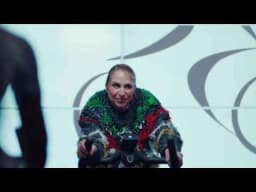
Band Aid 30 relaunched 'Do They Know It's Christmas?' in the United Kingdom in November 2014, raising funds for Ebola relief through a celebrity-led digital

Band Aid 30 Revives Do They Know It's Christmas for Ebola Relief
Band Aid 30's 'Do They Know It's Christmas?' is a United Kingdom digital public interest campaign released in November 2014, uniting a generation of British and Irish musicians to raise emergency funds for Ebola relief in West Africa through a charity single and accompanying music video.
Band Aid 30 represented the fourth major incarnation of the Band Aid fundraising platform, according to Wikipedia. The original Band Aid recording was made in November 1984 for Ethiopian famine relief, followed by Band Aid II in 1989 and Band Aid 20 in 2004. Three decades after the first recording, Bob Geldof and Midge Ure reactivated the property in response to the Ebola outbreak devastating communities across West Africa. The campaign was announced on 10 November 2014, recorded on 15 November, and released digitally on 17 November 2014, as documented by Wikipedia and confirmed by Little Black Book. The entire cycle from announcement to release compressed the production of a major charity single into less than one week.
The campaign operated through a single primary media asset: a music video pairing a refreshed version of the classic song with contemporary visual storytelling designed for digital distribution. Its mechanics were direct — consumers purchased the digital single or donated via text message, with proceeds directed toward Ebola relief in West Africa. In the United Kingdom, the campaign launched publicly during a broadcast of The X Factor, a deliberate choice that amplified its reach to one of the country's largest Saturday-night television audiences. The Clapboard Score for this campaign stands at 74 out of 100, reflecting its exceptional reach and commercial fundraising performance alongside the substantive critical debate the work generated about representation and narrative framing in charitable communications.
 ARCHIVE
Band Aid 30 operated as a cause-marketing fundraising property rather than a conventional advertising campaign, as noted by clapboard.com. The strategic rationale was rooted in acute humanitarian urgency: the 2014 Ebola outbreak in West Africa had generated widespread international alarm, and established charity mechanisms were struggling to mobilise fast enough at the scale required. By reviving a culturally embedded British institution — a song and format that had defined charitable pop in 1984 — the organisers could bypass the awareness-building phase entirely and move directly to donation conversion.
The decision to anchor the campaign in the United Kingdom reflected both the platform's heritage and its structural advantages. The UK charity singles market carries a cultural infrastructure — chart eligibility, broadcaster relationships, and a population conditioned to associate purchasing a physical or digital single with charitable giving — that few other markets replicate. First-week sales exceeded 312,000 copies, reportedly outselling the rest of the UK top five combined, according to Wikipedia. That figure illustrates the degree to which the Band Aid name functions as a category unto itself within UK public interest communications, distinct from competitors such as Comic Relief's Red Nose Day or Children in Need, both of which operate on annual broadcast cycles rather than crisis-response timescales.
The campaign's digital-first release strategy was equally deliberate. By making the single available for purchase and streaming from 8:00 a.m. on 17 November 2014, as reported by Wikipedia, the organisers positioned 'Do They Know It's Christmas?' to capitalise on the social media velocity generated by The X Factor premiere. The compressed timeline from announcement to release also served a narrative function, communicating the genuine urgency of the Ebola crisis to UK audiences through the speed of the campaign's own production.
Director Andy Morahan of Great Guns helmed the music video for Band Aid 30's 'Do They Know It's Christmas?', as documented by lbbonline.com. Morahan, a director with a long history in high-profile music video production, brought a craft sensibility to a project whose logistical constraints — dozens of participating artists recorded across a compressed window — might otherwise have produced visually fragmented results. The production company Great Guns served as the organisational backbone of the entire video production, as confirmed by lbbonline.com and clapboard.com.
The production drew on a substantial crew. Executive producers Laura Gregory and Sheridan Thomas oversaw the project, with producers Tim Francis, Dan Cleland, and Joe West managing day-to-day operations, according to lbbonline.com and clapboard.com. Directors of photography Tony C. Miller and Angus Hudson handled the visual capture of the recording sessions, working across the multi-artist format that is a defining visual grammar of the Band Aid tradition. Editors James Demetriou, Nick Saunders, and Will Cole shaped the final cut, while colourist Simone Grattarola established the film's tonal consistency in post-production. Post-production facilities were provided by Rushes, as reported by lbbonline.com.
On the music production side, Paul Epworth — one of the United Kingdom's most decorated record producers — served as music producer for the recording, with Matt Wiggins as mixing engineer, according to lbbonline.com and clapboard.com. The songwriting credits remained with original Band Aid architects Bob Geldof and Midge Ure, who also served as executive producers of the recording alongside John Kennedy, as documented by lbbonline.com. The creative approach placed celebrity participation at the visual and emotional centre of the work, a structural choice that maximised earned media coverage across UK broadcast and digital channels but also intensified the scrutiny directed at how Africa and Africans were framed within the song's updated lyrics.
No verified award records for Band Aid 30's 'Do They Know It's Christmas?' campaign exist across Cannes Lions, Effies, One Show, D&AD, Clios, or Webby Awards. The campaign's impact is therefore best understood through its commercial fundraising performance and its cultural footprint.
The digital single went on sale at 8:00 a.m. on 17 November 2014 and sold 206,000 copies in its first day, making it the fastest-selling single of 2014 in the United Kingdom at that point, according to Wikipedia. Bob Geldof stated publicly that pre-orders and text donations generated approximately £1 million within four or five minutes of the campaign's launch on The X Factor, as reported by Wikipedia. First-week sales exceeded 312,000 copies, with the single reaching number one in 62 countries according to the BBC. The Band Aid Charitable Trust's records, held by the Charity Commission for England and Wales, document its ongoing status as a registered fundraising entity.
The campaign also generated substantial cultural debate that became inseparable from its performance narrative. As reported by The Conversation and the BBC, critics argued the song presented Africa through a simplistic Western lens, implying a lack of agency among West African communities and reproducing what commentators described as a white saviour framework. These critiques, documented across BBC News, theconversation.com, and academic commentary, did not suppress sales in the United Kingdom but did meaningfully shape the reception of cause-led celebrity campaigns in British public discourse in the years that followed. Structurally, Band Aid 30 demonstrated that crisis timing, cultural heritage, and digital distribution can produce exceptional short-term fundraising velocity — while also illustrating that narrative framing in public interest communications carries lasting reputational consequences for the broader category.
Band Aid 30 was created to raise emergency funds for Ebola relief in West Africa. Released in the United Kingdom on 17 November 2014, the campaign used a celebrity charity single to mobilise public donations rapidly, leveraging the established cultural authority of the Band Aid name to generate immediate purchasing and giving behaviour.
Band Aid 30 sold 206,000 copies on its first day in the United Kingdom, according to Wikipedia. First-week sales exceeded 312,000 copies, reportedly outselling the rest of the UK top five combined. Bob Geldof stated the campaign generated approximately £1 million within minutes of its X Factor launch, also according to Wikipedia.
Andy Morahan of Great Guns directed the Band Aid 30 music video, as documented by lbbonline.com. Paul Epworth served as music producer, with Bob Geldof and Midge Ure as songwriters and executive producers of the recording. The post-production was handled by Rushes, with colourist Simone Grattarola completing the final grade.
Band Aid 30 faced significant criticism for its representation of Africa. As reported by The Conversation and the BBC, critics argued the song portrayed West Africa through a simplistic Western lens, lacked agency for African communities, and reproduced a white saviour framework by positioning Western celebrities and consumers as the primary agents of rescue.
Band Aid 30 was the fourth major incarnation of the Band Aid platform, according to Wikipedia. The original recording was made in November 1984 for Ethiopian famine relief, followed by Band Aid II in 1989 and Band Aid 20 in 2004. The 2014 version was recorded and released within seven days of its announcement in the United Kingdom.
Band Aid 30's 'Do They Know It's Christmas?' receives a Clapboard Score of 74 out of 100. The score reflects the campaign's exceptional commercial fundraising performance and cultural reach in the United Kingdom, balanced against the substantive critical debate its narrative framing generated regarding representation in public interest communications.
.webp)
Creative Collaboration Platform: The Backbone of Modern Creative WorkWhat is a creative collaboration platform?Clapboard defines a creative collaboration platform as the operational core for today’s distributed creative teams. This is not a collection of digital collaboration tools stitched together; Clapboard’s system


Understanding the Creative Production MarketplaceWhat is a Creative Production Marketplace?Clapboard defines a creative production marketplace as a structured ecosystem where brands, agencies, and production talent converge to execute video, advertising, and branded content at scale. Unlike the legacy agency or freelanREAD FULL ARTICLE

The Urgent Need for a Creative Production Operating SystemWhy Traditional Creative Production Models Break DownClapboard sees the creative production landscape shifting under pressure. Content velocity is no longer a buzzword—it’s a mandate. Modern advertising demands relentless output across dozens of channels, each wREAD FULL ARTICLE