 ARCHIVE
The world is a curve - Porsche | Clapboard Ad Archive
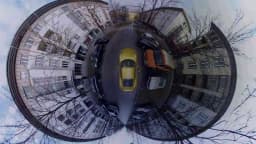
The world is a curve campaign from Porsche and Katapult distills the brand’s signature driving...
BMW Office and Restaurant Brings Teleservice to Italian Roads
BMW's "Office, Restaurant" is a 2013 Italian film campaign comprising two short films that dramatise the BMW Teleservice proposition by placing drivers in recognisable, real-world scenarios — an office commute and a restaurant journey — to show how the brand's remote vehicle monitoring technology integrates seamlessly into daily life.
Published in March 2013, the campaign was created by Milan-based agency Bcube and targets Italian motorists for whom the car is as much a professional tool as a personal one. The two film assets work as a paired set, each anchored to a distinct social context that Italian audiences would immediately recognise. Rather than staging abstract technology demonstrations, the campaign grounds BMW Teleservice in the rhythm of an ordinary working day, treating the driver's time and peace of mind as the product's real benefit.
The campaign sits within a broader period of strategic ambition for BMW in Italy and across Europe. By presenting Teleservice through the lens of lifestyle rather than engineering specification, BMW and Bcube position the feature as an enabler of confidence — the kind of quiet reassurance that allows a driver to walk into a meeting or a dinner without thinking twice about their vehicle's condition. In Italy, where automotive culture carries strong associations with personal expression and professional identity, that framing carries particular resonance. The campaign contains two media assets and is classified as a film medium execution, making television and digital pre-roll its natural distribution environment. Clapboard Score for "Office, Restaurant" is 54 out of 100.
BMW Teleservice addresses a genuine friction point in vehicle ownership. The service allows the car to communicate directly with BMW's service network, flagging maintenance needs before they become problems and removing the burden of diagnostic uncertainty from the driver. Communicating that proposition in Italy in 2013 required a strategy that spoke to the values of a market where automotive ownership is culturally layered.
Italy's new car market was navigating significant pressure in 2013. According to bestsellingcarsblog.com, European passenger car registrations declined during this period as economic headwinds continued to suppress consumer confidence across the continent. Within that context, premium manufacturers including BMW were competing not simply on product specifications but on the total ownership experience — the argument being that a BMW costs less to worry about, not just less to run. Bcube's strategic response is to reframe Teleservice as a lifestyle benefit rather than a technical feature, aligning the campaign with BMW's broader European positioning around intelligent, connected driving.
The campaign's dual-film structure serves a segmentation purpose. By presenting two distinct scenarios — the professional office environment and the social restaurant occasion — Bcube acknowledges that the Italian BMW driver moves through multiple worlds in a single day. The films collectively argue that Teleservice is relevant across all of them. According to Press Bmwgroup, BMW delivered 1,655,138 vehicles globally in 2013, a rise of 7.5 percent from 1,540,085 units in 2012, underscoring the brand's momentum during the year this campaign ran. That growth made sustaining owner loyalty and demonstrating connected-car value a logical priority for the brand's communications in markets like Italy.
Pietro Malegori directed both films in the "Office, Restaurant" campaign for BMW, working under the creative leadership of Francesco Bozza, who served as executive creative director at Bcube. Aureliano Fontana and Bruno Vohwinkel acted as client creative directors, with Fontana responsible for art direction and Vohwinkel handling copywriting. Production was managed by K48, the production company engaged for the project, while Vizeum handled media planning. Additional team members listed in the campaign credits include Edi Borrelli, Giansimone Graziosi, Giorgia Benetti, and Sveva Spalletti.
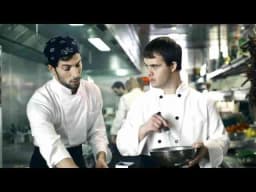
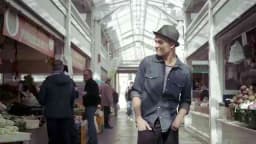
The on-screen execution places drivers in two settings that define the Italian professional day. In the "Office" film, the scenario frames the car journey as an extension of the working environment, suggesting that Teleservice keeps the vehicle as prepared and reliable as the driver arriving for a meeting. In the "Restaurant" film, the social occasion becomes the backdrop, with the same logic applied to a more relaxed context — the car waits, monitored and cared for, while its owner is present elsewhere. Both films treat the absence of anxiety as the visible proof of the technology's value.
The craft choice to shoot two separate scenarios rather than a single narrative reflects a considered production decision. Each film functions as a standalone argument for Teleservice, but together they build a cumulative case across the breadth of the driver's day. The Italian settings lend the films a specific visual and cultural texture, grounding the BMW brand proposition in a geography where design literacy and attention to environment are assumed rather than earned. The pairing also allows the campaign to reach distinct audience moments — professional context and leisure context — within a single creative platform.
No verified performance data for "Office, Restaurant" is publicly available. The campaign was not identified as a recipient of awards at Cannes Lions, the Effies, The One Show, D&AD, the Clio Awards, the Webby Awards, or the WARC Awards, based on award searches conducted across those bodies.
Structural analysis of the campaign suggests a clear and coherent persuasive logic. The dual-film format distributes the Teleservice argument across two distinct emotional registers — professional obligation and social pleasure — without requiring either film to carry the full weight of the brand's technical proposition. This architecture reduces creative risk and increases contextual relevance, since viewers encountering either film in isolation receive a complete and self-contained message.
The decision to anchor the campaign in recognisably Italian environments — the office, the restaurant — reflects an understanding that premium automotive advertising in Italy succeeds when it reflects the driver's self-image back with accuracy. By avoiding generic aspirational imagery in favour of specific, familiar social moments, Bcube creates room for the audience to project themselves into the scenario without effort. The limitation of the approach is that the Teleservice technology itself remains largely implied rather than demonstrated, which may constrain the campaign's ability to convert awareness into active consideration among drivers unfamiliar with the feature. As a purely brand-led film campaign with a connected-car proposition, its effectiveness would depend substantially on the strength of its media placement and the degree to which the paired films were encountered together.
"Office, Restaurant" is a BMW film campaign published in Italy in March 2013. Created by Bcube, it comprises two short films promoting BMW Teleservice by placing drivers in an office commute and a restaurant scenario, demonstrating how the technology supports a confident, worry-free ownership experience.
Pietro Malegori directed both films in the campaign. Francesco Bozza served as executive creative director at Bcube, with Aureliano Fontana handling art direction and Bruno Vohwinkel responsible for copywriting. K48 was the production company, and Vizeum managed media planning for the campaign.
BMW Teleservice allows a vehicle to communicate directly with BMW's service network, flagging maintenance requirements remotely. BMW chose to highlight the feature in Italy in 2013 to reinforce the total ownership experience in a premium market, positioning connected-car technology as a practical lifestyle benefit rather than a technical specification.
No awards for "Office, Restaurant" have been identified. Award searches across Cannes Lions, the Effies, The One Show, D&AD, the Clio Awards, the Webby Awards, and the WARC Awards returned no entries or wins attributable to this specific BMW and Bcube campaign from March 2013.
The Clapboard Score for "Office, Restaurant" is 54 out of 100. The campaign demonstrates a coherent dual-film structure and culturally grounded Italian settings, though the absence of verified performance data and award recognition limits the evidence base available for a higher creative effectiveness assessment.
.webp)
Creative Collaboration Platform: The Backbone of Modern Creative WorkWhat is a creative collaboration platform?Clapboard defines a creative collaboration platform as the operational core for today’s distributed creative teams. This is not a collection of digital collaboration tools stitched together; Clapboard’s system


Understanding the Creative Production MarketplaceWhat is a Creative Production Marketplace?Clapboard defines a creative production marketplace as a structured ecosystem where brands, agencies, and production talent converge to execute video, advertising, and branded content at scale. Unlike the legacy agency or freelanREAD FULL ARTICLE

The Urgent Need for a Creative Production Operating SystemWhy Traditional Creative Production Models Break DownClapboard sees the creative production landscape shifting under pressure. Content velocity is no longer a buzzword—it’s a mandate. Modern advertising demands relentless output across dozens of channels, each wREAD FULL ARTICLE