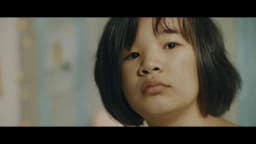
BRAC's 2018 'Thank You for Listening' short film used a live social experiment at BRAC Centre to reach nearly 1 million Facebook views within hours of launch.

How BRAC Turned Active Listening Into a Mental Health Movement
BRAC's 'Thank You for Listening' is a 2018 public-interest short film produced in Bangladesh for World Mental Health Day, built around a live social experiment in which real employees identified the people who listen to them most and called those people on camera to say thank you.
Released in October 2018 to coincide with World Mental Health Day on October 10, the campaign carries a theme consistent with that year's global focus — 'Young people and mental health in a changing world,' as designated by the World Health Organization. Rather than relying on statistics or advocacy messaging, BRAC constructed its public interest argument around a single, intimate human act: the phone call. The campaign's central proposition, drawn directly from its creative brief, is that the mind endures because someone listens. That sentence functions as both tagline and strategic anchor, making emotional resilience inseparable from the presence of another person willing to hear.
Filmed at BRAC Centre in Dhaka — the head office of what BRAC describes as the world's largest NGO, according to brac.net — the production invited employees in without informing them of the film's purpose in advance. The result was unscripted disclosure and, in several cases, visibly emotional live phone calls that formed the emotional core of the finished film. Distribution ran primarily through Facebook and YouTube, and according to the campaign's own documentation, the video approached one million views on Facebook within hours of publication. The campaign carries a Clapboard Score of 63 out of 100, reflecting its strong emotional architecture and culturally specific execution within the Bangladesh public service category.
BRAC identified listening as the actionable centre of mental health advocacy in Bangladesh. That strategic choice separated the campaign from most public-interest health communications, which typically lead with clinical framing, disorder statistics, or helpline information. By locating emotional resilience in an everyday interpersonal act — being heard — BRAC made participation feel immediate and personal rather than institutional.
The World Health Organization's 2018 World Mental Health Day theme explicitly addressed young people navigating mental health in a rapidly changing world, according to Who Int. In Bangladesh, that context carries particular weight. Research published through Dhaka University, cited by Du Ac Bd, has documented the scale of unaddressed mental health need across the country, where formal psychiatric infrastructure remains limited relative to population size. BRAC's campaign did not attempt to fill that clinical gap. Instead, it elevated informal support — the act of listening — as a mechanism of resilience that exists outside the healthcare system entirely.
That positioning also distinguished the campaign from contemporaneous mental health communications by organisations such as the World Health Organization's own awareness content and from commercially produced awareness campaigns by brands like Unilever and ACI in Bangladesh, which tend toward broader, more polished social messaging. BRAC's approach was deliberately raw and workplace-specific, drawing credibility from its own institutional identity. As an organisation operating across health, education, and poverty alleviation in Bangladesh and internationally, according to brac.net, BRAC carried the authority to speak about human resilience without that message sounding like advertising. The campaign's hashtag, #ThankYouforListening, was designed as a social call to action, inviting audiences across Bangladesh to tag individuals who had listened to them — extending the film's emotional logic into organic social behaviour.
HoloFilm Studios produced 'Thank You for Listening,' with Bidhan Saha directing. The film was shot entirely at BRAC Centre in Dhaka, Bangladesh, using the organisation's own employees as its sole on-screen subjects. Copywriting was handled by BRAC Communications, with creative supervision credited to Tousif Farhad and digital marketing oversight by Mehran Khan, according to campaign production records.
The central creative mechanism was withholding. Employees were brought into a studio setting without being told what the interview would involve. They were asked one question: who is the best listener in your life, and why? The answer to that question — personal, unrehearsed, and in several cases visibly surprising to the speakers themselves — became the first emotional layer of the film. The second layer arrived when participants were asked to call that person immediately and say thank you. It is at that point, as documented in the campaign's own account, that the film became genuinely emotional and unpredictable in a way that scripted production cannot replicate.
The documentary-style execution aligns with a broader shift in BRAC's public-interest communications during 2018. An earlier film from July 2018, addressing sexual harassment on public transport in Bangladesh, used a similar social-experiment format, according to linkedin.com production records. 'Thank You for Listening' refined that approach, narrowing the frame to a single room, a single question, and a single act of gratitude. The result is a film that reads as evidence rather than argument — the camera records something that happened, and the audience draws the conclusion that listening matters. That is a structurally more durable creative decision than presenting the same point as a declared message, because it converts viewers from recipients of information into witnesses to an event.
The 'Thank You for Listening' campaign generated measurable viral reach on Facebook immediately following its October 2018 release in Bangladesh. According to campaign documentation, the video approached one million views on Facebook within hours of publication — a rate of uptake that, for a public-interest film from a development organisation rather than a commercial brand, represents significant organic traction in the Bangladesh digital media environment.
YouTube performance figures, as recorded at the time of archiving, show over nine thousand views and one hundred and ninety-nine likes on that platform, according to available campaign metadata. Those numbers reflect YouTube's secondary role in the distribution strategy; Facebook was the primary channel and the platform where the campaign's social-sharing mechanic — tagging someone with #ThankYouforListening — was most likely to function as intended.
No independent third-party audit of total reach or engagement figures for the campaign is publicly available, and no awards recognition for 'Thank You for Listening' is documented in the sources consulted for this case study. The campaign's structural effectiveness, however, is evident in its design. By placing the emotional payoff — the live phone call — at the end of a building sequence of disclosure, the film creates a natural share impulse: viewers who feel moved want others to feel moved. That loop, combined with the hashtag mechanic, gave the campaign organic amplification without paid distribution. For a public service campaign produced within the resource constraints typical of the NGO sector in Bangladesh, that is a meaningful creative achievement. Clapboard Score: 63/100.
'Thank You for Listening' is a 2018 public-interest short film by BRAC, released for World Mental Health Day in Bangladesh. It follows real BRAC employees who identify their best listeners and call them on camera to say thank you, arguing that the act of listening is fundamental to mental health and emotional resilience.
BRAC released 'Thank You for Listening' in October 2018 to coincide with World Mental Health Day on October 10. That year's global theme, designated by the World Health Organization, focused on young people and mental health in a changing world, providing the campaign's broader advocacy context in Bangladesh.
Bidhan Saha directed 'Thank You for Listening' for BRAC. The film was produced by HoloFilm Studios, with copywriting by BRAC Communications, creative supervision by Tousif Farhad, and digital marketing oversight by Mehran Khan. It was shot entirely at BRAC Centre in Dhaka, Bangladesh.
According to campaign documentation, 'Thank You for Listening' approached one million views on Facebook within hours of its October 2018 release in Bangladesh. The film also accumulated over nine thousand YouTube views. Its hashtag, #ThankYouforListening, extended the campaign's reach through organic social tagging behaviour.
BRAC employees were brought to the filming location without knowing the interview's purpose, ensuring unscripted responses. When asked to call their best listeners live on camera, their reactions were visibly authentic. That documentary approach transformed the film from an advocacy message into witnessed evidence, strengthening its emotional credibility and share impulse.
'Thank You for Listening' by BRAC holds a Clapboard Score of 63 out of 100. The score reflects the campaign's strong emotional architecture and authentic social-experiment format, balanced against limited documented awards recognition and the absence of independently audited performance data beyond Facebook's initial viral reach figures.
.webp)
Creative Collaboration Platform: The Backbone of Modern Creative WorkWhat is a creative collaboration platform?Clapboard defines a creative collaboration platform as the operational core for today’s distributed creative teams. This is not a collection of digital collaboration tools stitched together; Clapboard’s system


Understanding the Creative Production MarketplaceWhat is a Creative Production Marketplace?Clapboard defines a creative production marketplace as a structured ecosystem where brands, agencies, and production talent converge to execute video, advertising, and branded content at scale. Unlike the legacy agency or freelanREAD FULL ARTICLE

The Urgent Need for a Creative Production Operating SystemWhy Traditional Creative Production Models Break DownClapboard sees the creative production landscape shifting under pressure. Content velocity is no longer a buzzword—it’s a mandate. Modern advertising demands relentless output across dozens of channels, each wREAD FULL ARTICLE