How Breville Made The Naked Espresso a Premium Coffee Moment
Breville's "The Naked Espresso" is a 2012 ambient campaign created by Sydney agency Reborn that used a live data-visualisation activation at Sydney's Aroma Festival to introduce the BES900 Dual Boiler espresso machine to Australian coffee enthusiasts by transparently revealing the art and science behind every shot.
The campaign launched in Australia in July 2012, with the centrepiece live event held on 29 July 2012 at the Aroma Festival in Sydney, according to Campaign Asia. The strategic premise was transparency — positioning the BES900 not as a consumer appliance but as a professional-grade instrument capable of delivering a coffee experience previously confined to commercial settings. By physically exposing the machine's internal workings through sensor technology, Reborn gave the product's commercial-grade specifications a visceral, tangible form that no conventional print or broadcast execution could replicate.
In Australia, where coffee culture occupies a defining role in daily life, the premium home espresso segment was an increasingly contested space in 2012. Breville chose the Aroma Festival as its launch platform precisely because the event drew an audience of serious coffee drinkers rather than passive consumers. The campaign comprised a single ambient media asset, and its reach was driven entirely through earned media and public relations rather than paid placement. Reborn, appointed to develop Breville's digital strategy and creative that same year, constructed an integrated programme that spanned live activation, digital content hosted at a dedicated campaign destination, and a targeted database-building initiative designed to build a qualified audience of premium espresso enthusiasts for Breville's ongoing marketing. The BES900 Dual Boiler sat at the centre of every element, its specifications — dual independent boilers, PID temperature control, precise pressure management — treated not as technical footnotes but as the creative substance of the campaign itself.
Breville identified a structural gap between mass-market capsule convenience and genuine espresso craft. The Australian and New Zealand portioned-coffee-machine market was reported as more than A$100 million annually by February 2013, according to Marketing Magazine Australia, illustrating the dominant commercial gravity of the capsule segment at the time. Nespresso operated 270 boutiques across 50 countries in 2012, demonstrating the substantial international scale and retail investment the capsule category's leading brand was deploying, as reported by Assets-Dam Foodthinkers. Against that context, Breville's decision to invest in a premium, craft-oriented platform for the BES900 Dual Boiler was a deliberate counter-positioning move rather than a direct competitive response.
The home espresso-machine category in Australia was structurally divided between traditional semi-automatic machines, fully automatic bean-to-cup systems, portion and capsule platforms, and the smaller but growing tier of commercial-style premium home machines. Breville competed in this latter segment with the BES900, a machine whose dual independent boilers and professional pressure management specifications placed it closer to café equipment than to the convenience-led alternatives dominating retail shelf space. The campaign's strategic rationale, as documented by Campaign Asia, rested on a consumer insight that serious home baristas were underserved by existing marketing — most espresso advertising in Australia either targeted aspirational convenience or emphasised design aesthetics, leaving technical mastery largely unarticulated.
Reborn's appointment to Breville's digital and creative account in 2012, as reported by Marketing Magazine Australia, reflected a broader strategic shift toward education-led brand building. Rather than competing with Nespresso or other capsule brands on ease of use, the Naked Espresso campaign addressed an audience for whom the complexity of a dual boiler system was a feature rather than a barrier. That precise audience segmentation underpinned every execution decision that followed, from the choice of the Aroma Festival as the activation venue to the construction of a dedicated database for premium espresso consumers.
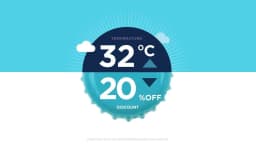
Reborn physically hacked a BES900 Dual Boiler espresso machine with flow, temperature, and pressure sensors, as described by Campaign Asia writer Nithin Coca in a report published 30 August 2012. That single act of creative engineering defined the entire campaign. By making the invisible mechanics of espresso extraction visible in real time, the activation transformed a product demonstration into an immersive scientific spectacle — one that required no advertising vocabulary to communicate the BES900's premium positioning.
The creative team at Reborn brought distinct and complementary expertise to the execution. David Easton, director and co-founder of Reborn, oversaw the project. Jarrad Collings served as Creative Director, shaping the conceptual frame of transparency and revelation that gave the campaign its name. Enrico Penzo contributed as Creative Technologist, responsible for the sensor integration that made the live data visualisation technically possible. Kirby Latice Hancock directed the senior design and art direction, while David Londono handled development. John Paul Wager served as Senior Planner, and David Gubbin represented Breville as Business Manager on the client side, according to documentation cited by Reborn Co and campaignasia.com.
The activation served more than 2,000 cups of espresso across the event, according to Campaign Asia, with each extraction rendered as a live visual data stream visible to festival attendees. The experience was engineered to attract both the curious general visitor and the committed coffee enthusiast — an audience calibrated by the Aroma Festival's own positioning as Sydney's premier coffee event. Supporting digital content directed participants to a dedicated campaign website, thenakedespresso.com, extending the educational narrative beyond the physical activation. The ambient medium — a single experiential asset rather than a media-bought campaign — required the creative execution itself to generate all reach, placing exceptional pressure on the craft quality and conceptual clarity of the live event.
The Naked Espresso campaign by Breville delivers measurable commercial outcomes from a single-day ambient activation. The campaign generated A$300,000 in new sales leads on activation day alone, achieved an estimated 2.8 million impressions, and recruited 6,987 people into Breville's premium espresso database — all at zero media spend, with reach driven entirely through public relations and earned media. These figures, drawn from Clapboard's editorial records, represent a structurally efficient result for a campaign built around one experiential asset and one event day.
The Aroma Festival attracted approximately 100,000 people, according to Campaign Asia, providing a concentrated, qualified audience that maximised the activation's reach within a single geographic market. More than 200 direct product leads were generated at zero media cost, as reported by Campaign Asia, a metric that underlines the commercial precision of the audience targeting strategy. The database of nearly 7,000 premium espresso prospects represented a durable asset — a qualified first-party audience for Breville's ongoing premium marketing — that extended the campaign's value well beyond the activation day itself.
Breville Group revenue increased by a reported percentage in the financial period surrounding the campaign's launch, reflecting the broader commercial momentum of the business in Australia during this period, as noted in Breville's own financial reporting. No independent third-party audit of the campaign's specific contribution to revenue has been publicly documented. The Clapboard Score for The Naked Espresso is 63 out of 100, reflecting strong strategic and executional clarity, a highly efficient media model, and measurable lead-generation outcomes, with room for greater creative ambition and broader audience reach beyond the single activation context.
The Naked Espresso is a 2012 ambient campaign by Breville, created by Sydney agency Reborn. It launched in Australia to introduce the BES900 Dual Boiler espresso machine through a live data-visualisation activation at Sydney's Aroma Festival, revealing the machine's internal mechanics via sensors to demonstrate its professional-grade espresso credentials.
The campaign generated A$300,000 in new sales leads on activation day and reached an estimated 2.8 million impressions at zero media spend. It also recruited 6,987 people into Breville's premium espresso database and produced more than 200 direct product leads, according to Campaign Asia and Clapboard's editorial records.
Reborn, a Sydney-based creative agency founded in 2008, created The Naked Espresso campaign. Reborn was appointed to Breville's digital strategy and creative account in 2012, as reported by Marketing Magazine Australia. The core team included Creative Director Jarrad Collings and Creative Technologist Enrico Penzo, according to reborn.co and campaignasia.com.
The BES900 Dual Boiler is a professional-grade home espresso machine featuring dual independent boilers and precise pressure and temperature control. It sits at the premium end of the Australian home espresso category. The Naked Espresso campaign was built entirely around demonstrating these specifications through live sensor-driven visualisation rather than conventional advertising.
The live activation took place at Sydney's Aroma Festival on 29 July 2012, according to Campaign Asia. The festival attracted approximately 100,000 attendees, providing Breville with a concentrated audience of coffee enthusiasts in Australia. The activation served more than 2,000 cups of espresso during the event, as reported by Campaign Asia.
The Naked Espresso receives a Clapboard Score of 63 out of 100. The score reflects strong strategic clarity, an efficient zero-media-spend model, and credible lead-generation results for Breville in Australia, while noting that greater creative ambition and broader activation scale could have extended the campaign's overall impact.
.webp)
Creative Collaboration Platform: The Backbone of Modern Creative WorkWhat is a creative collaboration platform?Clapboard defines a creative collaboration platform as the operational core for today’s distributed creative teams. This is not a collection of digital collaboration tools stitched together; Clapboard’s system


Understanding the Creative Production MarketplaceWhat is a Creative Production Marketplace?Clapboard defines a creative production marketplace as a structured ecosystem where brands, agencies, and production talent converge to execute video, advertising, and branded content at scale. Unlike the legacy agency or freelanREAD FULL ARTICLE

The Urgent Need for a Creative Production Operating SystemWhy Traditional Creative Production Models Break DownClapboard sees the creative production landscape shifting under pressure. Content velocity is no longer a buzzword—it’s a mandate. Modern advertising demands relentless output across dozens of channels, each wREAD FULL ARTICLE