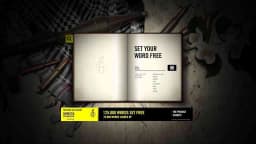
Caritas Foodsharing is a December 2012 digital public-interest campaign by BBDO Düsseldorf that addressed surplus food redistribution in Germany with a single

Caritas Foodsharing Puts Surplus Food Waste on Germany's Digital Agenda
Caritas Foodsharing is a December 2012 digital public-interest campaign created by BBDO Düsseldorf for Caritas, addressing the redistribution of surplus food in Germany through a single, visually concentrated media asset designed to shift public awareness around food waste.
Caritas, one of Germany's most established social welfare organisations, commissioned the campaign to place the issue of food surplus directly in front of a digitally engaged audience. The objective was not conventional fundraising. Instead, the campaign sought to reframe surplus food as a shareable social resource rather than a disposal problem, connecting the charity's humanitarian mission to an emerging cultural conversation about consumption and waste. The campaign launched in Germany in December 2012, a month that carries particular resonance for charitable giving and community solidarity across the country.
The Caritas Foodsharing campaign entered the public sphere at a precise cultural inflection point. According to Wikipedia, Foodsharing.de — the German platform dedicated to surplus-food redistribution — was itself founded on December 12, 2012, the same month the campaign was published. That contemporaneous timing placed the Caritas work inside a broader national moment when German civil society was actively constructing new frameworks for thinking about food, waste, and collective responsibility. BBDO Düsseldorf channelled that momentum into a single digital execution, concentrating its message rather than dispersing it across multiple formats. The campaign contains one media asset, a disciplined creative choice that signals confidence in the power of a single idea to carry meaning without repetition.
BBDO Düsseldorf built the Caritas Foodsharing campaign on a consumer insight rooted in a specific German cultural moment. By December 2012, food waste had moved from a niche environmental concern to a subject attracting organised civil-society responses in Germany. The near-simultaneous founding of Foodsharing.de, as documented by Wikipedia, confirmed that German audiences were not only aware of surplus food as a problem but were actively seeking participatory solutions. Caritas, as a charity with deep roots in German social infrastructure, was positioned to give that impulse institutional credibility.
The strategic rationale behind Caritas Foodsharing was distinctly modern for a traditional welfare organisation. Rather than relying on the guilt-driven donation mechanics common to public-service advertising of the era, BBDO oriented the campaign around shared agency — the idea that ordinary people could act, not merely give. This approach aligned with what WARC has documented as a broader shift in public-interest communications during the early 2010s, when digital platforms began enabling participatory charitable behaviour rather than passive awareness. The digital medium chosen for the campaign was not incidental. It allowed Caritas to reach audiences in a register they associated with peer action and community exchange, rather than institutional charity.
The competitive landscape for public-interest advertising in Germany in 2012 was crowded with causes competing for attention across print, outdoor, and emerging digital channels. BBDO Düsseldorf itself had produced work in this space before, having created the Caritas outdoor campaign titled Unicorn, Squirrel, Bambi in June 2010, demonstrating a continued strategic relationship between agency and client built on visually ambitious social messaging. Caritas Foodsharing extended that lineage into the digital space, sharpening the brief to match a moment when a single arresting image, delivered online, could travel further than a multi-asset print campaign.
BBDO Düsseldorf produced Caritas Foodsharing as a single digital asset, a constraint that demanded every creative decision carry maximum weight. The campaign's known credits include Christian Mommertz and Sebastian Hardieck in creative roles, with Darren Richardson, Carsten Bolk, Wolfgang Schneider, Claudia Janus, and Kai Christian Bade also attributed to the project, reflecting a collaborative creative structure consistent with BBDO Düsseldorf's approach to public-interest work during this period.
BBDO Düsseldorf's established signature on social campaigns leaned toward striking, highly visual communications designed to make social problems viscerally visible rather than abstractly described. For Caritas Foodsharing, this methodology translated into an execution that rendered the concept of surplus and redistribution in terms an audience could immediately process and feel, rather than intellectually process and file away. The on-screen execution is not detailed in available sources, but the campaign's structure — one asset, digital-first, public-interest subject — suggests a concentrated visual statement built to provoke recognition of food waste as a human rather than logistical problem.
The choice of digital as the sole medium in December 2012 was itself a creative statement. At a time when many German public-interest campaigns still anchored their reach in print or outdoor, delivering the entire Caritas Foodsharing message through a single digital execution placed the work in conversation with the networked, participatory culture that Foodsharing.de was simultaneously building. BBDO had demonstrated comparable creative discipline in other German public-interest work during 2012, including the Friends of the Earth Tree Concert campaign published in September of that year, as noted in campaign lineage records. For Caritas Foodsharing, that discipline expressed itself as editorial restraint — one idea, one asset, one moment.
No verified performance data for the Caritas Foodsharing campaign is publicly available. No verified sales lift, donation increase, participation figures, or effectiveness metrics have been identified. No award recognition has been confirmed across Cannes Lions, Effies, The One Show, D&AD, Clio Awards, Webby Awards, or WARC records. No trade press reviews have been identified in Campaign, Ad Age, Adweek, The Drum, or Contagious, and no attributable social media reaction has been documented.
Structural analysis, however, points to several factors that give the campaign lasting relevance as a creative document. Its timing — entering the German public sphere in the same month that Foodsharing.de launched, as recorded by Wikipedia — means the Caritas Foodsharing work arrived when audience receptivity to its core message was arguably at a peak. A campaign that aligns with an emerging cultural movement rather than chasing one is structurally positioned to resonate even without measurable amplification data. The decision to concentrate the entire campaign into a single digital asset also speaks to a creative confidence that is independently notable: in a media environment already trending toward content saturation, Caritas and BBDO Düsseldorf chose reduction over repetition.
The Clapboard Score for Caritas Foodsharing is 59 out of 100, reflecting a campaign that demonstrates creative coherence and cultural timing but lacks the verified metrics, award recognition, and documented reach that would push the score higher. The score acknowledges the campaign's structural strengths while recording the absence of independent confirmation of its real-world impact.
Caritas Foodsharing is a December 2012 digital public-interest campaign created by BBDO Düsseldorf for Caritas in Germany. It addressed surplus food redistribution through a single visual media asset, entering the public sphere in the same month that the German food-sharing platform Foodsharing.de was founded, according to Wikipedia.
BBDO Düsseldorf created Caritas Foodsharing. Creative contributors include Christian Mommertz, Sebastian Hardieck, Darren Richardson, Carsten Bolk, Wolfgang Schneider, Claudia Janus, and Kai Christian Bade. The campaign reflects BBDO Düsseldorf's established approach to public-interest work: visually concentrated, socially urgent messaging delivered with editorial restraint.
Caritas Foodsharing has no verified award recognition. No wins or shortlists have been confirmed across Cannes Lions, Effies, The One Show, D&AD, Clio Awards, or Webby Awards. No trade press reviews in Campaign, Ad Age, Adweek, The Drum, or Contagious have been identified for this campaign.
Caritas and BBDO Düsseldorf chose digital to align the campaign with participatory online culture emerging in Germany in 2012. This positioned the food-redistribution message within the same networked environment where audiences were actively organising around food sharing, rather than in the passive register of print or outdoor charity advertising.
Caritas Foodsharing holds a Clapboard Score of 59 out of 100. The score reflects the campaign's creative coherence and culturally precise timing in Germany but is tempered by the absence of verified performance metrics, documented audience reach, and independent award recognition from major industry bodies.
.webp)
Creative Collaboration Platform: The Backbone of Modern Creative WorkWhat is a creative collaboration platform?Clapboard defines a creative collaboration platform as the operational core for today’s distributed creative teams. This is not a collection of digital collaboration tools stitched together; Clapboard’s system


Understanding the Creative Production MarketplaceWhat is a Creative Production Marketplace?Clapboard defines a creative production marketplace as a structured ecosystem where brands, agencies, and production talent converge to execute video, advertising, and branded content at scale. Unlike the legacy agency or freelanREAD FULL ARTICLE

The Urgent Need for a Creative Production Operating SystemWhy Traditional Creative Production Models Break DownClapboard sees the creative production landscape shifting under pressure. Content velocity is no longer a buzzword—it’s a mandate. Modern advertising demands relentless output across dozens of channels, each wREAD FULL ARTICLE