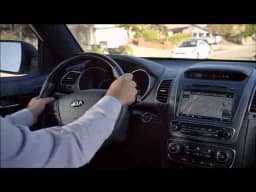
Chevrolet's 'Miss Evelyn' campaign by Goodby Silverstein & Partners lampoons automotive clichés through two fictional creatives failing to make the perfect car

Chevrolet Miss Evelyn Turns Automotive Clichés Into a Camaro Statement
Chevrolet's 'Miss Evelyn' is a 60-second commercial created by Goodby Silverstein & Partners, released in February 2011 in the United States, in which two fictional advertising creatives attempt to write the greatest car spot ever made for the Chevy Camaro, only to stumble through every automotive cliché in the book.
The campaign operates as a meta-commentary on the conventions of car advertising. Rather than presenting the Camaro through the polished, aspirational language that dominated the automotive category at the time, Chevrolet and Goodby Silverstein & Partners elected to let the vehicle speak through irony. The two fictional creatives brainstorm and pitch scenes that any viewer familiar with car commercials would immediately recognise — desert driving, impossibly attractive drivers, helicopter shots, hay bales, pursuits — cycling through each trope with mounting absurdity. The premise positions Chevrolet not as a brand performing confidence, but as one secure enough to laugh at the genre it inhabits.
Published in the United States in February 2011 and associated with the Super Bowl XLV advertising cycle, 'Miss Evelyn' arrived at a strategically significant moment for the brand. Goodby Silverstein & Partners had only recently taken over as Chevrolet's principal United States agency in 2010, according to reporting by Digiday, following more than ninety years of agency tenure held by Campbell-Ewald. The campaign sits under the broader 'Chevy Runs Deep' platform that Goodby Silverstein & Partners launched following that transition, though its tone represents a deliberate departure from the earnest emotional register typically associated with that platform. 'Miss Evelyn' targets media-savvy, younger American consumers who possess enough cultural literacy about advertising to find the self-referential humor rewarding rather than alienating. The Clapboard Score for this campaign is 70 out of 100.
 ARCHIVE
Chevrolet entered 2011 with the Camaro positioned as a genuine performance icon in need of protection from formulaic storytelling. The brand's agency transition created both a creative opening and a strategic imperative. According to Digiday, General Motors replaced long-standing agency Campbell-Ewald — which had handled Chevrolet advertising since 1919, per reporting by PopHistoryDig — with Goodby Silverstein & Partners in 2010, signalling an appetite for a bolder, more self-aware creative direction across the United States market.
The insight driving 'Miss Evelyn' is straightforward and durable: audiences in the United States had grown fluent in the visual grammar of automotive advertising. Desert roads, slow-motion close-ups, anonymous attractive drivers, dramatic pursuit sequences — these devices had become so familiar as to be nearly invisible, neutralising the persuasive impact of even expensive productions. By placing two fictional creatives on screen and letting them enumerate those devices with cheerful incompetence, Chevrolet converts viewer literacy into a point of connection rather than a barrier to engagement.
The Camaro's sales trajectory in 2011 reinforces the market context. Chevrolet sold 88,249 Camaros in the United States in 2011, an 8.5% increase from 2010, according to Motor Authority. The vehicle led the pony car segment in the United States that year, according to Edmunds. That commercial momentum gave the brand permission to experiment creatively — 'Miss Evelyn' did not need to do heavy product education work, because the Camaro's relaunch had already established its physical presence. Instead the campaign could concentrate on building personality, using humor and self-awareness to differentiate the Camaro from rivals competing through increasingly similar premium production values.
Goodby Silverstein & Partners built 'Miss Evelyn' around a single, sustained comedic premise executed over sixty seconds. On screen, two creatives of openly dubious ability sit together and attempt to construct what they imagine will be the definitive car commercial. As they pitch and visualise each idea — desert driving sequences, attractive drivers, helicopter aerials, hay bales, high-speed pursuits — the film allows each cliché to surface and collapse under its own weight, the absurdity of the cumulative catalogue becoming the joke. The Chevy Camaro is present throughout not as the subject of breathless narration but as the constant against which the creatives' imaginative failures are measured.
The production is a 60-second film, a format that provided sufficient room for the narrative to build comic momentum. The creative team behind the work was led by co-chairmen and creative directors Jeff Goodby and Rich Silverstein, with executive creative directors Hunter Hindman and Rick Condos shaping the execution. Alex Flint served as copywriter — the role most directly responsible for the script's satirical architecture — and Dino Spadavecchia acted as art director. Agency producers Susan Crimley and T.J. are also credited on the production.
The formal ambition of 'Miss Evelyn' lies in its willingness to collapse the fourth wall without fully breaking it. The two fictional creatives are incompetent enough to be funny but grounded enough to be recognisable, drawing on a shared cultural understanding of how advertising is made. That balance — between parody and affection — reflects the broader creative philosophy that Jeff Goodby and Rich Silverstein brought to the Chevrolet account, as noted by TheCreativesRoom, in which irreverence is used not to diminish the product but to give it a more honest, human quality.
No verified campaign-specific sales lift, brand-tracking effectiveness data, or advertising effectiveness awards for 'Miss Evelyn' are publicly available across the Cannes Lions, Effie Awards, The One Show, D&AD, Clio Awards, Webby Awards, or WARC databases. The absence of a formal awards record does not diminish the structural logic of the work, and the broader market conditions in which the film operated are instructive.
Chevrolet sold 88,249 Camaros in the United States in 2011, representing an 8.5% year-on-year increase, according to Motor Authority, and the Camaro led its competitive segment in the United States that year, according to Edmunds. While neither figure can be attributed directly to 'Miss Evelyn' in isolation, both metrics confirm that the Camaro was gaining commercial traction during the precise period in which the campaign was active.
Structurally, 'Miss Evelyn' demonstrates several properties associated with effective branded entertainment. Its self-referential format creates natural shareability — viewers who recognise the clichés being skewered are motivated to circulate the film as a form of cultural commentary rather than advertising. The 60-second runtime provides sufficient space for the comedic premise to develop without overstaying its welcome, and the Super Bowl XLV adjacency ensured exposure during one of the highest-reach television moments in the United States calendar. The film recorded 13,277 views and 42 likes in its documented digital life. For a campaign built on wit and insider recognition rather than spectacle, those markers of quiet, sustained engagement are consistent with its intended audience of media-literate American consumers.
'Miss Evelyn' is a 60-second Chevrolet commercial created by Goodby Silverstein & Partners and released in the United States in February 2011. It features two fictional advertising creatives attempting to write the perfect Chevy Camaro spot while stumbling through every recognisable automotive cliché, using humor to position the Camaro as a vehicle with genuine character.
Goodby Silverstein & Partners created the Miss Evelyn campaign for Chevrolet. Creative leadership included co-chairmen Jeff Goodby and Rich Silverstein as creative directors, executive creative directors Hunter Hindman and Rick Condos, copywriter Alex Flint, and art director Dino Spadavecchia. The film was published in the United States in February 2011.
The Miss Evelyn film parodies a range of well-established automotive advertising conventions. The two fictional creatives on screen propose desert driving sequences, attractive drivers, helicopter aerials, hay bales, and high-speed pursuits — devices so familiar to American audiences that enumerating them becomes the comedic and strategic point of the entire Camaro campaign.
Chevrolet sold 88,249 Camaros in the United States in 2011, an 8.5% increase from 2010, according to Motor Authority. The Camaro also led its competitive segment in the United States that year, according to Edmunds, providing the commercial backdrop against which the Miss Evelyn campaign operated during its February 2011 release.
Goodby Silverstein & Partners had recently replaced Campbell-Ewald as Chevrolet's principal United States agency in 2010, according to Digiday, bringing a mandate for a bolder creative direction. The humor in Miss Evelyn reflects a deliberate strategy to reach media-savvy American consumers who could recognise and appreciate the self-referential subversion of automotive advertising conventions.
No awards for Miss Evelyn are recorded across the Cannes Lions, Effie Awards, The One Show, D&AD, Clio Awards, Webby Awards, or WARC databases. Despite the absence of formal recognition, the campaign's structural qualities — including its satirical format, Super Bowl XLV adjacency, and media-literate target audience in the United States — remain analytically notable.
.webp)
Creative Collaboration Platform: The Backbone of Modern Creative WorkWhat is a creative collaboration platform?Clapboard defines a creative collaboration platform as the operational core for today’s distributed creative teams. This is not a collection of digital collaboration tools stitched together; Clapboard’s system


Understanding the Creative Production MarketplaceWhat is a Creative Production Marketplace?Clapboard defines a creative production marketplace as a structured ecosystem where brands, agencies, and production talent converge to execute video, advertising, and branded content at scale. Unlike the legacy agency or freelanREAD FULL ARTICLE

The Urgent Need for a Creative Production Operating SystemWhy Traditional Creative Production Models Break DownClapboard sees the creative production landscape shifting under pressure. Content velocity is no longer a buzzword—it’s a mandate. Modern advertising demands relentless output across dozens of channels, each wREAD FULL ARTICLE