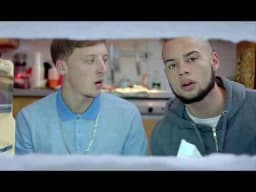
Chicago Ideas and Leo Burnett launched Music Versus Gun Violence in October 2015, an interactive social experiment using hip-hop to mobilise communities

Chicago Ideas and Leo Burnett Turn Music Into a Gun Violence Prevention Movement
Music Versus Gun Violence is a 2015 public interest social experiment created by Chicago Ideas and Leo Burnett in which Grammy-nominated producer Anthony "The Twilite Tone" Kahn leads an interactive hip-hop track inviting the public to submit anti-gun-violence lyrics, transforming a single song into a collective civic statement against gun violence in Chicago and across the United States.
The campaign launched on October 13, 2015, at MusicVsGunViolence.com, according to a MultiVu press release issued on that date. Its formal unveiling took place during Chicago Ideas Week, within a dedicated session titled "Keeping the Peace: Music, Art and the End of Violence." The choice of that platform was deliberate: Chicago Ideas Week positions itself as a civic convening space where large public challenges meet creative and entrepreneurial energy, making it a natural home for a campaign that asked whether artistic expression could do what policy debate had not.
At the centre of the campaign sits "Put The Guns Down," an interactive music video produced by Anthony "The Twilite Tone" Kahn and featuring a roster of Chicago artists that included Common, King Louie, Lil Herb, Katie Got Bandz, Saba, Tree, Noname Gypsy, Mic Terror, and Nick Jr. of Treated Crew, as documented in the campaign's own press materials. The public was invited to contribute original anti-gun-violence verses, with submissions integrated directly into the video, creating an ever-expanding collaborative track. According to Clapboard's editorial record of the campaign, one version of the interactive video eventually exceeded one hour in length, reflecting the scale of public participation the initiative attracted. The campaign received a Clapboard Score of 79 out of 100, reflecting its creative ambition, cultural specificity, and structural capacity to sustain ongoing public engagement.

Gun violence in Chicago presented a communications problem as much as a policy one. Brian Shembeda, who served as Executive Vice President and Creative Director at Leo Burnett Chicago, articulated this directly in an October 13, 2015 MultiVu press release: "The issue is on the news every night, and people can turn off the news, so we had to find a way outside of the news for people to have this conversation." That observation defined the entire strategic architecture of Music Versus Gun Violence — the campaign had to live in a medium that communities already trusted and engaged with voluntarily.
Music, and specifically hip-hop, was not an incidental creative choice. The campaign's central proposition, as stated in its own materials, was that if music can motivate someone to pick up a gun, it can also inspire them to put the gun down. This reframing repositioned a cultural form often blamed for glamorising violence as a potential instrument of prevention, a move with both rhetorical and strategic force. By anchoring the initiative in the existing creative community of Chicago — with artists who carried genuine credibility on the South and West Sides — Leo Burnett avoided the distance that characterises many institutional gun-violence-prevention communications campaigns in the United States.
The competitive landscape for public-interest advertising in the United States in 2015 included well-funded advocacy organisations producing their own media. Everytown for Gun Safety, for instance, reported approximately forty-eight million dollars in donations in that period, according to Everytown's own published financial disclosures, funding a substantial volume of paid advocacy content. The Brady Campaign to Prevent Gun Violence similarly maintained active communications programmes. Against that environment, the Music Versus Gun Violence campaign differentiated itself not through paid media scale but through participatory design: rather than broadcasting a message at an audience, it invited that audience to become co-authors of the message itself.
Anthony "The Twilite Tone" Kahn executive produced and produced "Put The Guns Down," the track that formed the spine of the entire campaign. The piece was recorded, mixed, and mastered by Chuck Bein at See Music, as documented in the campaign's production credits. Director Andre Mayon shaped the visual component of the interactive video, bringing a visual language suited to both the music and the civic weight of the subject matter.
The creative approach was built around an open architecture. Rather than releasing a finished music video — the standard format for a campaign built around a track — Leo Burnett and Chicago Ideas designed the asset to remain structurally incomplete by intention. Each new verse submitted through MusicVsGunViolence.com extended the video, so the work could never be considered done as long as participants continued to contribute. This mechanic transformed the campaign from a broadcast into a platform, a meaningful distinction in public-interest advertising where sustained engagement is typically far harder to achieve than initial awareness.
Brian Shembeda stated in the MultiVu press release that the initiative had to accomplish two things simultaneously: achieve broad impact and provide a means for people to speak with a unified voice against one of the largest issues facing Chicago. The creative solution addressed both by using the inherent shareability of music and video alongside a participation mechanism that gave every contributor a tangible stake in the campaign's output. The roster of featured artists — Common, King Louie, Lil Herb, Katie Got Bandz, Saba, Tree, Noname Gypsy, Mic Terror, and Nick Jr. — lent the track immediate credibility within Chicago's hip-hop community, reducing the cultural distance between the campaign and the communities it sought to reach across the United States.
The campaign generated documented audience engagement across its digital assets. According to Clapboard's editorial archive, the campaign's primary video asset recorded 83,625 views, 1,298 likes, and 115 comments. While these figures reflect a targeted, community-rooted distribution rather than a mass-media spend, they represent meaningful organic traction for a public-interest social experiment operating without a large paid media budget.
The interactive video's capacity to exceed one hour in length — as noted in Clapboard's campaign record — provides a qualitative measure of participation depth that view counts alone do not capture. Each additional verse represented a community member willing to publicly align themselves with an anti-gun-violence message, a form of civic commitment that is structurally distinct from passive viewership. In the context of public-interest advertising in the United States, where campaigns frequently struggle to convert awareness into active participation, the submission mechanic represented a meaningful structural achievement.
The campaign's formal launch within Chicago Ideas Week, as reported by MultiVu, also generated earned media coverage that extended its reach beyond the organic digital audience. No third-party verified reach or conversion metrics for the MusicVsGunViolence.com platform are publicly available beyond those noted above. Leo Burnett's prior work with Chicago Ideas — including the hashtag-driven #WhatIfChicago initiative documented in a March 2013 Leo Burnett portfolio publication — established a lineage of civic participation campaigns from the same partnership, providing institutional context for the ambition of the 2015 effort. The Music Versus Gun Violence campaign received a Clapboard Score of 79 out of 100, reflecting its creative integrity, community specificity, and the structural originality of its open-ended participatory format.
Music Versus Gun Violence is a 2015 public interest social experiment created by Chicago Ideas and Leo Burnett. It centred on an interactive hip-hop track, "Put The Guns Down," produced by Anthony "The Twilite Tone" Kahn, inviting the public to submit anti-gun-violence lyrics and become part of an ever-growing collaborative music video addressing gun violence in Chicago.
Leo Burnett created the campaign in partnership with Chicago Ideas. It launched on October 13, 2015, according to a MultiVu press release, with its formal unveiling at Chicago Ideas Week in the session titled "Keeping the Peace: Music, Art and the End of Violence," held in Chicago, United States.
The track featured Common, King Louie, Lil Herb, Katie Got Bandz, Saba, Tree, Noname Gypsy, Mic Terror, and Nick Jr. of Treated Crew, as documented in the campaign's press materials. Anthony "The Twilite Tone" Kahn executive produced and produced the track, with John Monopoly serving as additional executive producer.
Members of the public submitted original anti-gun-violence verses through MusicVsGunViolence.com, which were incorporated directly into the video. According to Clapboard's editorial archive, one version of the interactive video exceeded one hour in length, reflecting the sustained level of public participation the campaign generated across the United States.
Brian Shembeda served as Executive Vice President and Creative Director at Leo Burnett Chicago and was a key strategic voice behind the campaign. He stated in a MultiVu press release that the initiative had to achieve broad impact while giving people a unified voice against gun violence — a challenge the interactive music format directly addressed.
Music Versus Gun Violence received a Clapboard Score of 79 out of 100. The score reflects the campaign's creative ambition, its culturally specific use of Chicago hip-hop, and the structural originality of its open-ended participatory format, which turned a single music track into an ongoing civic platform for gun violence prevention in the United States.
.webp)
Creative Collaboration Platform: The Backbone of Modern Creative WorkWhat is a creative collaboration platform?Clapboard defines a creative collaboration platform as the operational core for today’s distributed creative teams. This is not a collection of digital collaboration tools stitched together; Clapboard’s system


Understanding the Creative Production MarketplaceWhat is a Creative Production Marketplace?Clapboard defines a creative production marketplace as a structured ecosystem where brands, agencies, and production talent converge to execute video, advertising, and branded content at scale. Unlike the legacy agency or freelanREAD FULL ARTICLE

The Urgent Need for a Creative Production Operating SystemWhy Traditional Creative Production Models Break DownClapboard sees the creative production landscape shifting under pressure. Content velocity is no longer a buzzword—it’s a mandate. Modern advertising demands relentless output across dozens of channels, each wREAD FULL ARTICLE