Chicago Latino Film Festival's 2014 campaign by Lapiz and Leo Burnett used audio storytelling across five assets to celebrate the festival's 30th edition in

Chicago Latino Film Festival Turns 30 With a Campaign Built on Great Stories
The Chicago Latino Film Festival's 2014 campaign, titled 'Spain, Aztec, Guevara, Swine Love, Forever Alone Hair,' is an audio-led advertising effort created by Lapiz and Leo Burnett to promote the festival's 30th edition in the United States, anchored by the creative platform 'All About Great Stories' and built around five distinct media assets released in April 2014, according to Rmnstars.
The campaign positions the Chicago Latino Film Festival as a cultural destination defined not by cinematic spectacle but by the depth and variety of its storytelling. By invoking references that span continents and centuries — Spain's historical influence on Latin American identity, the symbolic weight of the Aztec empire, the towering iconography of Che Guevara — the work signals that the festival's programming offers audiences something more demanding and rewarding than mainstream entertainment. Each reference functions as a shorthand for a strand of Latino heritage, collectively mapping the breadth of what the festival screens.
Launched in April 2014 in the United States, the campaign targets culturally curious audiences who seek nuanced engagement with Latino narratives, according to LinkedIn. The five media assets include both short narrative films and humorous radio spots, making audio the primary vehicle for the campaign's argument, according to Imdb. Rather than showcasing clips from festival films, the work demonstrates its thesis through its own storytelling: the ads themselves are designed to be interesting, surprising, and character-driven. The campaign earned a Clapboard Score of 63 out of 100, reflecting solid creative ambition within a niche cultural marketing context.

Lapiz developed the 'All About Great Stories' platform as a direct strategic reframe of what a film festival campaign could say. The proposition shifts attention away from production values and celebrity — the dominant currencies of mainstream film marketing — and toward narrative originality, the quality that distinguishes the Chicago Latino Film Festival's programming from broader multiplex fare. By making this argument in audio, the campaign trusts the medium to do what it claims the festival does: create meaning through words, voice, and imagination alone.
The cultural grounding of the campaign is deliberate and specific. References to Spain, the Aztec empire, and Guevara are not decorative; they represent distinct chapters of Latino history that the festival's films engage with year after year. This signals to culturally connected Latino audiences in the United States that the festival understands their heritage in full, not as a simplified or homogenised identity. At the same time, the campaign's humour — evident in titles like Swine Love and Forever Alone Hair — broadens its reach to general audiences who may be culturally curious but not already familiar with the festival.
The Chicago Latino Film Festival began in 1985 with approximately 500 attendees, according to the International Latino Cultural Center. That the same institution's broader year-round programming was attracting more than 70,000 Latino and non-Latino participants by 2019, as reported by the International Latino Cultural Center, underscores the long-term cultural authority the festival had built by the time this campaign ran. Lapiz, operating as a Chicago-based emerging-cultures marketing agency within the Leo Burnett Group, was positioned to translate that institutional credibility into a creative voice that felt both culturally specific and broadly accessible across the United States.
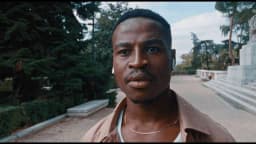
The campaign's creative execution unfolds across two promotional narrative films and a set of humorous radio spots. In Swine Love, as reported by The Drum, a man acts out a romantic scene with a pig while performers dressed in green morph suits move around him adjusting the production — a deliberately absurdist scenario that uses comedy to make an earnest point about unconventional storytelling. Forever Alone Hair, the second film, centres on the story of people waiting for love and choosing not to cut their hair in the interim, an equally strange and specific premise that rewards patient, curious viewers. The radio spots, meanwhile, name-check Che Guevara, the Aztec empire, and Spanish history in quick succession, using cultural shorthand and tonal contrast to build intrigue about the festival's programming range.
The creative team behind the campaign was led by Laurence Klinger as chief creative officer, with Fabio Seidl serving as executive creative director and Manuel Torres Kortright as creative director. Roberto Luque, Alexis Budejen, and Ricardo Vallejo also contributed to the creative output. This team, working across Lapiz and Leo Burnett in Chicago, sustained a consistent tonal register throughout all five assets — one that is deadpan, specific, and confident enough to treat oddity as an asset rather than a risk. The work was covered by The Drum in an article published on April 18, 2014, written by deputy editor Jennifer Faull, whose headline characterised the campaign as a 'quirky' effort — a descriptor that undersells the strategic coherence behind the creative choices.
The CLFF Spain English radio asset accumulated 1,695 views on its documented platform, with no recorded likes or comments at time of submission. These figures, while modest in absolute terms, reflect the niche but engaged audience profile that the Chicago Latino Film Festival occupies in the United States market. A cultural institution targeting a specific community through an audio format in 2014 was not optimising for viral reach; it was optimising for resonance with a defined audience of culturally connected and culturally curious listeners.
No broader verified performance data for the full campaign — including attendance figures attributable specifically to the 2014 edition or audience growth directly linked to the 'Spain, Aztec, Guevara, Swine Love, Forever Alone Hair' campaign — is publicly available. What the structural evidence does support is a campaign with clear strategic logic: the 'All About Great Stories' platform is distinctive enough to be memorable, the creative executions are specific enough to demonstrate rather than merely claim that distinctiveness, and the audio format is well matched to the festival's literary and narrative programming identity. The campaign earned a Clapboard Score of 63 out of 100, a result that reflects genuine creative coherence and cultural specificity, tempered by the absence of documented performance metrics and the inherently limited reach of a regional cultural festival campaign in the United States.
The campaign is an audio-led advertising effort created by Lapiz and Leo Burnett for the Chicago Latino Film Festival's 30th edition in 2014. Built on the platform 'All About Great Stories,' it comprises five media assets including two narrative films and radio spots referencing Spain, the Aztec empire, and Che Guevara.
Lapiz and Leo Burnett created the campaign. The creative team included chief creative officer Laurence Klinger, executive creative director Fabio Seidl, creative director Manuel Torres Kortright, and contributors Roberto Luque, Alexis Budejen, and Ricardo Vallejo, all working from Chicago in the United States.
Swine Love depicts a man acting out a romantic scene with a pig while performers in green morph suits adjust the production around him. As reported by The Drum, the absurdist scenario is designed to illustrate the festival's commitment to unusual, character-driven storytelling rather than conventional cinematic spectacle.
'All About Great Stories' is the central creative proposition of the 2014 Chicago Latino Film Festival campaign. It repositions the festival away from production values and special effects, arguing instead that the depth and originality of its narrative programming — spanning Latino histories from Spain to the Aztec empire — is the defining draw.
The Chicago Latino Film Festival began in 1985 with approximately 500 attendees, according to the International Latino Cultural Center. By the time the 2014 campaign ran, the festival was celebrating its 30th edition, marking three decades as one of the United States' most enduring Latino cultural institutions.
The campaign received a Clapboard Score of 63 out of 100. The score reflects the work's genuine creative coherence and cultural specificity in targeting Latino and culturally curious audiences across the United States, balanced against limited publicly documented performance metrics for this regional cultural festival campaign.
.webp)
Creative Collaboration Platform: The Backbone of Modern Creative WorkWhat is a creative collaboration platform?Clapboard defines a creative collaboration platform as the operational core for today’s distributed creative teams. This is not a collection of digital collaboration tools stitched together; Clapboard’s system


Understanding the Creative Production MarketplaceWhat is a Creative Production Marketplace?Clapboard defines a creative production marketplace as a structured ecosystem where brands, agencies, and production talent converge to execute video, advertising, and branded content at scale. Unlike the legacy agency or freelanREAD FULL ARTICLE

The Urgent Need for a Creative Production Operating SystemWhy Traditional Creative Production Models Break DownClapboard sees the creative production landscape shifting under pressure. Content velocity is no longer a buzzword—it’s a mandate. Modern advertising demands relentless output across dozens of channels, each wREAD FULL ARTICLE