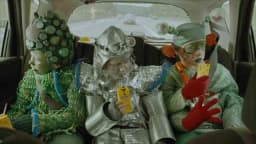
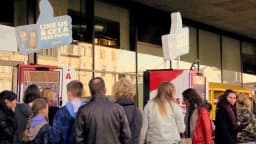
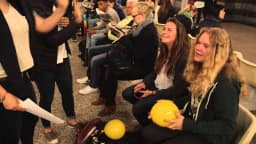
Coca-Cola's Fantastic film, created for the 2014 Special Olympics European Summer Games in Antwerp, Belgium, uses narrative inversion to challenge audience

Coca-Cola and Special Olympics Bring Antwerp 2014 to Life in Fantastic
Coca-Cola's Fantastic is a single-asset narrative film published in Belgium in September 2014, created in partnership with Special Olympics to mark the Special Olympics European Summer Games held in Antwerp, uniting two organisations with a sponsorship relationship dating back to 1968.
The campaign operates within the non-alcoholic drinks category and deploys film as its sole medium, targeting Belgian audiences during one of the country's most significant adaptive-sport moments of that year. The European Summer Games in Antwerp gave Coca-Cola a culturally grounded occasion to extend its long-standing Special Olympics partnership into local storytelling, anchoring a global sponsorship commitment to a specific, real-world event on Belgian soil. Rather than producing a conventional celebratory sponsor film, the creative approach draws its force from narrative inversion, overturning what viewers expect to see and feel before delivering its emotional resolution. The on-screen execution opens by presenting what appears to be a scenario of loss or disappointment, allowing the audience to form assumptions about the athlete's experience, before reframing that reading entirely and revealing the moment as one of genuine triumph and joy. This structural reversal transforms a simple film into a quietly powerful piece of communication, one that asks the audience to examine its own preconceptions about competition, ability, and what it means to win. The campaign carries a Clapboard Score of 72 out of 100, reflecting solid creative merit in the context of cause-aligned brand communication.
Coca-Cola has served as a founding partner of Special Olympics since 1968, making the relationship one of the longest continuous corporate sponsorships in sports history, according to coca-colacompany.com. The Fantastic film does not announce this partnership; it activates it creatively, translating decades of institutional alignment into a single, emotionally coherent film timed to the 2014 Special Olympics European Summer Games in Antwerp. Belgium, as the host nation, provided both audience relevance and civic pride as strategic levers, giving the film a natural reason to exist and circulate in the local market.
The strategic insight underpinning the campaign is the decision to resist celebratory convention. As documented by studylib.net through Martin Murphy's published review, the film's strength derives from overturning audience assumptions rather than delivering the kind of triumphant montage viewers might expect from a sponsor communication. This choice reflects a broader tension in cause-related advertising: affirmation of ability versus the implicit condescension of pity. By engineering a narrative that inverts expectation, Coca-Cola and Special Olympics position their partnership as one built on genuine respect for the athletes rather than on charitable optics. The competitive landscape for non-alcoholic beverage brands in Belgium during this period included major international players across carbonated soft drinks and broader beverage categories, with brand differentiation increasingly dependent on values-led communication rather than product claims alone. Within that environment, a film rooted in human dignity and athletic authenticity offered Coca-Cola a meaningful point of distinction at a moment of national sporting significance.
The Fantastic film is structured around a single, carefully controlled act of misdirection. The opening frames establish a situation that reads, on first viewing, as defeat or exclusion, drawing the audience into an empathetic but assumption-laden response. The film then pivots, recontextualising what has been shown and revealing that the athlete's experience is one of elation rather than disappointment. This two-beat structure, withhold then reveal, is executed with economy, relying on the gap between what the viewer assumes and what is actually true to generate its emotional impact. The restraint in this approach is notable: the film does not over-explain, does not use on-screen text to guide interpretation, and trusts the audience to arrive at the correct reading once the reframe is complete.
Martin Murphy, writing for Adboardingpass on September 24, 2014, and cited by studylib.net, described the film as simple and very effective, a judgement that points directly to the discipline of the craft. Effectiveness in this context is not measured by production scale but by the precision with which the narrative mechanism is set and released. The campaign contains a single media asset, which concentrates the entire creative argument into one film with no supporting executions to carry residual meaning. That constraint demands that the film work completely on its own terms, and the structural inversion is what enables it to do so. Production credits for Fantastic are not publicly documented, and the agency responsible for the work has not been disclosed in available sources.
No verified performance data for the Fantastic campaign is publicly available. As confirmed by clapboard.com, no campaign-specific sales lift, market-share movement, brand-tracking shift, or awareness data has been documented in the public record. The film has not been identified as a recipient of any Cannes Lions, Effie, One Show, D&AD, Clio, Webby, or WARC award, according to clapboard.com.
Structural analysis of the campaign nonetheless supports a credible assessment of its effectiveness as a piece of cause-aligned brand communication. The choice to anchor the film to the 2014 Special Olympics European Summer Games in Antwerp gave it immediate contextual relevance for Belgian audiences, while the narrative inversion technique created a reason for viewers to watch beyond the opening seconds. Martin Murphy's contemporaneous review, published September 24, 2014, and cited by studylib.net, characterised the film as simple and very effective, noting that its power came from challenging rather than confirming audience preconceptions. That independent, positive reception from a qualified observer at the time of release suggests the film landed as intended within the Belgian market. The campaign's single-asset format and the absence of a disclosed agency make broader industry recognition difficult to assess, but the creative mechanism at the film's core, earned emotion through narrative surprise rather than spectacle, reflects a disciplined approach to values-based brand storytelling that retains relevance as a model for sponsor communication in the food and drink sector.
Fantastic is a single-asset narrative film created for Coca-Cola and Special Olympics, published in Belgium in September 2014. It was made to mark the Special Olympics European Summer Games in Antwerp and uses a narrative inversion structure to challenge audience assumptions about athletic achievement and what it means to win.
The Special Olympics European Summer Games in Antwerp were a major adaptive-sport event held in Belgium in 2014. Coca-Cola, as a founding partner of Special Olympics since 1968 according to coca-colacompany.com, used the Games as the occasion and context for the Fantastic film campaign in the Belgian market.
Coca-Cola has been a founding partner of Special Olympics since 1968, according to coca-colacompany.com. That relationship spans more than five decades and underpins cause-aligned campaigns such as the 2014 Fantastic film in Belgium, which activated the partnership creatively around the Antwerp European Summer Games.
Martin Murphy, writing for Adboardingpass on September 24, 2014, described the Fantastic film as simple and very effective, as cited by studylib.net. Murphy identified the film's core strength as its ability to overturn audience assumptions rather than deliver conventional celebratory sponsor messaging about the Special Olympics Games.
The creative agency responsible for the Fantastic campaign has not been disclosed in any available public source. Production credits, including director, production company, and media agency, are not publicly documented for this September 2014 Belgian film created for Coca-Cola and Special Olympics.
The Fantastic campaign holds a Clapboard Score of 72 out of 100, reflecting solid creative merit for a cause-aligned brand film. The score acknowledges the campaign's effective use of narrative inversion and its contextual relevance to the 2014 Special Olympics European Summer Games in Antwerp, Belgium.
.webp)
Creative Collaboration Platform: The Backbone of Modern Creative WorkWhat is a creative collaboration platform?Clapboard defines a creative collaboration platform as the operational core for today’s distributed creative teams. This is not a collection of digital collaboration tools stitched together; Clapboard’s system


Understanding the Creative Production MarketplaceWhat is a Creative Production Marketplace?Clapboard defines a creative production marketplace as a structured ecosystem where brands, agencies, and production talent converge to execute video, advertising, and branded content at scale. Unlike the legacy agency or freelanREAD FULL ARTICLE

The Urgent Need for a Creative Production Operating SystemWhy Traditional Creative Production Models Break DownClapboard sees the creative production landscape shifting under pressure. Content velocity is no longer a buzzword—it’s a mandate. Modern advertising demands relentless output across dozens of channels, each wREAD FULL ARTICLE