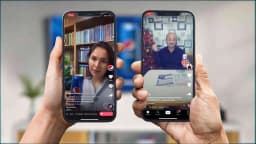
Coca-Cola's 'Mr Lucky, Jeff Waldman, Secret Gardener' campaign, created by Ogilvy São Paulo in January 2013, profiled real acts of generosity as shareable

How Coca-Cola and Ogilvy Brazil Turned Everyday Generosity Into a Digital Campaign
Coca-Cola's 'Mr Lucky, Jeff Waldman, Secret Gardener' is a three-asset digital campaign created by Ogilvy São Paulo and published in Brazil in January 2013, profiling real individuals performing extraordinary acts of generosity as part of the brand's broader 'Crazy for Good' initiative.
The campaign operates as a triptych of human stories, each standing alone yet collectively reinforcing a single proposition: that ordinary people are capable of quietly remarkable goodness. Mr Lucky is an anonymous figure who gives strangers the equivalent of £1,000 per day on the sole condition that the money be used positively. Jeff Waldman and the Secret Gardener represent further portraits of unsolicited generosity embedded in everyday life. Together, the three narratives form the content architecture of the campaign, distributed across digital channels in Brazil and designed to travel globally through social sharing.
Ogilvy São Paulo developed the campaign within Coca-Cola's 'Crazy for Good' platform, which positioned the brand not as a product but as a catalyst for positive social action. Rather than constructing fictional scenarios, the creative team documented real people whose behaviour already embodied the values Coca-Cola wished to associate with its identity. In Brazil, a market identified as a key growth territory for the carbonated soft drinks category, this approach aligned brand ambition with cultural appetite for authentic, emotionally resonant content. The campaign's digital medium gave it immediate scalability, allowing stories rooted in a specific geographic and human context to reach audiences well beyond the Brazilian market where they originated. With a Clapboard Score of 74 out of 100, the campaign earns recognition for its strategic coherence and narrative discipline.
Coca-Cola entered 2013 as the dominant force in the global non-alcoholic drinks category. According to Investors Coca-Colacompany, Coca-Cola reported 28.2 billion unit cases of company volume that year, a figure that reflects the scale at which the brand was operating when it commissioned Ogilvy Brazil to develop the 'Crazy for Good' campaign. The strategic challenge was not awareness but emotional relevance — maintaining meaningful consumer connection in a media environment increasingly hostile to conventional advertising.
Brazil represented a particularly important arena for this effort. According to foodnavigator.com, an industry report from 2013 forecast approximately two percent global growth in carbonated soft drinks, with Brazil and Mexico identified explicitly as important growth markets. In this context, Coca-Cola's decision to anchor a participatory digital narrative campaign in Brazil was not incidental. It reflected a deliberate investment in a market where brand loyalty and emotional affinity could translate directly into volume growth.
The competitive landscape sharpened this strategic need. According to goodmorningamerica.com, Coca-Cola held a commanding position in the United States carbonated soft drinks market in 2013, while Pepsi trailed significantly — but in Brazil and across Latin America, the rivalry between Coca-Cola and PepsiCo remained active, and both brands were investing in culturally resonant content to deepen consumer relationships. By moving away from product-centric advertising and toward documentary-style human storytelling, as reported by campaignbrief.com in its coverage of the broader campaign, Ogilvy Brazil gave Coca-Cola a creative posture that neither a price promotion nor a traditional spot could replicate. The 'Crazy for Good' platform positioned the brand as a witness to and enabler of human generosity rather than simply a beverage manufacturer, a distinction with real strategic value in a digital environment where shareability depends on emotional authenticity.
Henry-Alex Rubin directed the campaign. His involvement signals an intentional commitment to documentary realism over constructed advertising aesthetics — Rubin's background in observational filmmaking gave the three portraits their quality of discovered rather than staged truth.
Creative leadership came from Gaston Bigio, Regional Creative Director of Ogilvy Latina, according to available production records. Bigio's regional perspective informed a campaign that was simultaneously local in its Brazilian development and designed for global digital circulation. The decision to profile three distinct individuals — Mr Lucky, Jeff Waldman, and the Secret Gardener — rather than a single hero figure gave the campaign structural variety while maintaining tonal consistency. Each asset could function independently as a piece of content or contribute to the cumulative emotional argument of the full trilogy.
The production approach prioritised authenticity of environment and behaviour. Mr Lucky's story, centred on the anonymous daily distribution of the equivalent of £1,000 to strangers with the condition that it be used positively, was rendered in a way that preserved the subject's anonymity while making the generosity feel verifiable and human. Jeff Waldman and the Secret Gardener received similar treatment — their stories told through visual languages that respected the particularity of their actions rather than aestheticising them into brand symbols. Campaign participant Zainab Imran, quoted via marklives.com, captured the emotional register the production aimed for: 'When I sing, I feel that the children forget that they are unwell.' That statement, spare and direct, exemplifies the kind of human testimony the campaign built its credibility upon. The three media assets together demonstrate that the production team understood documentary economy — no scene exists for its own sake, every image serves the central argument about spontaneous goodness.
No verified performance data for the 'Mr Lucky, Jeff Waldman, Secret Gardener' campaign is publicly available. Quantified metrics such as view counts, engagement rates, or share volume have not been disclosed by Coca-Cola or Ogilvy São Paulo in any attributable public source, and no independent audit of campaign results has entered the public record. What can be assessed is the structural effectiveness of the work against its stated strategic purpose.
The campaign's three-asset architecture is well-suited to the digital distribution environment of January 2013, a moment when platforms rewarded episodic content that gave audiences a reason to return. Each of the three portraits — Mr Lucky, Jeff Waldman, and the Secret Gardener — functions as a discrete content unit capable of earning organic reach independently while pointing toward the others. This architecture reduces reliance on paid amplification and increases the probability of genuine social sharing, which was the primary distribution mechanism the campaign was designed to exploit.
The choice of documentary realism as the creative mode also carries structural advantages in terms of credibility and longevity. Content that documents real behaviour ages differently from content built around trend or spectacle. As reported by bandt.com.au in coverage of Coca-Cola's broader creative activity during this period, the brand's shift toward participatory and socially shareable brand experiences represented a deliberate repositioning away from isolated product advertising — and 'Mr Lucky, Jeff Waldman, Secret Gardener' sits precisely at the leading edge of that repositioning. The campaign's Clapboard Score of 74 out of 100 reflects strong strategic intent and disciplined narrative execution, with modest deductions for the absence of verifiable outcome data and the inherent difficulty of attributing business impact to documentary content of this kind.
'Mr Lucky, Jeff Waldman, Secret Gardener' is a three-asset digital campaign created by Ogilvy São Paulo for Coca-Cola, published in Brazil in January 2013. It profiles real individuals performing acts of spontaneous generosity as part of the brand's broader 'Crazy for Good' initiative, using documentary storytelling to build emotional brand relevance.
Henry-Alex Rubin directed the campaign. His background in observational documentary filmmaking shaped the production's commitment to authenticity over constructed advertising aesthetics. Creative leadership came from Gaston Bigio, Regional Creative Director of Ogilvy Latina, who oversaw the campaign's development at Ogilvy São Paulo in Brazil.
Mr Lucky is an anonymous individual who gives strangers the equivalent of £1,000 per day on the sole condition that the money be used positively. The Coca-Cola campaign profiled this figure as one of three portraits of real-world generosity, preserving the subject's anonymity while making the act feel verifiable and human.
Ogilvy Brazil chose digital narrative because the format allowed documentary-style content to travel globally through social sharing from its Brazilian origin. The three-asset structure gave each portrait independent reach while building a cumulative emotional argument, reducing reliance on paid media and maximising organic distribution across platforms active in early 2013.
The campaign earns a Clapboard Score of 74 out of 100. The score reflects strong strategic coherence and disciplined narrative execution across three documentary portraits. Modest deductions account for the absence of publicly verifiable performance data and the inherent challenge of attributing direct business impact to documentary-format digital content.
Brazil was identified as a key growth market for carbonated soft drinks in 2013, according to foodnavigator.com. Coca-Cola anchored the 'Crazy for Good' campaign there to deepen emotional brand loyalty in a commercially strategic territory, using authentic human stories rather than product promotion to build consumer affinity ahead of intensifying competition from rivals including PepsiCo.
.webp)
Creative Collaboration Platform: The Backbone of Modern Creative WorkWhat is a creative collaboration platform?Clapboard defines a creative collaboration platform as the operational core for today’s distributed creative teams. This is not a collection of digital collaboration tools stitched together; Clapboard’s system


Understanding the Creative Production MarketplaceWhat is a Creative Production Marketplace?Clapboard defines a creative production marketplace as a structured ecosystem where brands, agencies, and production talent converge to execute video, advertising, and branded content at scale. Unlike the legacy agency or freelanREAD FULL ARTICLE

The Urgent Need for a Creative Production Operating SystemWhy Traditional Creative Production Models Break DownClapboard sees the creative production landscape shifting under pressure. Content velocity is no longer a buzzword—it’s a mandate. Modern advertising demands relentless output across dozens of channels, each wREAD FULL ARTICLE