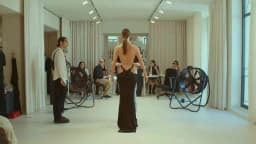
Eram's September 2012 French campaign by Euro RSCG 360 revived the brand's iconic tagline and marked its return to television for the autumn–winter collection.

Eram Revives a French Advertising Legend for Autumn 2012
Eram's 2012 campaign is a French multichannel fashion and footwear advertising effort launched in September 2012 by Euro RSCG 360, designed to accompany the brand's autumn–winter 2012–2013 collection and reintroduce Eram to French television audiences through a blend of irony, contemporary style, and its revived signature tagline.
The campaign arrived at a moment of deliberate repositioning. Rather than pursuing a clean break from its heritage, the work signalled a transition from purely price-led messaging toward fashion, style, and a more contemporary brand image — a strategic evolution documented across the French advertising trade press. The launch targeted urban women in their thirties, a demographic described in campaign briefing materials as "citizenistas" with a strong interest in music, and the full campaign rolled out across France in September 2012.
At its core, the campaign revived Eram's most celebrated piece of copywriting: the tagline "Il faut être fou pour dépenser plus" — a phrase with roots stretching back to approximately 1979, when, according to Stratégies, Eram executive Gérard Biotteau collaborated with Philippe Michel, co-founder of CLM-BBDO, to create what became one of the most recognisable slogans in French advertising history. Bringing that line back in 2012 was not an act of nostalgia but of recalibration, signalling that the brand's core promise — intelligent spending, not cheap compromise — remained as relevant as ever for the French apparel consumer. The Clapboard Score for this campaign is 56 out of 100.
Eram's 2012 campaign was built around a sharply defined consumer portrait. The target was an urban French woman in her thirties — culturally engaged, style-conscious, financially pragmatic, and resistant to the idea that spending less on footwear meant sacrificing identity. Campaign materials described this audience as "citizenistas," a formulation that fused civic awareness with aesthetic ambition and reflected the brand's desire to position its ballerines and broader range as the intelligent choice rather than the default one.
The strategic rationale drew on irony as its primary tool. As reported by campaignlive.co.uk, a 2013 Campaign article characterised Eram's advertising in this period as sophisticated and ironic in tone, drawing a comparison to the register of the television series Ally McBeal. The creative strategy used that irony to communicate that Eram shoes were affordable without making the brand feel cheap — a distinction that is structurally difficult to achieve in the value-fashion segment, where price messaging frequently undermines brand aspiration.
In France, Eram competed directly with mass-market chains including La Halle aux Chaussures, Gémo, Chaussea, André, and international retailers such as H&M and Zara, according to available trade reporting. Within that competitive landscape, the revival of the iconic tagline served a dual function: it differentiated Eram through cultural memory while reinforcing a value proposition that competitors could not credibly claim. The autumn–winter 2012 timing anchored the campaign to a high-consideration purchasing moment for French apparel consumers, maximising the relevance of the footwear and fashion messaging across all channels.
Eram's 2012 campaign was produced as a multichannel effort spanning a television film, digital banners and homepages, in-store visuals, and a mobile game titled "Le mur du son," as documented by llllitl.fr. The television film was the centrepiece, marking the brand's return to the medium and carrying the primary burden of narrative and tonal positioning across the French market.
On screen, the campaign presented scenarios drawn from the everyday lives of its target audience. According to campaignlive.co.uk, the executions included a woman doing laundry and a female job applicant confronting workplace sexism — grounded, recognisable situations that the creative team used to anchor the ironic register without tipping into abstraction. These scenes allowed the brand to take what campaignlive.co.uk described as a swipe at social conventions, using the mundane and the professional as stages on which Eram's value proposition — stylish, affordable footwear including ballet slippers — could land with wit rather than bluntness.
The strategic use of irony in the creative execution was articulated by Benoit Devarrieux, co-founder of Devarrieuxvillaret, who stated, as reported by campaignlive.co.uk, that the work used irony to show that "spending your money wisely" was intelligent. That framing gave the television film and its accompanying digital assets a consistent tonal spine: the campaign never argued that Eram was cheap, only that choosing it was smart. Euro RSCG 360 served as the lead agency across all components. Broader production credits for the 2012 campaign, including director and cinematographer, are not publicly documented in available sources.
No verified performance data for the 2012 Eram campaign is publicly available in terms of sales uplift, television viewership metrics, digital engagement figures, or mobile game downloads. What the available record does confirm, through reporting by llllitl.fr and lemondemarketing.com, is the breadth of the campaign's channel architecture: television, digital display, in-store, and mobile — a scope consistent with a significant seasonal investment tied to the autumn–winter 2012–2013 collection launch in France.
Structurally, the campaign's effectiveness argument rests on several observable factors. The revival of the "Il faut être fou pour dépenser plus" tagline leveraged decades of brand equity in the French market, reducing the cognitive distance between the new campaign and established consumer affection for the slogan. Targeting a precisely defined audience — urban women in their thirties with cultural and musical interests — reduced creative dilution and allowed the ironic register, noted by campaignlive.co.uk, to function coherently rather than broadly. The multichannel deployment, including the mobile game "Le mur du son," reflected an understanding that the citizenista target engaged with brands across digital touchpoints as well as traditional media. Taken together, these structural elements suggest a campaign designed for sustained impression-building across the French apparel season rather than short-term promotional conversion. The Clapboard Score of 56 out of 100 reflects solid strategic coherence alongside room for greater creative distinctiveness.
Eram's 2012 campaign launched in France in September 2012 to accompany the brand's autumn–winter collection. Created by Euro RSCG 360, it revived the iconic tagline "Il faut être fou pour dépenser plus" and used irony to position Eram footwear, including ballet slippers, as the intelligent choice for style-conscious French women.
Eram's 2012 campaign targeted urban French women in their thirties. Campaign materials described this audience as "citizenistas" — culturally engaged, musically interested, and financially pragmatic. The creative strategy used irony and relatable everyday scenarios to speak directly to this group without defaulting to straightforward price-led messaging.
The Eram 2012 campaign ran across television, digital banners and homepages, in-store visuals, and a mobile game titled "Le mur du son," as documented by llllitl.fr. The television film was the flagship execution and marked Eram's return to the medium after a period of absence from French broadcast advertising.
Eram's tagline "Il faut être fou pour dépenser plus" originated around 1979, according to strategies.fr. It emerged from a collaboration between Eram executive Gérard Biotteau and Philippe Michel, co-founder of CLM-BBDO. The 2012 campaign revived the slogan to reconnect with French consumer memory while repositioning the brand around contemporary fashion.
Euro RSCG 360 created the Eram 2012 campaign. The creative approach used irony to communicate affordability without cheapening the brand. As reported by campaignlive.co.uk, Benoit Devarrieux of Devarrieuxvillaret noted the work showed that spending wisely was intelligent, with executions depicting relatable female scenarios including workplace and domestic settings.
Eram's 2012 campaign receives a Clapboard Score of 56 out of 100. The score reflects the campaign's strong strategic coherence — a precise audience target, a culturally resonant tagline revival, and a multichannel structure suited to the French autumn–winter apparel season — alongside scope for greater creative distinctiveness in its executions.
.webp)
Creative Collaboration Platform: The Backbone of Modern Creative WorkWhat is a creative collaboration platform?Clapboard defines a creative collaboration platform as the operational core for today’s distributed creative teams. This is not a collection of digital collaboration tools stitched together; Clapboard’s system


Understanding the Creative Production MarketplaceWhat is a Creative Production Marketplace?Clapboard defines a creative production marketplace as a structured ecosystem where brands, agencies, and production talent converge to execute video, advertising, and branded content at scale. Unlike the legacy agency or freelanREAD FULL ARTICLE

The Urgent Need for a Creative Production Operating SystemWhy Traditional Creative Production Models Break DownClapboard sees the creative production landscape shifting under pressure. Content velocity is no longer a buzzword—it’s a mandate. Modern advertising demands relentless output across dozens of channels, each wREAD FULL ARTICLE