First National Bank's 2014 'Reinvention' film by DDB South Africa contrasted evolving inventions with unchanged practices to position FNB as a genuinely

First National Bank Reframes Banking Through the Lens of Reinvention
First National Bank's 'Reinvention' is a 2014 South African brand film created by DDB that positions FNB as a bank committed to continuous improvement rather than one-time innovation, drawing a sharp contrast between inventions that have evolved over time and practices that have remained stubbornly unchanged.
Published in September 2014 for the South African market, the campaign comprises a single film asset and sits squarely within the finance sector. The creative premise is both philosophical and competitive: the film distinguishes between mere invention — the act of creating something new — and reinvention, the sustained commitment to making something better. FNB is positioned on the side of reinvention, implying that the bank does not rest on the achievement of innovation but actively continues to refine and improve its offering for South African customers.
The campaign arrived at a moment of meaningful competitive pressure within South African retail banking, where the country's four dominant institutions — Standard Bank, Absa, FNB, and Nedbank — collectively controlled more than 85% of retail household deposits, according to Journals Co Za. Within that concentrated landscape, differentiation through brand narrative carried real strategic weight. 'Reinvention' reflects FNB's intent to claim a progressive identity that separates the bank from rivals on the basis of attitude and ambition, not product features alone. The Clapboard Score for this campaign is 67 out of 100, reflecting its creative clarity and strategic coherence against the absence of publicly verified performance data.
First National Bank faced measurable headwinds in its customer base during the period surrounding this campaign. FNB's customer base stood at 7.6 million in the 2013/14 financial year before declining to 7.3 million by 2014/15, a drop of approximately 3.9%, according to Businesstech Co Za. By contrast, Standard Bank grew its customer base to 10.4 million over the same period, while Absa recorded growth of 7.0%, per businesstech.co.za. In this environment, a campaign built around the idea of reinvention was not merely a brand exercise — it was a strategic response to a market in which rivals were actively gaining ground.
The strategic rationale behind 'Reinvention' draws on a well-established insight in financial services advertising: product parity makes functional claims difficult to sustain, so the more durable competitive advantage lies in owning a brand idea. By framing reinvention as a philosophy — asking audiences to consider which inventions have improved and which have stagnated — DDB invited South African consumers to apply that lens to their own banking relationship. The implied question is whether their current bank belongs to the category of things that have evolved, or the category that has not.
This approach also carries continuity with FNB's earlier brand platform. The bank's 'Hello Steve' campaign, created by DDB and launched in June 2011, had generated more than 220 executions by 2014 and was credited with an 11% increase in monthly leads as well as a 41% increase in FNB revenue over three years, according to bizcommunity.com. 'Reinvention' extends the same underlying ambition — positioning FNB as the bank that challenges convention — while shifting from character-led storytelling to a more conceptual, idea-driven narrative form suited to a maturing brand.
Robin Goode directed the 'Reinvention' film for First National Bank, with production handled by Giant Films. The campaign was created at DDB South Africa under executive creative director Liam Wielopolski, with Matthew Berge serving as creative director and copywriter. Hital Pandya held the role of art director, and Rachel Andreotti produced the spot on the agency side.
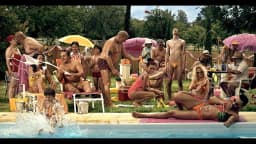
On screen, the film works by juxtaposing inventions that have undergone significant evolution over time with objects or practices that have remained essentially unchanged, drawing a contrast that makes the concept of reinvention feel both concrete and culturally resonant. This structural device — placing progress alongside stagnation — allows the film to build its argument visually before articulating the brand message, grounding an abstract philosophical idea in everyday references that South African audiences can immediately recognise and evaluate.
The choice of film as the sole medium for this campaign is itself a creative statement. A single, well-crafted film asset demands that the idea carry the full weight of communication without the support of supplementary formats. The DDB team's decision to work within that constraint speaks to confidence in the central concept: that the contrast between invention and reinvention is sufficiently compelling to hold attention, generate reflection, and transfer meaning to the FNB brand in one sustained piece of storytelling. The production, helmed by Goode through Giant Films, translates a conceptual brief into a viewing experience that positions reinvention not as a tagline but as a genuine organising principle for how FNB presents itself to the South African market.
No verified performance data for the 'Reinvention' campaign is publicly available. No sales lift, market-share change, brand-tracking shift, or customer acquisition figure specific to this campaign has been identified in available sources including businesstech.co.za, bizcommunity.com, marklives.com, or Mediaupdate Co Za. Similarly, no Cannes Lions, Effies, D&AD, The One Show, Webby, or WARC award results connected to this campaign have been confirmed, and while a Clio Awards section was referenced on the campaign page, no verified award result, category, level, or year has been identified.
Structural analysis, however, supports a reading of the campaign as strategically well-constructed. The film's core mechanism — contrasting evolved inventions with unchanged ones — creates a clear cognitive framework that audiences can apply directly to the question of which bank they use. That self-referential quality is rare in financial services advertising in South Africa and raises the probability of genuine engagement beyond passive viewing. The campaign also arrives at a moment when FNB's customer base was under pressure, as reported by businesstech.co.za, making the philosophical claim of reinvention a timely reassertion of brand ambition. Combined with the proven creative lineage of the DDB and FNB partnership — which had already delivered measurable revenue results through the 'Hello Steve' platform, according to bizcommunity.com — 'Reinvention' reads as a mature, considered evolution of a brand that understood the value of a sustained narrative identity in a competitive four-bank market.
First National Bank's 'Reinvention' is a 2014 South African brand film by DDB that contrasts inventions which have evolved over time with those that have not, positioning FNB as a bank committed to continuous improvement rather than standing still. The campaign uses this contrast to make reinvention feel like an active brand philosophy rather than a slogan.
DDB South Africa created the 'Reinvention' film for First National Bank. The executive creative director was Liam Wielopolski, with Matthew Berge as creative director and copywriter, Hital Pandya as art director, and Rachel Andreotti as agency producer. Director Robin Goode handled production through Giant Films.
The 'Reinvention' campaign was published in South Africa in September 2014. It consisted of a single film asset and was created for the South African retail banking market, where FNB competed against Standard Bank, Absa, and Nedbank in a highly concentrated sector.
FNB's 'Reinvention' extends the brand platform built by the 'Hello Steve' campaign, also created by DDB, which launched in 2011 and was credited with a 41% increase in FNB revenue over three years, according to bizcommunity.com. 'Reinvention' shifts from character-led storytelling to a conceptual, idea-driven film format while maintaining the same challenger-brand ambition.
No verified award results for the 'Reinvention' campaign have been confirmed. No wins from Cannes Lions, Effies, D&AD, The One Show, or WARC have been identified in available sources. A Clio Awards reference appeared on the campaign page, but no specific result, category, or year has been publicly verified.
South African retail banking in 2014 was dominated by four institutions — Standard Bank, Absa, FNB, and Nedbank — controlling more than 85% of retail household deposits, according to journals.co.za. FNB's customer base declined from 7.6 million to 7.3 million between 2013/14 and 2014/15, per businesstech.co.za, making brand differentiation through narrative a strategically urgent priority.
.webp)
Creative Collaboration Platform: The Backbone of Modern Creative WorkWhat is a creative collaboration platform?Clapboard defines a creative collaboration platform as the operational core for today’s distributed creative teams. This is not a collection of digital collaboration tools stitched together; Clapboard’s system


Understanding the Creative Production MarketplaceWhat is a Creative Production Marketplace?Clapboard defines a creative production marketplace as a structured ecosystem where brands, agencies, and production talent converge to execute video, advertising, and branded content at scale. Unlike the legacy agency or freelanREAD FULL ARTICLE

The Urgent Need for a Creative Production Operating SystemWhy Traditional Creative Production Models Break DownClapboard sees the creative production landscape shifting under pressure. Content velocity is no longer a buzzword—it’s a mandate. Modern advertising demands relentless output across dozens of channels, each wREAD FULL ARTICLE