 ARCHIVE
WeatherTech Brings Scout to Super Bowl LIII in a Pet Accessories Push
How WeatherTech Used Super Bowl LIII to Launch a Pet Accessories Line WeatherTech's 'Scout: Working...
Ford Jubilee Turns Dealership Visits Into a Rockstar Fantasy
Ford's Rockstar Photo Op is a 2011 Canadian dealership-activation film campaign created by agency Kinetic, using self-aware rock-star parody to reframe a routine visit to Jubilee Ford as an aspirational, celebrity-style event, according to Strategyonline Ca. The campaign consists of one film asset, archived in September 2011, and targets everyday consumers who privately imagine themselves as rock stars despite having no professional musical credentials.
The campaign's central mechanic is humour rooted in self-recognition. Rather than positioning the car or the dealership through conventional product messaging, Rockstar Photo Op inverts the celebrity endorsement format entirely. Where a standard automotive film might borrow cultural cachet from a famous face, this execution places the ordinary consumer at the centre of the rock-star mythology — turning the act of showing up to a dealership into a punchline that flatters rather than diminishes its audience. The tone is deliberately irreverent and satirical, designed to generate warmth toward the Jubilee Ford brand through laughter rather than aspiration in the traditional sense, according to Ophelia Sdsu Edu:8443.
In Canada, the automotive market in 2011 was shaped by recovering consumer confidence following the global financial contraction of the preceding years. Ford's dealership network across the country was navigating a competitive retail environment in which differentiation at the local level — rather than purely at the national brand level — carried growing strategic weight. Rockstar Photo Op represents precisely this kind of localised activation: a film built not for mass national broadcast but for the specific audience of a named dealership, Jubilee Ford, giving it a community-facing character unusual for automotive film production. The campaign earns a Clapboard Score of 63 out of 100, reflecting its creative ambition and clear tonal identity within the constraints of a single-asset dealership brief, according to Autoremarketing.
Kinetic built Rockstar Photo Op on a precise consumer insight: the gap between how people privately see themselves and how the world actually receives them is a reliable source of comedy and, when handled generously, of genuine affection. By casting that gap in the language of rock-star mythology — a cultural shorthand instantly legible to Canadian consumers across age groups — the campaign transforms an otherwise transactional destination, a car dealership, into a stage, according to Globalnews Ca.
This approach stands in deliberate contrast to the dominant strategy Ford Canada had used in the preceding decade. As reported by Strategy Online, Ford Canada signed Wayne Gretzky for a multimillion-dollar campaign that debuted in November 2002, spanning national television, print, and regional radio — a conventional celebrity-endorsement model in which borrowed fame was expected to transfer credibility to the brand. Rockstar Photo Op effectively reverses that logic: there is no famous person here, and the joke only works because there is no famous person. The consumer is the celebrity, and the dealership is the green room.
In the Canadian automotive retail landscape of 2011, Ford competed directly with General Motors and Toyota for market share at both the national brand and individual dealership levels. While global new-vehicle sales across major markets were recovering — U.S. light-vehicle sales reached approximately 12.78 million vehicles in 2011, a rise of roughly ten percent year over year, according to data cited by MediaPost — Canadian dealerships faced the additional challenge of building local loyalty within a market where national advertising budgets were concentrated on flagship models and mass-reach media. A single-film dealership campaign like Rockstar Photo Op operated in a space that neither General Motors nor Toyota was routinely occupying with this degree of tonal specificity, giving Kinetic and Jubilee Ford a moment of genuine differentiation within a crowded retail environment.
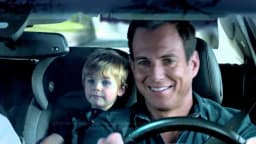
Tony Hrynchuk directed Rockstar Photo Op, with production handled by Fahrenheit Films. The directorial challenge was one of calibration: a parody of rock-star culture lives or dies on the precision of its visual references and the timing of its reveal, and the single-film format offered no room for a second attempt to land the central joke. Hrynchuk's approach leaned into the iconography of the classic rock documentary and backstage photograph — contexts the target audience would recognise immediately — and then populated those frames with the deliberately unheroic reality of a dealership visit.
Cinematography was handled by Ray Dumas, whose work on the film would have needed to balance the glossy, high-contrast aesthetic associated with genuine rock-star imagery against the mundane physical reality of the Jubilee Ford environment. That tension between the aspirational visual grammar and the ordinary setting is where the comedy lives, and it required Dumas to play both registers simultaneously rather than committing entirely to either parody or realism. Visual effects were provided by Cheshire Smile, adding a layer of post-production polish that reinforces the film's internal joke: this ordinary moment has been treated with the full apparatus of the celebrity image-making machine.
Creative direction was led by Drew Sebesteny, with account management handled by Christopher Kleiter. Sebesteny's creative concept — connecting celebrity fantasy with the specific, named reality of Jubilee Ford — reflects an understanding that local dealership advertising works best when it owns its particularity rather than imitating the scale of national campaigns. The decision to commit to full film production values for a dealership-level brief, rather than defaulting to lower-cost formats, signals confidence in the creative idea and distinguishes Rockstar Photo Op from the bulk of regional automotive advertising produced in Canada during this period.
No verified performance data for Rockstar Photo Op is publicly available. No confirmed sales lift, dealership traffic attribution, brand tracking uplift, or market share movement has been located in public sources, and the campaign does not appear in the verified award databases of Cannes Lions, the Effies, the One Show, D&AD, the Clios, or the Webby Awards, as confirmed by Clapboard's own research.
Structural analysis of the campaign nonetheless points to several factors likely to have driven effectiveness within its specific brief. The single-film format, combined with a clearly defined target — consumers already in or near Jubilee Ford's catchment area — reduces the distributional burden placed on a single asset and concentrates its impact. The self-aware parody mechanism generates the kind of earned attention that paid placement alone cannot manufacture: a viewer who laughs at themselves in the mirror of the film is a viewer who remembers the dealership name attached to that moment.
In the Canadian automotive context of 2011, where local dealership advertising frequently relied on price-led messaging and inventory promotion, a film that offered neither a price point nor a product specification represented a meaningful departure. The risk of that departure — alienating consumers seeking transactional information — was mitigated by the campaign's clarity of tone. Irreverence, when it is this specific and this well-produced, communicates confidence in the brand rather than evasion of it. The Clapboard Score of 63 out of 100 reflects this balance: a campaign with genuine creative distinction and a coherent strategic rationale, limited in its verifiable footprint by the nature of a single-asset, dealership-scale brief.
Rockstar Photo Op is a 2011 Canadian automotive film campaign created by Kinetic for Jubilee Ford. It uses self-aware rock-star parody to make a dealership visit feel like a celebrity moment. The campaign consists of one film asset archived in September 2011 and targets consumers who imagine themselves as rock stars.
Kinetic created Rockstar Photo Op for Ford Canada in 2011. The film was directed by Tony Hrynchuk and produced by Fahrenheit Films. Creative direction was led by Drew Sebesteny, cinematography by Ray Dumas, visual effects by Cheshire Smile, and account management by Christopher Kleiter.
Rockstar Photo Op was created specifically for Jubilee Ford, a named Canadian dealership. The campaign positioned a routine dealership visit as an aspirational rock-star experience, distinguishing it from national Ford Canada advertising by focusing on a single, locally identified retail destination.
Rockstar Photo Op does not appear in the verified award records of Cannes Lions, the Effies, the One Show, D&AD, the Clios, or the Webby Awards, according to Clapboard's research. The campaign earned a Clapboard Score of 63 out of 100, reflecting its creative coherence within a dealership-scale brief.
Rockstar Photo Op inverts Ford Canada's earlier celebrity-endorsement model, most notably the Wayne Gretzky campaign reported by Strategy Online as debuting in November 2002 across national television and print. Rather than borrowing fame from a known figure, Rockstar Photo Op places the ordinary consumer inside the celebrity framework as its central joke.
.webp)
Creative Collaboration Platform: The Backbone of Modern Creative WorkWhat is a creative collaboration platform?Clapboard defines a creative collaboration platform as the operational core for today’s distributed creative teams. This is not a collection of digital collaboration tools stitched together; Clapboard’s system


Understanding the Creative Production MarketplaceWhat is a Creative Production Marketplace?Clapboard defines a creative production marketplace as a structured ecosystem where brands, agencies, and production talent converge to execute video, advertising, and branded content at scale. Unlike the legacy agency or freelanREAD FULL ARTICLE

The Urgent Need for a Creative Production Operating SystemWhy Traditional Creative Production Models Break DownClapboard sees the creative production landscape shifting under pressure. Content velocity is no longer a buzzword—it’s a mandate. Modern advertising demands relentless output across dozens of channels, each wREAD FULL ARTICLE