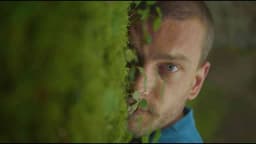
Garage Museum of Contemporary Art launched 'The Country You've Never Seen Before' in March 2017, using explorer Fedor Konyukhov to promote the first Garage

Garage Museum of Contemporary Art Reframes Russia as Undiscovered Territory
Garage Museum of Contemporary Art launched 'The Country You've Never Seen Before' on 6 March 2017, a film campaign created by agency Possible in Russia, positioning the inaugural Garage Triennial of Russian Contemporary Art as an invitation to discover a nation most Russians had never truly encountered through the lens of contemporary art.
The campaign's central proposition was both literal and conceptual. Russia, the world's largest country by land mass, contained multitudes of artistic voices that remained invisible to mainstream audiences. The Garage Triennial brought together 68 artists and artist groups drawn from more than 40 Russian cities, and the campaign architecture reflected that geographic ambition directly. A dedicated website allowed users to book tours corresponding to each of those cities, with every tour priced at the equivalent of an exhibition ticket, binding the act of cultural discovery to the act of physical travel.
In Russia, where contemporary art institutions have historically concentrated their programming and prestige in Moscow and Saint Petersburg, this campaign represented a deliberate reorientation. Tour dates were aligned precisely with the Triennial's run, ensuring that the digital activation and the physical exhibition existed as a single, integrated experience rather than parallel promotional streams. People who booked tours on opening day received notifications that connected their journey to the broader cultural event, creating a moment of shared arrival across the country.
The campaign sits within the Travel and Leisure category and operates through a single film asset, yet its strategic reach extended well beyond a conventional museum advertisement. It addressed leisure, recreation, narrative, and national identity simultaneously, making Garage Museum of Contemporary Art not merely a destination but a reason to see Russia itself differently. Clapboard awarded the campaign a score of 61 out of 100.
Possible identified a tension at the heart of Russian cultural life in 2017. The country's contemporary art scene was geographically dispersed yet institutionally centralised, meaning audiences in Moscow and beyond had limited awareness of the creative output emerging from regional cities. The Garage Triennial of Russian Contemporary Art was designed to correct that imbalance, and the campaign strategy translated that curatorial intent into consumer behaviour by framing art tourism as a form of genuine exploration.
The choice to use the language of travel and discovery was not incidental. In Russia, domestic tourism had been gaining renewed attention as international travel became more complicated by currency pressures and geopolitical context in the mid-2010s. By positioning the Triennial's reach across more than 40 Russian cities as a touring proposition, the campaign gave leisure-oriented audiences a framework for engagement that felt accessible and adventurous rather than rarefied or institutional.
Globally, the museum sector in 2017 was navigating mixed attendance signals. According to CNN, the top twenty museums worldwide received approximately 108 million visits in 2017, with attendance among that group growing by only 0.2 percent year over year. The Louvre recorded 8.1 million visitors in 2017, up 14 percent from 2016, according to Presse Louvre, reflecting the recovery of Paris tourism following the terror attacks of the previous years. Against this backdrop, institutions outside the established global canon faced pressure to articulate distinctive value propositions. Garage Museum of Contemporary Art responded by competing not with the Tretyakov Gallery or international blockbusters but with the idea of Russia itself as an unseen place. The Tretyakov Gallery, one of Russia's most prominent art institutions, represents the kind of canonical domestic competitor against which Garage consistently positioned its more contemporary, outward-facing identity.
Fedor Konyukhov anchors the campaign's creative identity. Konyukhov is Russia's most celebrated living explorer and adventurer, a figure who has circumnavigated the globe solo, crossed the Atlantic by rowboat, and ascended the world's highest peaks, making him a culturally legible embodiment of the campaign's thesis that Russia contains territories yet to be fully known, according to garagemca.org. His presence transforms the film from a museum advertisement into something closer to a documentary provocation, lending the proposition that Russia remains undiscovered a credibility that no anonymous narrator or invented character could supply.
The creative team at Possible built the campaign around this casting decision with deliberate economy. The film format, the campaign's sole media asset, carries the entire argumentative and emotional weight of the activation. Rather than fragmenting the message across multiple executions, the agency concentrated its creative energy into a single narrative object. According to Tagline Ru, the campaign was developed under the leadership of chief creative officer Vladimir Garev, with creative direction by Artem Filimonov and Ekaterina Antipova. The creative was handled by Mikhail Sinelshchikov, with Roman Antonov serving as art director, as documented by clapboard.com.
The visual and narrative logic of the film mirrors the Triennial's own structure. Just as the exhibition assembled 68 artists from across Russia into a single curatorial argument, the film uses Konyukhov's explorer identity to propose that the country's breadth is itself the subject. The tone avoids institutional reverence, leaning instead toward the register of adventure and recreation, which positioned Garage Museum of Contemporary Art as a cultural entry point for audiences who might not self-identify as contemporary art visitors. Production credits beyond the named creative team are not fully documented in public sources.
No independently verified audience or box-office performance data for 'The Country You've Never Seen Before' is publicly available through named sources at the level of campaign-specific metrics such as film views, website bookings completed, or tour uptake figures. What the structural evidence does confirm, according to tagline.ru and garagemca.org, is that the campaign was live and operationally active from 6 March 2017, with Garage publishing documentation of the Fedor Konyukhov element on 13 March 2017, indicating a sequenced release strategy designed to sustain attention across the Triennial's opening period.
The campaign's effectiveness can be assessed structurally on several dimensions. The mechanic of pricing tours at the cost of an exhibition ticket created a direct, measurable conversion pathway from digital engagement to cultural participation, linking leisure intent to Garage Museum of Contemporary Art's core attendance objective. The alignment of tour dates with Triennial dates eliminated friction between discovery and action, a design choice that reflects sound understanding of how cultural consumers move from awareness to commitment.
The use of Fedor Konyukhov as the campaign's public face provided earned media potential that a purely institutional film would not have generated. As one of Russia's most recognisable public figures in the domain of exploration and adventure, his association with the Garage Triennial extended the campaign's reach into audiences with strong leisure and travel interests rather than pre-existing contemporary art engagement. The campaign's Clapboard Score of 61 out of 100 reflects a creative execution that is strategically coherent and culturally grounded, though limited in verifiable performance evidence and constrained to a single media asset.
'The Country You've Never Seen Before' is a 2017 film campaign created by agency Possible for Garage Museum of Contemporary Art in Russia. It promoted the inaugural Garage Triennial of Russian Contemporary Art by positioning Russia's 40-plus participating cities as undiscovered destinations, using explorer Fedor Konyukhov as its central figure.
Fedor Konyukhov is Russia's most prominent living explorer and adventurer, known for solo circumnavigations and oceanic crossings. Garage Museum featured him because his identity as a discoverer of unknown territories directly embodied the campaign's argument that Russia itself remained unseen, lending the proposition credibility and extending its reach to leisure and travel audiences.
The Garage Triennial was the first major survey exhibition of its kind, assembling 68 artists and artist groups from more than 40 Russian cities under the Garage Museum of Contemporary Art. It launched on 6 March 2017 in Russia and was designed to surface regional contemporary art that mainstream cultural institutions had not previously brought into wide visibility.
A campaign website allowed users to book tours representing the more than 40 Russian cities featured in the Garage Triennial. Each tour was priced at the equivalent of an exhibition ticket, and tour dates aligned with the Triennial's run. People who booked on opening day received notifications connecting their journey to the exhibition's launch, according to tagline.ru.
Possible, a Moscow-based agency, created the campaign. The creative team included chief creative officer Vladimir Garev, creative directors Artem Filimonov and Ekaterina Antipova, creative Mikhail Sinelshchikov, and art director Roman Antonov, as documented by clapboard.com and tagline.ru. The campaign launched in Russia in March 2017.
Garage Museum of Contemporary Art's 2017 campaign received a Clapboard Score of 61 out of 100. The score reflects a campaign that is strategically coherent and culturally well-grounded, using Fedor Konyukhov's explorer identity to genuine effect, while being constrained by its reliance on a single film asset and limited verifiable performance data.
.webp)
Creative Collaboration Platform: The Backbone of Modern Creative WorkWhat is a creative collaboration platform?Clapboard defines a creative collaboration platform as the operational core for today’s distributed creative teams. This is not a collection of digital collaboration tools stitched together; Clapboard’s system


Understanding the Creative Production MarketplaceWhat is a Creative Production Marketplace?Clapboard defines a creative production marketplace as a structured ecosystem where brands, agencies, and production talent converge to execute video, advertising, and branded content at scale. Unlike the legacy agency or freelanREAD FULL ARTICLE

The Urgent Need for a Creative Production Operating SystemWhy Traditional Creative Production Models Break DownClapboard sees the creative production landscape shifting under pressure. Content velocity is no longer a buzzword—it’s a mandate. Modern advertising demands relentless output across dozens of channels, each wREAD FULL ARTICLE