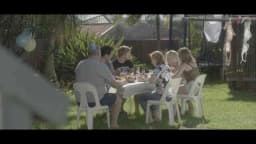
Granada C.F. and agency Tino París launched a film campaign in Spain in January 2013 that reframed football attendance as a defining, once-in-a-lifetime

Granada C.F. and Tino París Craft a Film That Puts the Fan at the Heart of the Club
Granada C.F.'s 2013 film campaign, "The day to live up to the rest of your days," produced by agency Tino París and released in Spain in January 2013, positions a single visit to the Estadio Nuevo Los Cármenes as an emotionally irreversible experience — a moment so charged with identity and belonging that it recalibrates every other memory a supporter holds.
The campaign sits squarely within the recreation and leisure sector, functioning simultaneously as sports marketing and destination experience communication. Granada C.F., a club whose identity is inseparable from the city of Granada in Andalusia, uses the film format to speak directly to the emotional architecture of fandom. The campaign's single media asset — a short-form film — carries the full weight of the brief: to make a prospective or lapsed supporter feel that attending a Granada C.F. match is not merely a leisure activity but a threshold moment, a before-and-after in personal history.
In Spain, where football occupies a structural role in regional and civic identity, this framing carries particular resonance. The campaign was published during a period when Granada C.F. was competing in La Liga, the top tier of Spanish football, having secured promotion in 2011, according to En Wikipedia. The club's presence in the Primera División gave the campaign a rare window: a team with deep local roots now playing against the country's most storied sides, offering supporters an experience that combined underdog pride with top-flight spectacle. The Clapboard Score for this campaign is 52 out of 100, reflecting its creative ambition within modest production scale and limited documented reach.
Granada C.F. built its early 2010s brand communication around the platform known as "Matagigantes" — the giant-killer — a positioning that acknowledged the club's underdog status in La Liga while transforming that status into a source of pride and collective identity. This strategic stance shaped the emotional logic of "The day to live up to the rest of your days," anchoring the campaign in heritage, supporter experience, and the particular dignity of supporting a club that fights above its weight.
The strategic context in Spain during early 2013 was defined by a tension between economic contraction and the enduring resilience of live sports attendance. Spain received approximately 57.5 million international tourists in 2012, according to Statista, and the country's tourism strategy for the 2012–2015 period emphasised experience-led promotion and product diversification, as documented by research archived on SciSpace. Within that environment, a football club positioned as a cultural and emotional destination — rather than simply a sporting fixture — could function as a genuine leisure proposition for both domestic audiences and inbound visitors drawn to Andalusia.
The competitive landscape for fan attention in Spanish football in this period was dominated overwhelmingly by Real Madrid and FC Barcelona, whose combined global media presence dwarfed all other clubs in La Liga. For a club of Granada C.F.'s scale, competing for mindshare on rational or performance-based grounds was structurally impossible. Tino París responded by relocating the competition entirely: the campaign does not argue that Granada C.F. is as glamorous as its rivals, but that the experience of belonging to Granada C.F. is categorically different — more intimate, more personal, and ultimately more defining. This is a classic challenger-brand move, executed with emotional rather than functional language.
Aléx Juliá directed the film for production company Igloo, working from a script developed by creative director and copywriter David Titos, with art direction by Iván Miguel of agency Tino París, Madrid. The creative team's decision to work in the film format — rather than print, outdoor, or digital display — signals a deliberate commitment to emotional duration: film allows a narrative to build across time, accumulating feeling in a way that static formats cannot.
The campaign's title, "The day to live up to the rest of your days," operates as both headline and thesis. It is a phrase constructed around inversion: rather than the cliché of a day one will remember forever, it proposes a day against which all subsequent days will be measured. That grammatical reversal — the future looking back at the present — gives the campaign its emotional specificity. It is not nostalgia; it is anticipation of nostalgia, which is a more sophisticated and more motivating register for a fan-recruitment or fan-reactivation brief.
David Titos, credited as both creative director and copywriter on this production, brought to the project a sensibility consistent with the broader Tino París approach to sports and culture clients: rooted in human truth, resistant to the hyperbolic visual grammar that dominates much of football advertising. Iván Miguel's art direction, working in concert with Juliá's direction, appears to have prioritised authenticity of setting and character over production spectacle — a choice that aligns with the Matagigantes platform's core positioning. Production credits for the full technical crew beyond these key roles are not publicly documented.
No verified performance data for "The day to live up to the rest of your days" is publicly available. No verifiable trade press reviews of the campaign appear in Campaign, Ad Age, Adweek, The Drum, or Contagious, and no documented social media reaction data has been located across Twitter/X, Reddit, LinkedIn, or YouTube.
What can be assessed is the campaign's structural effectiveness. The single-asset film format, deployed in January 2013 at the midpoint of Granada C.F.'s La Liga season, targets a decision window when supporters who have not yet attended a home match in that campaign cycle are most likely to be considering it. The emotional mechanism — positioning attendance as a life-defining threshold rather than a discretionary leisure purchase — is structurally well-suited to overcoming the inertia of lapsed or prospective fans.
The broader Tino París and Granada C.F. creative partnership did produce documented recognition: a related campaign in the same heritage-led direction, "El día más feliz," won a Sol de Bronce award, according to Clapboard's editorial records. That award provides an independent signal of creative quality within the Iberian and Latin American advertising community, suggesting the Granada C.F. and Tino París collaboration was regarded by peers as producing work of genuine craft merit. The Clapboard Score of 52 out of 100 for this specific film reflects its creative coherence and tonal clarity, offset by the absence of verifiable reach data and the inherently limited distribution footprint of a single-asset regional campaign.
Granada C.F.'s 2013 film positions a single match-day attendance as a life-defining emotional threshold. Created by agency Tino París and directed by Aléx Juliá, the campaign targets lapsed and prospective supporters in Spain, framing the club experience as categorically more personal and meaningful than any rival football offering.
The campaign was created by Tino París, the Madrid-based advertising agency. Creative director and copywriter David Titos led the concept, with art direction by Iván Miguel. Director Aléx Juliá helmed the film for production company Igloo. All credits are documented in Clapboard's campaign archive records.
Granada C.F. operated under the Matagigantes platform — meaning giant-killer — during this period. The positioning acknowledged the club's underdog status in La Liga and transformed it into a source of supporter pride, shaping the emotional logic of the 2013 Tino París film campaign.
A related Granada C.F. campaign by Tino París titled "El día más feliz" won a Sol de Bronce award, as recorded in Clapboard's editorial records. No specific award documentation for "The day to live up to the rest of your days" itself is publicly verified in available trade sources.
The film operates within Spain's experience-led leisure sector. Spain received approximately 57.5 million international tourists in 2012, according to Statista, and national tourism strategy in that period emphasised experiential promotion. Granada C.F.'s positioning as an emotional destination aligns directly with that broader market shift in Spain.
.webp)
Creative Collaboration Platform: The Backbone of Modern Creative WorkWhat is a creative collaboration platform?Clapboard defines a creative collaboration platform as the operational core for today’s distributed creative teams. This is not a collection of digital collaboration tools stitched together; Clapboard’s system


Understanding the Creative Production MarketplaceWhat is a Creative Production Marketplace?Clapboard defines a creative production marketplace as a structured ecosystem where brands, agencies, and production talent converge to execute video, advertising, and branded content at scale. Unlike the legacy agency or freelanREAD FULL ARTICLE

The Urgent Need for a Creative Production Operating SystemWhy Traditional Creative Production Models Break DownClapboard sees the creative production landscape shifting under pressure. Content velocity is no longer a buzzword—it’s a mandate. Modern advertising demands relentless output across dozens of channels, each wREAD FULL ARTICLE