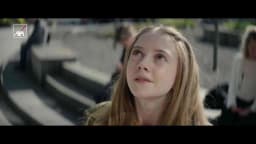
GRDF and Rosa Paris launched 'The Big Jump' in France on April 28, 2024, starring Jamel Debbouze to drive public awareness of green gas and decarbonization.

GRDF Bets on Jamel Debbouze to Make Green Gas Unmissable in France
"The Big Jump" is a 2024 public service advertising campaign by French gas infrastructure operator GRDF and agency Rosa Paris, starring comedian Jamel Debbouze, designed to raise awareness of green gas as a credible tool for decarbonization and carbon neutrality among individuals, businesses, and industries across France.
Launched on April 28, 2024, the campaign positions green gas not as a niche technical subject but as a mainstream energy solution with immediate relevance to France's path toward energy independence. The campaign was produced in partnership with Coénove, France Gaz Renouvelables, and Professionnels du Gaz — a coalition that signals genuine sector-wide commitment rather than a single operator acting alone. The campaign's creative hook is deceptively simple: Debbouze arrives on set believing he is shooting a conventional commercial and discovers, for the first time in front of the camera, that the agreed stunt involves leaping off a diving board positioned above a cliff. The escalating comic tension becomes a structural metaphor for the boldness required to accelerate France's energy transition.
In France, the case for green gas rests on tangible infrastructure. The 674 methanation plants installed across the country carry a combined production capacity of 12 TWh per year, equivalent to the annual output of more than two nuclear reactors. Green gas is produced locally from agricultural waste and livestock emissions, giving it a supply-chain logic that connects rural French producers directly to the national energy grid. The campaign runs across television, video-on-demand, digital, social media, and 360-degree formats, with a flagship three-minute long-form film supported by 45-, 30-, 20-, and 15-second edits, two of which focus specifically on green gas equipment and applications. The production itself was designed to meet eco-responsible production criteria, an alignment between message and method that reinforces the credibility of the broader argument GRDF and its partners are making to the French public.
GRDF operates France's largest gas distribution network. Reaching general consumers with a technically complex energy subject requires translating infrastructure data into emotional relevance, and that translation is the strategic core of "The Big Jump."
The campaign responds to a specific tension in the French energy conversation. As France works toward carbon neutrality, gas infrastructure faces reputational pressure from electrification advocates, while simultaneously presenting an underappreciated opportunity through biomethane and green gas production. Competitors in the energy transition space, including electricity-led platforms and heat-pump manufacturers whose messaging dominates home-renovation advertising, have made electrification synonymous with sustainability in the minds of many French consumers. GRDF and Rosa Paris respond by occupying a gap: demonstrating that existing gas networks can carry renewable energy and that green gas already powers meaningful portions of the French energy mix.
The global biomethane market was valued at between approximately 4.7 and 8.0 billion US dollars in 2024, according to estimates from Grand View Research and Cedigaz. Europe remained the leading global production region in 2024, generating an estimated 6 billion cubic metres of renewable natural gas, up 21 percent year on year, according to Cedigaz. France's 674 methanation plants are a material contributor to that European total. The campaign's choice of Jamel Debbouze as spokesperson reflects a precise audience calculation. As reported by CB News on May 1, 2024, Rosa Paris Vice-President Delphine Drutel described the campaign's ambition as wanting to "frapper un grand coup" — to strike a major blow — in public consciousness. That ambition demands a figure with cross-demographic appeal, and Debbouze, best known internationally for his Oscar-nominated role in Amélie, carries recognition that spans age groups and media habits across France.
The creative execution of "The Big Jump" operates on a single sustained comic premise. Jamel Debbouze, an actor who rarely appears in advertising, plays a version of himself arriving to shoot a commercial for green gas, only to learn mid-briefing that the agreed performance involves jumping from a dangerously elevated diving board over a cliff edge. The comedy derives from the gap between expectation and reality — a structural joke that also carries the campaign's core argument: doing something genuinely significant for France's energy future requires a leap of commitment.
The film was directed by Traktor, represented by Stink Films, a directing collective with an established track record in high-production television commercials across Europe. The three-minute long-form version sustains a full comedic arc, giving the star room to deploy the improvisational energy and generous physicality that defines his stage and screen persona. The shorter edits — 45, 30, and 20 seconds — distil the premise without losing its punchline logic, while the two dedicated 15-second films shift register entirely to focus on green gas equipment and practical applications, providing informational ballast to the entertained viewer.
Copywriter Louise Mussot and Art Director Cerise Leclère contributed to the creative team at Rosa Paris, working under Co-founder Gilles Fichteberg, who described the approach as building something "ambitious with entertaining and educational content" drawn from "the best: directors, ambassador, production and partners," as reported by packshotmag.com. The production was designed to meet eco-responsible production standards — a decision that reflects the growing expectation, particularly in French public service advertising, that the method of making a campaign should be consistent with its message. The result is a film that uses spectacle and laughter to lower the entry barrier into a conversation about methane plants, carbon neutrality, and energy independence that most public utility campaigns struggle to make accessible.
No independently verified audience reach or recall figures for "The Big Jump" are publicly available at the time of writing. What can be assessed is the structural effectiveness of the campaign's design against its stated objective of raising awareness of green gas among individuals, businesses, and industries across France.
The campaign's distribution architecture is built for scale. Television and video-on-demand placement in France puts the long-form film in front of broad, mixed-demographic audiences, while digital and social media channels allow the 15- and 20-second cuts to reach younger viewers and those who have already reduced linear television consumption. The 360-degree format commitment signals an investment in consistent message exposure across touchpoints rather than a single-channel bet. The choice of Jamel Debbouze provides earned media value that is structurally difficult to quantify but historically significant: as reported by packshotmag.com, his participation was itself treated as news within French media, extending the campaign's reach beyond paid placements. The coalition structure — bringing together GRDF, Coénove, France Gaz Renouvelables, and Professionnels du Gaz — means the campaign's distribution costs and credibility are shared across the sector, increasing the likelihood of sustained amplification. Rosa Paris's roughly seven-year agency relationship with GRDF, as reported by CB News, suggests strategic continuity that tends to produce more coherent long-term audience positioning than single-campaign interventions. The Clapboard Score for "The Big Jump" is 61 out of 100. That rating reflects a campaign with genuine creative ambition and smart casting that nonetheless leaves some of its educational potential unrealised within the shorter edits, where the comedic framing occasionally crowds out the informational content about green gas, decarbonization, and France's energy transition.
"The Big Jump" is a 2024 public service campaign by GRDF and Rosa Paris starring Jamel Debbouze. It uses a comedic high-dive premise to raise awareness of green gas as a tool for decarbonization and carbon neutrality in France. The campaign launched on April 28, 2024, across television, digital, and social media channels.
The film was directed by Traktor, represented by Stink Films. Traktor is a directing collective known for high-production European commercials. The campaign's creative team at Rosa Paris included Copywriter Louise Mussot and Art Director Cerise Leclère, working under Co-founder Gilles Fichteberg, as reported by packshotmag.com.
Jamel Debbouze carries cross-demographic recognition in France, partly from his Oscar-nominated role in Amélie. He rarely appears in advertising, which gave the campaign inherent news value. Rosa Paris Vice-President Delphine Drutel described the ambition as wanting to strike a major blow in public consciousness, as reported by CB News on May 1, 2024.
France operates 674 methanation plants with a combined production capacity of 12 TWh per year, equivalent to more than two nuclear reactors' annual output. This infrastructure grounds the campaign's claim that green gas is already a functioning part of France's energy mix, not a future aspiration, supporting the case for energy independence and decarbonization.
"The Big Jump" receives a Clapboard Score of 61 out of 100. The rating acknowledges strong creative ambition, effective casting, and a clear public service objective around green gas awareness in France, while noting that the shorter edits sometimes allow comedy to crowd out the educational content on decarbonization and energy transition.
The campaign was produced in partnership with Coénove, France Gaz Renouvelables, and Professionnels du Gaz alongside GRDF and agency Rosa Paris. This sector-wide coalition structure distributed both the production costs and institutional credibility of the campaign, strengthening its authority as a public service message about France's energy transition and carbon neutrality goals.
.webp)
Creative Collaboration Platform: The Backbone of Modern Creative WorkWhat is a creative collaboration platform?Clapboard defines a creative collaboration platform as the operational core for today’s distributed creative teams. This is not a collection of digital collaboration tools stitched together; Clapboard’s system


Understanding the Creative Production MarketplaceWhat is a Creative Production Marketplace?Clapboard defines a creative production marketplace as a structured ecosystem where brands, agencies, and production talent converge to execute video, advertising, and branded content at scale. Unlike the legacy agency or freelanREAD FULL ARTICLE

The Urgent Need for a Creative Production Operating SystemWhy Traditional Creative Production Models Break DownClapboard sees the creative production landscape shifting under pressure. Content velocity is no longer a buzzword—it’s a mandate. Modern advertising demands relentless output across dozens of channels, each wREAD FULL ARTICLE