 ARCHIVE
Punk - Legal & General | Clapboard Ad Archive
Legal & General’s Punk campaign, launched in the United Kingdom in 2018 with JWT, stands as a...
ING Brings Rembrandt's Night Watch to Life in Breda
ING's 'The Night Watch' is an ambient campaign created by JWT Amsterdam in April 2013 that sent approximately 30 performers dressed as the militia figures from Rembrandt's iconic painting into a Dutch shopping centre to announce the Rijksmuseum's reopening and ING's sponsorship of free admission during its first twelve hours back.
The campaign launched in The Netherlands on April 5, 2013, centred on a live flash mob staged at the Barones shopping centre in Breda. Performers appeared dressed as members of Captain Frans Banninck Cocq's civic guard — the figures immortalised in Rembrandt van Rijn's seventeenth-century masterpiece — recreating the composition of the painting in a contemporary retail environment. The core message, 'Our Heroes are Back', connected the return of a national cultural treasure to ING's direct role in making that return accessible to the Dutch public free of charge for half a day.
The activation sat within a broader campaign architecture that extended beyond the flash mob itself. As reported by LBB Online, the campaign included a filmed record of the stunt, a newspaper advertisement, an online game, and an internal invitation component, giving the single ambient moment multiple distribution channels across the Netherlands. The Rijksmuseum had been closed for a decade-long renovation, and ING, as a long-standing sponsor of the museum, used the reopening as a culturally significant platform to demonstrate its civic commitment rather than its product range. The Clapboard Score for this campaign stands at 82 out of 100, reflecting strong creative ambition and cultural resonance within the ambient format.
ING identified the Rijksmuseum reopening as a rare cultural flashpoint in the Netherlands. The museum had been closed for ten years, and public anticipation for the return of its collection — including Rembrandt's Night Watch, one of the most recognisable paintings in Western art — gave ING a moment of genuine national significance to anchor its sponsorship message.
The strategic logic was precise. Rather than advertising a financial product, JWT Amsterdam positioned ING as the institution that removed the barrier between Dutch citizens and their most celebrated cultural asset. Sponsoring free admission for the first twelve hours of reopening was a concrete, verifiable act of public generosity, and the 'Our Heroes are Back' message framed Rembrandt's figures as cultural heroes whose homecoming ING had helped enable. This moved the brand away from the functional territory of banking — interest rates, fees, digital services — and into the emotional territory of national pride and shared cultural ownership.
The choice of an ambient format in a busy shopping centre in Breda, rather than a capital-city venue, also carried strategic weight. Breda is not Amsterdam. Staging the flash mob there extended the campaign's geographic reach within the Netherlands and signalled that the Rijksmuseum's reopening was a moment for the whole country, not only the cultural institutions of the capital. In the Dutch banking market of 2013, where retail banks competed on broadly similar product propositions, as reported by LBB Online, differentiation through cultural sponsorship offered ING a distinct and difficult-to-replicate positioning. The campaign's multi-channel extension — from live stunt to filmed content to press advertising — ensured the ambient activation reached audiences well beyond those present at the Barones shopping centre.
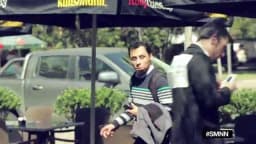
The creative execution of 'The Night Watch' rested on a disciplined act of visual translation. Approximately 30 performers, costumed as the militia members depicted in Rembrandt's painting, entered the Barones shopping centre in Breda and assembled into a living tableau that reproduced the composition of the original work. Shoppers encountered the scene without prior warning, experiencing the painting as a sudden, three-dimensional presence in an entirely everyday setting. The contrast between the seventeenth-century costuming and the contemporary retail environment was the creative engine of the piece.
The campaign was directed by Coen Stroeve, with creative direction by Bas Korsten of JWT Amsterdam. The creative team comprised Rik Eysink Smeets and Nick van Beijnen, with strategy led by Marcel de Jonge and media strategy by Simon van Oldenbeek. Production was handled by Brenninkmeijer and Isaacs. As reported by LBB Online, Jean-Pierre Kin also contributed to the production of the campaign. The involvement of a named director and a structured creative team gave the filmed record of the flash mob the production quality necessary to travel beyond the live event itself.
The decision to film the activation was as important as the activation itself. A flash mob that exists only in the memories of those present has a limited audience. By capturing the moment with sufficient production value to function as shareable content, JWT Amsterdam ensured that the creative idea could be distributed through online channels, amplifying the reach of a single live event across the Netherlands and, as reported by The Drum, drawing wider international attention to the campaign. The newspaper advertisement and online game added further layers to the campaign's presence, giving different audience segments multiple points of engagement with the same central idea.
No verified performance data for 'The Night Watch' campaign is publicly available in terms of reach figures, earned media value, or direct brand metric shifts. What can be assessed is the structural effectiveness of the campaign's design and the external recognition it generated.
The campaign operated across multiple formats simultaneously — live ambient activation, filmed content, press advertising, digital game, and internal communications — which gave a single creative idea significant multiplier potential within the Dutch market. The flash mob format, when filmed and distributed, has an established capacity to generate organic sharing, and the cultural weight of the Rijksmuseum reopening provided an inherently newsworthy context that reduced the dependence on paid media to achieve reach.
As reported by LBB Online and The Drum, the campaign attracted coverage from international advertising press, indicating that the creative idea travelled beyond the Netherlands and generated industry-level attention. This kind of trade press visibility is a meaningful proxy for creative effectiveness in the ambient category. The campaign's connection to the Rijksmuseum — one of the most visited museums in Europe — also meant that ING's sponsorship message was embedded within an event of genuine public significance in the Netherlands, rather than a manufactured brand occasion. The structural integrity of the campaign, its cultural specificity, its production discipline, and its multi-channel architecture are the primary indicators of its effectiveness in the absence of published performance metrics.
ING's 'The Night Watch' was an ambient campaign launched in the Netherlands in April 2013 to mark the Rijksmuseum's reopening after a ten-year renovation. JWT Amsterdam staged a flash mob of approximately 30 performers costumed as Rembrandt's militia in a Breda shopping centre, promoting ING's sponsorship of free museum admission for twelve hours.
JWT Amsterdam created the campaign for ING. Creative direction was by Bas Korsten, the creative team comprised Rik Eysink Smeets and Nick van Beijnen, and the activation was directed by Coen Stroeve. Production was handled by Brenninkmeijer and Isaacs, with strategy by Marcel de Jonge and media strategy by Simon van Oldenbeek.
The flash mob took place at the Barones shopping centre in Breda, in the Netherlands, on April 5, 2013. Breda's location outside Amsterdam extended the campaign's geographic reach within the Netherlands, reinforcing that the Rijksmuseum's reopening was a national event rather than a capital-city occasion.
The campaign message was 'Our Heroes are Back.' As reported by LBB Online, this line connected Rembrandt's returning civic guard figures to the Rijksmuseum's reopening after a decade of renovation, with ING positioned as the sponsor enabling free public access during the first twelve hours after the museum reopened.
As reported by LBB Online, the campaign extended across a filmed record of the flash mob, a newspaper advertisement, an online game, and an internal invitation component. This multi-format structure allowed a single live ambient moment to reach audiences across the Netherlands who were not present at the Barones shopping centre.
No verified award wins for 'The Night Watch' campaign are publicly documented in available sources. The campaign did attract coverage from international advertising press, including LBB Online and The Drum, indicating that the work received meaningful industry recognition beyond the Dutch market where it originally aired in 2013.
.webp)
Creative Collaboration Platform: The Backbone of Modern Creative WorkWhat is a creative collaboration platform?Clapboard defines a creative collaboration platform as the operational core for today’s distributed creative teams. This is not a collection of digital collaboration tools stitched together; Clapboard’s system


Understanding the Creative Production MarketplaceWhat is a Creative Production Marketplace?Clapboard defines a creative production marketplace as a structured ecosystem where brands, agencies, and production talent converge to execute video, advertising, and branded content at scale. Unlike the legacy agency or freelanREAD FULL ARTICLE

The Urgent Need for a Creative Production Operating SystemWhy Traditional Creative Production Models Break DownClapboard sees the creative production landscape shifting under pressure. Content velocity is no longer a buzzword—it’s a mandate. Modern advertising demands relentless output across dozens of channels, each wREAD FULL ARTICLE