 ARCHIVE
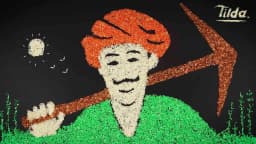
Salute to Farmers - Tilda India | Clapboard Ad Archive
Tilda India's "Salute to Farmers" campaign serves as a poignant tribute to the agricultural...
KFC Singapore Goes Unapologetically Meat-First with SorryNotSorry
KFC Singapore's #SorryNotSorry campaign is a June 2021 social and digital film series created by The Secret Little Agency that launched the Cheesy Zinger Double Down by positioning KFC as unapologetically indulgent, rejecting health-conscious food trends with the declaration that no vegetables would be found anywhere near the product.
The campaign launched on 23 June 2021 in Singapore, introducing a product built around crispy turkey bacon, sliced cheese, KFCheese sauce, and two signature Zinger fillets — no bun, no greens, no compromise. Alongside the Cheesy Zinger Double Down, a limited-edition Triple Down variant ran exclusively from 24 June to 3 July 2021, a ten-day window designed to concentrate consumer urgency and drive immediate action through the KFC app.
The campaign comprised four short films: "Sorry Buns," "Sorry Diets," "Sorry Veggies," and "Less Talk, More Meat." Each film addressed a different category of culinary convention that KFC was explicitly refusing to observe. The creative system was unified by the hashtag #SorryNotSorry and supported by companion tags including #CheesyZingerDoubleDown, #ZingerDoubleDown, and #KFCSG, building a social layer that invited the KFC fried family of fans into the brand's defiant posture. The Secret Little Agency had been appointed KFC Singapore's lead brand and creative agency in September 2020 following a competitive pitch involving four other agencies, as reported by Marketing Interactive, and #SorryNotSorry represented the agency's first major product campaign under that remit. The integrated brief spanned branding, design, and communications, according to staging.thesecretlittleagency.com, giving the agency latitude to develop a tonal identity rather than a single executional idea.
KFC Singapore identified a specific consumer tension. Younger adult audiences in Singapore were increasingly exposed to health-forward food messaging, plant-based alternatives, and clean-eating discourse — yet a significant segment of those same consumers actively sought permission to indulge without guilt. The #SorryNotSorry campaign addressed that tension directly, offering defiance as a lifestyle signal rather than merely a product claim.
The strategic insight centred on what The Secret Little Agency's General Manager Min Ng described as empowering fans to say #SorryNotSorry to the health police, as reported by Little Black Book. This framing transformed a product launch into a cultural stance. The messaging — "meat-on-meat-on-meat" and "more is definitely more" — rejected the moderate language common to fast-food category communications and instead leaned into excess as the brand's honest proposition.
The competitive context in Singapore's food-service sector made this positioning meaningful. In 2021, KFC held approximately five percent of Singapore's food-service market, according to goigi.com, operating in a crowded quick-service restaurant environment where McDonald's and Burger King pursued broader demographic appeal with more tempered messaging. By contrast, KFC Singapore used #SorryNotSorry to sharpen its relevance with a meat-loving consumer cohort willing to self-identify with the brand's unapologetic attitude. Singapore's online food-delivery market was also expanding during this period, which made the campaign's direct call-to-action through the KFC app a strategically sound channel choice aligned with shifting consumer ordering behaviour. Juliana Lim, Senior Director of Marketing and Food Innovation at KFC Singapore, stated that the brand was unafraid to push the needle and go beyond the expectations of its fans, as reported by campaignasia.com on 23 June 2021 — a declaration that framed #SorryNotSorry as brand philosophy, not product promotion.
The Secret Little Agency built the #SorryNotSorry creative system around a series of four short films. Each film carried its own target and its own comic logic, but all four spoke in the same voice: confident, direct, and entirely uninterested in moderation. "Sorry Buns" dismissed the conventional sandwich format. "Sorry Diets" confronted clean-eating culture head-on. "Sorry Veggies" addressed the absence of produce with theatrical finality. "Less Talk, More Meat" collapsed the entire campaign argument into four words.
The films were distributed through social and digital channels, as documented by adsoftheworld.com, making brevity and visual impact the primary craft considerations. The product itself — the Cheesy Zinger Double Down — functioned as its own hero visual. Turkey bacon, layered cheese, and the double Zinger fillet construction required no abstraction; the camera held on the stack and let the architecture speak. The tone throughout was playful rather than aggressive, which allowed the defiance to read as invitation rather than alienation.
Min Ng of The Secret Little Agency articulated the creative intention as wanting fans to feel empowered by the brand's position, as reported by lbbonline.com. That empowerment dynamic shaped the executional register: the films addressed the audience as co-conspirators in the rejection of dietary convention, not as passive recipients of a product message. Production credits for specific directors or cinematographers on the #SorryNotSorry films are not publicly documented. Campaign Asia published a review on 23 June 2021 stating the publication "heartily and hungrily approves" of the campaign's tone, and lbbonline.com described the work as a standout example of brand voice executed with consistency across a multi-film format.
No independently verified sales or reach metrics for the #SorryNotSorry campaign are publicly available at this time. What the public record does confirm is the campaign's reception among industry observers and the structural factors that gave it commercial potential.
Campaign Asia's review, published on the campaign's launch date of 23 June 2021, endorsed the work with the phrase "heartily and hungrily approves," a qualitative signal of creative effectiveness from a respected trade publication in the Singapore and Asia-Pacific market, as reported by campaignasia.com. The limited-edition Triple Down product ran for precisely ten days — 24 June to 3 July 2021 — a scarcity mechanic that, combined with app-exclusive ordering, created measurable conversion pressure without requiring above-the-line media spend to sustain it.
The campaign's structural effectiveness rests on three compounding elements. The hashtag system — #SorryNotSorry, #CheesyZingerDoubleDown, #ZingerDoubleDown — created a participatory layer that extended organic reach beyond paid distribution. The four-film architecture gave the campaign narrative depth unusual for a product-launch social campaign in the Food and Drink category. And the ten-day exclusivity window on the Triple Down concentrated consumer action within a defined period, a mechanism well-suited to Singapore's high mobile-commerce adoption environment. Taken together, these design choices reflect a campaign engineered for social amplification and app-driven conversion in equal measure. The Clapboard Score for #SorryNotSorry is not available at this time.
The #SorryNotSorry campaign is a June 2021 KFC Singapore product launch created by The Secret Little Agency. It introduced the Cheesy Zinger Double Down through four short films — "Sorry Buns," "Sorry Diets," "Sorry Veggies," and "Less Talk, More Meat" — distributed across social and digital channels with a bold, unapologetically meat-first brand message.
The Secret Little Agency created #SorryNotSorry for KFC Singapore. The agency was appointed KFC Singapore's lead brand and creative agency in September 2020 after a competitive pitch, as reported by marketing-interactive.com. General Manager Min Ng led the agency's strategic and creative direction for the campaign, according to lbbonline.com.
The campaign promoted the Cheesy Zinger Double Down, featuring turkey bacon, sliced cheese, KFCheese sauce, and two Zinger fillets with no bun. A limited Triple Down variant was available exclusively from 24 June to 3 July 2021, a ten-day window designed to drive urgency and app-based orders, as documented by adsoftheworld.com.
KFC Singapore used #SorryNotSorry to sharpen its identity among meat-focused consumers while competitors McDonald's and Burger King pursued broader appeal. KFC held approximately five percent of Singapore's food-service market in 2021, according to goigi.com, and the campaign's defiant tone was designed to make that segment more loyal rather than chase incremental reach.
The hashtag was built around playful defiance toward health-conscious food culture. The Secret Little Agency's Min Ng stated the goal was to empower fans to say #SorryNotSorry to the health police, as reported by lbbonline.com. The four-film series each targeted a different food convention — buns, diets, vegetables, and moderation — and invited audiences to self-identify with the brand's stance.
Industry reception was positive. Campaign Asia published a review on 23 June 2021 stating the publication "heartily and hungrily approves" of the campaign's tone, as reported by campaignasia.com. LBBOnline described the work as a standout example of consistent brand voice executed across a multi-film format, reflecting strong creative credibility for both KFC Singapore and The Secret Little Agency.
.webp)
Creative Collaboration Platform: The Backbone of Modern Creative WorkWhat is a creative collaboration platform?Clapboard defines a creative collaboration platform as the operational core for today’s distributed creative teams. This is not a collection of digital collaboration tools stitched together; Clapboard’s system


Understanding the Creative Production MarketplaceWhat is a Creative Production Marketplace?Clapboard defines a creative production marketplace as a structured ecosystem where brands, agencies, and production talent converge to execute video, advertising, and branded content at scale. Unlike the legacy agency or freelanREAD FULL ARTICLE

The Urgent Need for a Creative Production Operating SystemWhy Traditional Creative Production Models Break DownClapboard sees the creative production landscape shifting under pressure. Content velocity is no longer a buzzword—it’s a mandate. Modern advertising demands relentless output across dozens of channels, each wREAD FULL ARTICLE