March For Our Lives and McCann New York launched 'The Most Vicious Cycle' in October 2018 — a music video using a Rube Goldberg machine to drive young voter

March For Our Lives Turns Gun Violence Into a Rube Goldberg Machine
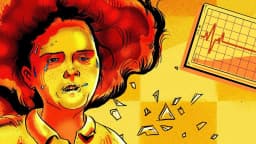
March For Our Lives launched 'The Most Vicious Cycle' in October 2018 — a music video directed by Ben Smith and produced by Mill+ for McCann New York — using a repeating Rube Goldberg machine as a visual metaphor for the unbroken cycle of gun violence in the United States, and urging young people to vote in the November 6 midterm elections to break it.
The campaign arrived at a moment of acute civic urgency. March For Our Lives was founded in 2018 in the immediate aftermath of the February 14 Parkland, Florida shooting at Marjory Stoneman Douglas High School, an event that galvanised a generation of student activists and reshaped the landscape of gun-law advocacy in the United States. By October, with midterm elections weeks away, the organisation and McCann New York chose not to issue another statement of grief but to convert that grief into electoral instruction. The film launched approximately three weeks before polling day, placing it squarely inside the final mobilisation window when persuadable young voters were most likely to be reached.
The mechanic is both literal and metaphorical. A Rube Goldberg machine — a chain-reaction contraption in which each element triggers the next — repeats endlessly on screen, mirroring the documentary reality that mass shootings in the United States produce political outrage, then legislative inaction, then the next mass shooting. The only interruption to that loop, the film argues, is a vote. Music anchors the emotional register: the song 'Safe,' performed by Kesha, Sage Sebert, and Chika, runs beneath the imagery, transforming a public interest argument into something closer to a cultural artefact. The campaign contains one media asset — the film itself — concentrating its entire argument into a single, shareable object designed for social distribution in the weeks preceding November 6, 2018.
 ARCHIVE
Voter mobilization among young Americans sat at the centre of this campaign's strategic architecture. As reported by shots in October 2018, only 28 percent of voters under 29 were planning to vote at the time the film launched — a figure that framed the entire creative challenge: the audience most affected by gun violence in the United States was also the audience least likely to participate in the electoral process that could change gun laws.
McCann New York had already established a creative relationship with March For Our Lives earlier in 2018 through the 'Price on Our Lives' campaign — a digital tool that allowed users to calculate the monetary value politicians placed on their constituents' lives based on connections to gun-lobby money. That earlier work operated in the domain of data and exposure. 'The Most Vicious Cycle' shifted register entirely, moving from information to emotion and from individual calculation to collective action. The two campaigns together represent a full-funnel public interest strategy: awareness and anger first, then directed civic behaviour.
The competitive context for gun-safety advocacy communications had changed dramatically by 2018. According to a Kantar Media and CMAG analysis cited by Giffords, gun-safety advocacy advertisements aired more than 102,000 times in 2018 — a 22-fold increase over 2014 levels. Candidate-related advertisements referencing guns rose sharply in the same period, according to Giffords, as organisations including Everytown for Gun Safety and Moms Demand Action expanded their media presence. In that crowded landscape, McCann's decision to produce a music video rather than a conventional public service announcement was a deliberate act of differentiation: it competed for attention not against other advocacy spots but against entertainment content, targeting young Americans in the digital spaces where they actually spent time.
Director Ben Smith, who also served as creative director on the project, built the film's visual logic around the Rube Goldberg machine as a formal device that does not merely illustrate cyclical gun violence but enacts it. Each element in the chain triggers the next with the inevitability of mechanism rather than accident — a structural argument that legislative inaction is not random but systemic, and that the cycle can only be interrupted by external force: in this case, a vote cast before November 6, 2018.
Production was executed by Mill+ and The Mill, New York, with post-production, editing, and visual effects all handled within The Mill. Editor Ryan McKenna shaped the film's rhythm, and Sound Lounge delivered the sound design that holds the mechanical imagery in tension with the song. Additional post-production and Foley work was carried out by Alchemy Post Sound. The concentration of creative and technical disciplines within a single production ecosystem — Mill+ directing, The Mill editing and VFX, Sound Lounge audio — allowed for a tightly controlled aesthetic in which every sonic and visual element reinforced the central metaphor.
The music is not incidental. 'Safe,' performed by Kesha, Sage Sebert, and Chika, functions as both emotional counterweight and cultural bridge, connecting the campaign to an audience that might resist a conventional public service announcement but would engage with a song from artists they already followed. The choice of performers also carried meaning: Kesha in particular had spent the preceding years publicly navigating questions of personal safety and institutional failure, lending the word 'safe' in the song's title an additional layer of resonance for young audiences in the United States. Executive producers Ian Bearce and Christina Thompson, producer Tia Perkins, and agency producer Gaby Levy oversaw the project, with senior art director André De Castro and senior copywriter Nick Larson leading the creative execution at McCann New York, as documented by one club dot org and shots dot net.
'The Most Vicious Cycle' earned recognition across the United States advertising industry's principal award bodies. The campaign received honours from The One Club, the New York Festivals Advertising Awards, and the Clio Awards, as documented by oneclub.org, nyfadvertising.com, and clios.com respectively — a spread of institutional recognition that confirms its standing as one of the more formally accomplished public interest campaigns of the 2018 midterm cycle. Eric David Johnson of McCann presented the campaign as an example of purpose-driven creative work in an October 2019 interview with Muse by Clio, as reported by musebyclios.com, indicating its continued resonance within the industry more than a year after launch.
The 2018 midterm elections did produce historically elevated youth turnout in the United States, though no verified performance data directly attributing that outcome to 'The Most Vicious Cycle' is publicly available. The structural effectiveness of the campaign, however, is legible without proprietary metrics. Launching a single media asset three weeks before polling day, concentrating the entire argument in a shareable film, and distributing it through the cultural channels where under-29 Americans were already present represented a disciplined and coherent mobilisation strategy. The Rube Goldberg format gave journalists, educators, and voters a visual shorthand that extended the campaign's reach beyond its paid media footprint. Clapboard scores 'The Most Vicious Cycle' at 77 out of 100, recognising its creative ambition, production quality, and strategic clarity while noting that the single-asset format, however purposeful, limits evidential breadth.
'The Most Vicious Cycle' is a 2018 music video campaign created by McCann New York for March For Our Lives. It uses a repeating Rube Goldberg machine to represent the unbroken cycle of gun violence in the United States and urges young people to vote in the November 6, 2018 midterm elections to end it.
Ben Smith directed 'The Most Vicious Cycle' and also served as creative director. The film was produced by Mill+ and The Mill, New York, with editing by Ryan McKenna, sound design by Sound Lounge, and additional post-production by Alchemy Post Sound — all working in service of McCann New York's creative strategy for March For Our Lives.
The film features 'Safe,' performed by Kesha, Sage Sebert, and Chika. The song functions as emotional counterweight to the mechanical imagery on screen, connecting the gun violence and voter mobilization message to young audiences in the United States through artists they already followed, extending the campaign's cultural reach beyond conventional public service advertising.
March For Our Lives and McCann New York launched the film approximately three weeks before the November 6, 2018 US midterm elections. As reported by shots, only 28 percent of voters under 29 were planning to vote at that time, making the final pre-election window the most critical moment to reach and mobilize young Americans on gun laws.
'The Most Vicious Cycle' received recognition from The One Club, the New York Festivals Advertising Awards, and the Clio Awards, as documented by oneclub.org, nyfadvertising.com, and clios.com. It was also cited by McCann's Eric David Johnson in a 2019 Muse by Clio interview as a defining example of purpose-driven creative work in the United States.
March For Our Lives and McCann New York had already launched 'Price on Our Lives' in March 2018 — a digital tool exposing politicians' financial ties to gun-lobby money. 'The Most Vicious Cycle' followed in October as the emotional, voter-focused counterpart, completing a two-phase public interest strategy moving from data-driven awareness to direct electoral mobilization.
.webp)
Creative Collaboration Platform: The Backbone of Modern Creative WorkWhat is a creative collaboration platform?Clapboard defines a creative collaboration platform as the operational core for today’s distributed creative teams. This is not a collection of digital collaboration tools stitched together; Clapboard’s system


Understanding the Creative Production MarketplaceWhat is a Creative Production Marketplace?Clapboard defines a creative production marketplace as a structured ecosystem where brands, agencies, and production talent converge to execute video, advertising, and branded content at scale. Unlike the legacy agency or freelanREAD FULL ARTICLE

The Urgent Need for a Creative Production Operating SystemWhy Traditional Creative Production Models Break DownClapboard sees the creative production landscape shifting under pressure. Content velocity is no longer a buzzword—it’s a mandate. Modern advertising demands relentless output across dozens of channels, each wREAD FULL ARTICLE