 ARCHIVE
Love Boat by Hannah
Love Boat by Hannah is an engaging content and film campaign launched in November 2024 across...
Mattel Frames Barbie as a Lifestyle Icon in World of Dreams
World of Dreams is a 2023 film campaign by Mattel that positions Barbie as a facilitator of aspirational, imaginative experiences for children in the United States, inviting young audiences to envision limitless adventures — from camping trips to days on the water — within Barbie's world.
Published in the United States in July 2023, the campaign consists of a single media asset, a short-form film that immerses viewers in Barbie's world as a stage for real-life scenarios rather than a purely fantastical or product-led environment. The creative proposition is explicit in its invitation: welcome to a world where children can dream up anything. That framing places imagination at the centre of the brand experience, extending Barbie's identity well beyond her role as a doll and into the broader Consumer Durables and lifestyle category.
Mattel's strategic intent with World of Dreams is to deepen Barbie's emotional relevance with two simultaneous audiences: children, who are drawn to the adventure scenarios on screen, and parents, who increasingly evaluate toys against developmental and experiential criteria rather than novelty alone. By anchoring Barbie in relatable, outdoor lifestyle moments — camping adventures and water activities — the campaign signals that the brand's imaginative universe mirrors the aspirations families hold for their children's real lives. The Clapboard Score for World of Dreams stands at 58 out of 100, reflecting a campaign that communicates its proposition clearly but operates without the breadth of creative or media ambition that would distinguish it at the highest tier of Toys industry advertising in the United States.
Mattel builds the World of Dreams campaign on a consumer insight that has reshaped the Toys industry across the United States: parents and caregivers no longer select toys solely for entertainment value but for the developmental and imaginative narratives those toys enable. The campaign's lifestyle framing — placing Barbie inside recognisable, real-world adventure scenarios — addresses that shift directly, presenting the brand as a tool for aspiration and creative role-play rather than passive play.
The competitive context for this positioning is significant. Lego, Mattel's primary rival in the construction and imaginative play segment, has long built its US advertising around the theme of limitless creative possibility, with campaigns rooted in children's real-world environments and self-expression. Hasbro, another direct competitor in the broader Consumer Durables and Toys category, pursues similar lifestyle alignment through franchises such as Play-Doh. Against that backdrop, World of Dreams seeks to reinforce Barbie's standing as the definitive lifestyle icon of imaginative play for children in the United States.
Mattel's commercial context in 2023 lent additional urgency to the brand's messaging. According to Corporate Mattel, Mattel's worldwide Barbie gross billings increased twenty-seven percent year over year to reach eight hundred and eighty-five million dollars in the third quarter of 2023 — a figure buoyed substantially by the cultural momentum generated by the Warner Bros. Barbie theatrical release, as reported by CNN. World of Dreams, published in July 2023, sits inside that same commercial window, functioning as a brand-owned expression of the Barbie lifestyle at the moment when wider cultural interest in the property was at its highest point in a generation. The global kids' toys market was estimated at approximately one hundred and thirty-four billion dollars with a projected four-and-a-half percent compound annual growth rate through 2032, according to GM Insights, underscoring the scale of the opportunity Mattel was competing to capture in the United States market.
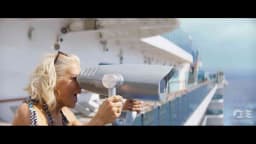
World of Dreams deploys the film medium to place Barbie at the centre of two distinct lifestyle scenarios: a camping adventure and a day on the water. The creative choice to anchor the narrative in outdoor, experiential settings rather than domestic or fantasy-led environments marks a deliberate tonal decision — one that connects Barbie's world to the kinds of active, exploratory experiences that resonate with contemporary families in the United States.
The single media asset that constitutes the campaign is constructed around an aspirational register that is warm rather than spectacular. The language of the campaign — "dream up anything," "it's a dream life" — operates as an open invitation rather than a product demonstration, shifting the film's function from advertising to brand storytelling. That approach aligns with the lifestyle genre conventions the campaign sits within, where emotional resonance and imaginative identification carry more weight than feature-led messaging.
Production credits for World of Dreams are not publicly documented. The agency responsible for the campaign has not been disclosed, and no director, creative director, or production company has been identified in publicly available sources. What the film does reveal through its creative construction is a disciplined understanding of Barbie's core brand equity: the conviction that her world is a space of possibility. The outdoor settings chosen — camping and water activities — are culturally legible to a broad United States audience and require no explanation, allowing the film to invest its running time entirely in emotional atmosphere rather than contextual setup. That economy of execution is a structural strength, even if the campaign's overall ambition, as reflected in its Clapboard Score of 58 out of 100, does not reach the tier of Mattel and Barbie's most celebrated work in the Toys industry.
No verified performance data — including sales lift, market-share movement, or brand-tracking results — for the World of Dreams campaign is publicly available. No campaign-specific recognition from Cannes Lions, the Effies, One Show, D&AD, Clio, the Webby Awards, or WARC has been identified in publicly available sources.
The archive record available through Clapboard documents 42,320 views, 182 likes, and 7 comments on the campaign's film asset, producing a likes-to-views engagement ratio of approximately 0.43 percent. That figure positions World of Dreams as a campaign that reached a substantial audience in absolute terms but generated modest active engagement relative to its view count — a pattern consistent with brand-building lifestyle films that prioritise reach and passive awareness over interactive response.
The structural effectiveness of World of Dreams rests on its timing and tonal alignment. Published in July 2023, the campaign entered the United States market at the precise moment when Barbie's cultural visibility was at a generational peak, driven by the theatrical release of the Warner Bros. Barbie film, as reported by CNN. A brand-owned film reinforcing Barbie's lifestyle identity during that window carried inherent strategic logic, even if World of Dreams itself operates at a measured creative register. According to corporate.mattel.com, Barbie gross billings rose twenty-seven percent year over year in the third quarter of 2023, though that result cannot be attributed to this campaign in isolation. The World of Dreams film functions most credibly as a brand reinforcement asset — a piece of consistent, on-brand communication that sustains Barbie's positioning as a lifestyle icon within the broader Toys industry rather than as a standalone media event.
World of Dreams is a Mattel film campaign published in the United States in July 2023. It positions Barbie as a gateway to imaginative lifestyle experiences, inviting children to envision adventures such as camping trips and days on the water within Barbie's world, extending the brand beyond its traditional toy identity.
The agency behind World of Dreams has not been publicly disclosed. No production company, director, or creative director has been identified in publicly available sources for this campaign. Mattel has worked with agencies including BBDO and BBH USA on Barbie campaigns in prior years, according to PR Daily and The Drum.
World of Dreams recorded 42,320 views, 182 likes, and 7 comments in the Clapboard archive, producing a likes-to-views engagement ratio of approximately 0.43 percent. The campaign received a Clapboard Score of 58 out of 100, reflecting clear brand communication without reaching the highest tier of creative distinction.
July 2023 coincided with peak cultural interest in Barbie driven by the Warner Bros. theatrical release, as reported by CNN. Mattel's worldwide Barbie gross billings rose twenty-seven percent year over year in Q3 2023, according to corporate.mattel.com. World of Dreams functioned as a brand-owned lifestyle expression during that commercially significant window in the United States.
World of Dreams shares thematic DNA with Barbie's landmark campaigns. BBDO created the 2015 "You Can Be Anything" campaign built around empowerment and possibility, according to PR Daily. BBH USA developed a 2021 campaign linking imaginative play with empathy, as reported by The Drum. World of Dreams extends that lineage through an outdoor lifestyle lens.
The global kids' toys market was estimated at approximately one hundred and thirty-four billion dollars with a projected four-and-a-half percent compound annual growth rate through 2032, according to GM Insights. In the United States, Mattel competes directly with Lego and Hasbro across the imaginative play segment, making lifestyle-led brand positioning a central competitive battleground.
.webp)
Creative Collaboration Platform: The Backbone of Modern Creative WorkWhat is a creative collaboration platform?Clapboard defines a creative collaboration platform as the operational core for today’s distributed creative teams. This is not a collection of digital collaboration tools stitched together; Clapboard’s system


Understanding the Creative Production MarketplaceWhat is a Creative Production Marketplace?Clapboard defines a creative production marketplace as a structured ecosystem where brands, agencies, and production talent converge to execute video, advertising, and branded content at scale. Unlike the legacy agency or freelanREAD FULL ARTICLE

The Urgent Need for a Creative Production Operating SystemWhy Traditional Creative Production Models Break DownClapboard sees the creative production landscape shifting under pressure. Content velocity is no longer a buzzword—it’s a mandate. Modern advertising demands relentless output across dozens of channels, each wREAD FULL ARTICLE