McDonald's Philippines and Leo Burnett Manila launched 'The Boy Who Loves to Study' in December 2016, reuniting viral photo subjects Joyce Torrefranca and

McDonald's Philippines Turns a Viral Moment Into a Story of Shared Love
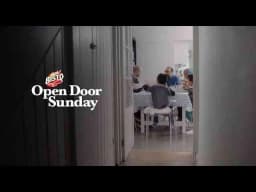
McDonald's Philippines released 'The Boy Who Loves to Study' on 13 December 2016, an online film produced by Leo Burnett Manila that documents the real-life reunion between medical student Joyce Torrefranca and nine-year-old Daniel Cabrera, approximately one year after a photograph of Cabrera studying beside the glow of a McDonald's restaurant window spread across the internet and generated public donations for his education.
The campaign's strategic anchor is the hashtag #ShareTheLove, which frames McDonald's not as a fast-food destination but as a quiet enabler of human connection in the Philippines. The original 2015 image — captured by Torrefranca and posted to Facebook — depicted Cabrera seated on the pavement outside a McDonald's store, using its exterior light to do his schoolwork late at night. The photograph resonated deeply across Filipino social media and beyond, drawing an outpouring of donations that changed the trajectory of the boy's life. The 2016 campaign returns to that story, documenting what happened next.
The film operates as a narrative sequel rather than a conventional advertisement, sitting at the intersection of documentary storytelling and branded content. Produced in the Philippines by Filmex Manila and directed by Paolo Villaluna, it carries the emotional weight of a verified, publicly known event rather than a constructed scenario. The campaign contains one media asset — the online film itself — and was submitted to industry databases shortly after launch. Its Clapboard Score of 63 out of 100 reflects solid creative and strategic execution within the food and drink category, acknowledging both the strength of the underlying story and the challenges inherent in translating an organic viral moment into deliberate brand communication.
McDonald's Philippines built the campaign on a consumer insight that runs deeper than brand affinity. In the Philippines, McDonald's stores occupy a distinctive cultural role: they function as neighbourhood anchors, study spaces, and late-night havens in communities where reliable lighting and air conditioning are not universally available. The original photograph of Daniel Cabrera existed precisely because that reality was true. By returning to that story, the brand acknowledged a dimension of its physical presence that conventional advertising rarely addresses.
The decision to build a campaign around a pre-existing viral image rather than manufacture a new emotional narrative was strategically significant. As reported by The Drum, the film generated substantial online engagement in the Philippines following its December 2016 release, with audiences responding to the authenticity of a reunion that had already been anticipated by the public. The story did not need to be invented — it needed to be honoured, documented, and amplified. Leo Burnett Manila, which had maintained its relationship with McDonald's Philippines for approximately 17 to 20 years by 2016, according to reporting by adobomagazine.com, was well positioned to navigate that balance between brand storytelling and journalistic sensitivity.
The quick-service restaurant sector in the Philippines operates within a highly competitive landscape, where emotional resonance and community relevance increasingly differentiate brands beyond product and price. Per reporting by Business Inquirer, Leo Burnett's work for McDonald's Philippines across the 2013 to 2019 period emphasised emotionally driven, locally relevant narratives — a consistent strategic posture that 'The Boy Who Loves to Study' represents at its most fully realised. The campaign did not position McDonald's against named competitors; instead, it staked out territory defined by warmth, community, and the particular textures of Filipino daily life.
Director Paolo Villaluna helmed the production for Filmex Manila, bringing a documentary sensibility to material that could easily have collapsed into sentimentality. The film follows the reunion between Joyce Torrefranca, the medical student and photographer who first captured Daniel Cabrera's image in 2015, and Cabrera himself, now approximately one year on from the moment that made him known across the Philippines and internationally. On screen, the film traces the arc from the original photograph — Cabrera bent over his books in the light spilling from a McDonald's storefront — through the public response that followed, and into the moment the two subjects meet again, with the camera present to record what has changed and what has endured.
The creative team at Leo Burnett Manila was led by chief creative officer and copywriter Raoul Panes, with creative direction and art direction by Mela Advincula. Copywriting was handled by Keena Jauregui, with additional art direction by Sara Sarmiento and Spiro Barroga. Account leadership came from directors Donny Dingcong and Judy Buenviaje Medina, supported by account managers Maik Alturas and Mary Pahati. Producers Steve Vesagas and Tria Sordan oversaw production at Filmex Manila.
The craft choice that defines the film is restraint. Rather than reconstruct the original scene or manufacture emotional beats, the production leans on the inherent power of two real people meeting after a year shaped by an extraordinary public moment. The single-asset campaign format — one online film, no supporting print or outdoor — concentrated all creative weight on the film's ability to sustain attention and generate sharing behaviour organically. That structural decision reflects confidence in the story itself, as documented across coverage by adobomagazine.com and adsspot.me, and aligns with Leo Burnett Manila's broader approach to narrative-led work for the brand during this period.
Industry recognition confirmed the campaign's standing within the region's creative community. 'The Boy Who Loves to Study' received a Silver award in the Interactive Lotus — Viral Video category at ADFEST 2017, as well as a Bronze award in the Film Lotus — Internet Film category at the same festival, according to reporting by adsspot.me and thedrum.com. These results placed Leo Burnett Manila's work among the most recognised branded content entries from Southeast Asia that year.
As reported by The Drum, the film generated significant online engagement in the Philippines following its December 2016 release, with viewing and sharing patterns consistent with content that extends beyond the brand's own audience into broader social circulation. The #ShareTheLove hashtag provided a measurable social layer, allowing the campaign to track conversation volume across Filipino social media platforms, though precise engagement figures are not independently verified in publicly available sources.
No further third-party verified performance metrics — including total view counts, earned media valuations, or sales uplift data — are publicly documented for this campaign. What the available record does confirm is that the film succeeded on the terms most relevant to its format: it was recognised by regional award bodies as among the strongest viral video work of its cycle, and it extended the life of an organic cultural moment in a manner that added credibility to the McDonald's brand in the Philippines rather than diminishing it. For a campaign built on a real story already known to its audience, that outcome represents a meaningful measure of success.
'The Boy Who Loves to Study' is a McDonald's Philippines online film released on 13 December 2016. Created by Leo Burnett Manila, it documents the reunion between medical student Joyce Torrefranca and Daniel Cabrera, the homeless boy she photographed studying by a McDonald's store light in 2015, under the campaign hashtag #ShareTheLove.
Paolo Villaluna directed the film for production company Filmex Manila. The Leo Burnett Manila creative team was led by chief creative officer Raoul Panes, with creative direction by Mela Advincula and copywriting by Keena Jauregui. Account direction was handled by Donny Dingcong and Judy Buenviaje Medina.
The campaign won a Silver Interactive Lotus in the Viral Video category and a Bronze Film Lotus in the Internet Film category at ADFEST 2017, according to adsspot.me and thedrum.com. These awards recognised the film as among Southeast Asia's strongest branded content entries in its year of release.
Joyce Torrefranca is a Filipino medical student and photographer who in 2015 captured an image of nine-year-old Daniel Cabrera studying beside the light of a McDonald's store. Her Facebook post went viral, generating public donations for Cabrera. The 2016 McDonald's film documents their reunion approximately one year later.
McDonald's Philippines used the pre-existing viral story because it reflected a genuine truth about how its stores function in Filipino communities — as neighbourhood anchors and study spaces. Leo Burnett Manila, the brand's agency partner for approximately 17 to 20 years by 2016, according to adobomagazine.com, structured the film to honour rather than manufacture the story.
The McDonald's Philippines 'Boy Who Loves to Study' campaign holds a Clapboard Score of 63 out of 100. The score reflects solid creative and strategic execution within the food and drink category, recognising the strength of the documentary storytelling approach and the campaign's verified regional award recognition at ADFEST 2017.
.webp)
Creative Collaboration Platform: The Backbone of Modern Creative WorkWhat is a creative collaboration platform?Clapboard defines a creative collaboration platform as the operational core for today’s distributed creative teams. This is not a collection of digital collaboration tools stitched together; Clapboard’s system


Understanding the Creative Production MarketplaceWhat is a Creative Production Marketplace?Clapboard defines a creative production marketplace as a structured ecosystem where brands, agencies, and production talent converge to execute video, advertising, and branded content at scale. Unlike the legacy agency or freelanREAD FULL ARTICLE

The Urgent Need for a Creative Production Operating SystemWhy Traditional Creative Production Models Break DownClapboard sees the creative production landscape shifting under pressure. Content velocity is no longer a buzzword—it’s a mandate. Modern advertising demands relentless output across dozens of channels, each wREAD FULL ARTICLE