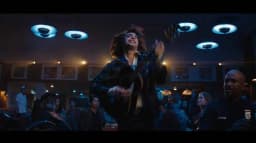
Miller Lite Bets on Questlove, Ken Jeong and Chuck Liddell
Miller Lite's 'Questlove, Ken, Chuck' campaign is a 2013 United States film series produced by Saatchi & Saatchi that cast musician Questlove, actor and comedian Ken Jeong, and former UFC fighter Chuck Liddell to reinvigorate the brand's longstanding Miller Time platform through three distinct short-film assets.
Published in March 2013, the campaign arrived at a deliberate moment in Miller Lite's creative evolution. Saatchi & Saatchi had won the Miller Lite account around 2012, bringing a fresh strategic mandate to a brand whose advertising had cycled through several tonal registers over the preceding decade. The three-asset film series was designed to inject novelty and cultural energy into the Miller Time idea without abandoning its core premise: the rewarding pause shared between friends after effort well spent. The campaign targeted young male drinkers in the United States, a demographic that advertisers in the alcoholic drinks category compete intensely to reach. The Clapboard Score for this campaign is 54 out of 100, reflecting a competent but modestly distinctive execution within the broader food and drink advertising landscape.
Beyond the film assets themselves, the campaign was timed to support a wider Miller Lite brand refresh. MillerCoors announced on May 1, 2013, per PRNewswire, the launch of a redesigned Miller Lite bottle featuring broad shoulders and a contoured grip, and a television phase featuring additional bottle-focused commercials followed the initial personality-led films. The 'Questlove, Ken, Chuck' work therefore functioned as the culture-oriented opening salvo of a larger 2013 United States brand push, establishing tone and energy before the product-focused communications arrived.
Saatchi & Saatchi built the campaign's strategic foundation on a specific insight about celebrity relatability. As reported by SportsBusiness Journal on March 19, 2013, drawing on Adweek coverage by Tim Nudd dated March 18, 2013, the agency made a deliberate choice to cast personalities who felt like everyday guys rather than expensive A-list celebrities — figures the young male viewer could plausibly imagine having a beer with. Questlove, the drummer and cultural polymath; Ken Jeong, the physician-turned-comedian; and Chuck Liddell, the retired UFC champion, each carried genuine cultural recognition without the distance that accompanies conventional Hollywood stardom.
This positioning reflected the pressures facing established light beer brands in the United States in 2013. The domestic beer category was navigating a period of meaningful competition from the craft beer segment, which was drawing younger legal-drinking-age consumers toward more differentiated products. Rather than compete on liquid credentials alone, Miller Lite's strategy leaned into social occasion and personality, using the Miller Time platform as a frame for accessible aspiration. The selection of three figures from music, comedy and combat sports also broadened the campaign's cultural reach within the target male demographic, giving it multiple entry points across different taste communities. Miller Lite was owned by MillerCoors at the time of the campaign, and the work sat within a broader effort to sharpen the brand's personality during Saatchi & Saatchi's tenure on the account, which ran from approximately 2012 until April 2014, as noted by Campaign Live.
The 'Questlove, Ken, Chuck' campaign comprises three film assets, each built around one of the named personalities. The campaign was produced through two production companies, Pony Show and MJZ, with direction by Peter Berg and Irv Blitz. On screen, each film places its featured personality in a scenario calibrated to their established public persona, using humor and character specificity to connect the individual to the Miller Time idea of a well-earned social moment. The tone across the three assets is comedic and grounded, leaning on the personalities' recognizability rather than elaborate narrative construction.
The creative team at Saatchi & Saatchi New York was led by Chief Creative Officer Conway Williamson, with Executive Creative Directors Keith Scott, Paul Johnson and Orion Tait shaping the campaign. Keith Scott served as Art Director and Paul Johnson as Copywriter on the project. Music was handled by Ryan Fitch at Butter, with additional licensed music woven through the films. The VFX dimension of the production was supervised by Andy Mac, who also served as a Flame Artist alongside Dave Sarbell, with Matthew McManus credited as Executive Producer. The presence of a dedicated VFX Supervisor and Flame Artists on a campaign of this type signals a post-production workflow oriented toward seamless visual integration rather than conspicuous effects work, supporting the naturalistic comedic register the campaign sought. These production credits confirm a well-resourced execution appropriate to a national United States television campaign for a major alcoholic drinks brand.
No verified performance data for the 'Questlove, Ken, Chuck' campaign is publicly available. No figures for viewership, recall, sales uplift or earned media reach have been attributed to this specific campaign in available sources. Structural analysis, however, suggests several credible effectiveness drivers. The casting strategy — grounded in relatability over star power, as reported by SportsBusiness Journal — reduced the risk of celebrity overshadowing the brand, a common failure mode in personality-led advertising. The three-asset format gave the campaign built-in variety, allowing media planners to rotate creative and maintain freshness across the launch window in the United States market.
The campaign's role within a larger 2013 brand push also strengthens its structural logic. By establishing cultural tone ahead of the redesigned bottle launch announced by MillerCoors via PRNewswire in May 2013, the film series primed audiences with an emotional and social frame before the product-focused communications arrived. The selection of Questlove, Ken Jeong and Chuck Liddell as vehicles for the Miller Time platform gave the campaign measurable cultural relevance across distinct male audience segments. Miller Lite's decision to part ways with Saatchi & Saatchi in April 2014, as noted by Campaign Live, means the full arc of this creative direction's commercial impact was relatively brief, limiting the longitudinal evidence base for assessing the campaign's contribution to brand health.
The three figures are Questlove, the musician and drummer; Ken Jeong, the actor and comedian; and Chuck Liddell, the former UFC fighter. Saatchi & Saatchi selected them, as reported by SportsBusiness Journal, because they carried genuine cultural recognition while still feeling approachable and relatable to the young male target audience in the United States.
Saatchi & Saatchi New York created the campaign. The agency held the Miller Lite account from approximately 2012 until April 2014. The creative team was led by Chief Creative Officer Conway Williamson, with Executive Creative Directors Keith Scott, Paul Johnson and Orion Tait shaping the work across all three film assets.
The campaign was published in the United States in March 2013. Public reporting on the campaign appeared on March 18 and 19, 2013. It served as the culture-oriented opening of a broader Miller Lite brand push that continued with the redesigned bottle launch announced by MillerCoors via PRNewswire on May 1, 2013.
VFX on the campaign was supervised by Andy Mac, who also served as a Flame Artist alongside Dave Sarbell. Matthew McManus served as Executive Producer. The VFX work supported a naturalistic comedic tone rather than conspicuous effects, consistent with the campaign's grounded, personality-driven creative approach across its three film assets.
The campaign supported Miller Lite's longstanding Miller Time platform. Saatchi & Saatchi used the three-film series to inject novelty and energy into this idea, framing the reward of a shared social moment around three recognizable personalities. The work also preceded and helped set the tone for the brand's redesigned bottle launch later in 2013.
.webp)
Creative Collaboration Platform: The Backbone of Modern Creative WorkWhat is a creative collaboration platform?Clapboard defines a creative collaboration platform as the operational core for today’s distributed creative teams. This is not a collection of digital collaboration tools stitched together; Clapboard’s system


Understanding the Creative Production MarketplaceWhat is a Creative Production Marketplace?Clapboard defines a creative production marketplace as a structured ecosystem where brands, agencies, and production talent converge to execute video, advertising, and branded content at scale. Unlike the legacy agency or freelanREAD FULL ARTICLE

The Urgent Need for a Creative Production Operating SystemWhy Traditional Creative Production Models Break DownClapboard sees the creative production landscape shifting under pressure. Content velocity is no longer a buzzword—it’s a mandate. Modern advertising demands relentless output across dozens of channels, each wREAD FULL ARTICLE