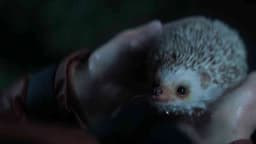
Minnesota State Lottery's 2017 Lucky For Life campaign by Periscope used a rap-video TV spot starring Grandma Margie to attract younger players to a new daily

How Minnesota State Lottery Used a Rap Video to Win Over Younger Players
Minnesota State Lottery's Moneyratehub.clapboard.com/archive/minnesota-state-lottery-community-gambling">Lucky For Life campaign is a 2017 television spot created by Minneapolis agency Periscope that uses a rap-video format, a custom song, and a fictional Midwestern grandmother to introduce a new daily prize game and attract younger adults to lottery play in the United States, according to Lottography.
The campaign launched in March 2017 to promote Lucky For Life, a game offering players the chance to win one thousand dollars per day for life, according to En Wikipedia. The strategic challenge was direct: younger Americans were increasingly disengaged from traditional draw-game formats, and the Minnesota State Lottery needed a creative device capable of bridging generational distance without abandoning the warmth of its regional identity, according to Mnlottery. Periscope answered that challenge by inverting expectations entirely. Rather than casting a young winner at the center of the spot, the agency built the narrative around Grandma Margie, a fictional older woman who has clearly been making the most of imagined winnings.
Grandma Margie arrives wearing custom sweaters and flashy jewelry, surrounded by pimped-out home décor, dancing with family and friends in a setting that is unmistakably Midwestern yet unmistakably lavish. The rap-video conventions are played straight enough to register as genuine and playful enough to read as self-aware. That tonal balance is the campaign's core creative achievement. By anchoring contemporary cultural references inside a familiar domestic environment, the Lucky For Life spot communicates aspiration without alienation, making it legible to both the younger audience it was designed to recruit and the established lottery players the Minnesota State Lottery already held, according to Lotterycritic. The spot contains a single media asset, a film, released in the United States market in March 2017. Clapboard rates this campaign 63 out of 100.

Minnesota State Lottery entered 2017 facing a measurable contraction in its core business. According to La Fleur's, total US traditional lottery sales reached approximately seventy-one billion dollars in fiscal 2017, a decline of roughly one percent from fiscal 2016. More specifically, draw-game sales across the United States fell approximately seven percent to around twenty-five point eight billion dollars in the same period, according to La Fleur's, while instant-ticket sales grew approximately three percent to around forty-five point one billion dollars. The structural shift was clear: players were migrating toward faster, more immediately gratifying formats.
Minnesota's own numbers reflected that national pattern. According to the Legislative Reference Library of Minnesota, the Minnesota Lottery recorded total sales of approximately five hundred sixty-three point five million dollars in fiscal 2017, down from roughly five hundred ninety-two million dollars the prior year. Within that figure, scratch-ticket sales held firmer ground, reaching approximately three hundred ninety-eight point three million dollars, per the same source. Draw games were the pressure point, and Lucky For Life was the Minnesota State Lottery's direct response — a game designed to reintroduce the daily-prize draw format with a proposition compelling enough to recruit new players.
The competitive context in the United States lottery market is shaped by multistate games such as Powerball and Mega Millions, both of which dominate national draw-game awareness through jackpot-driven advertising that relies on scale and spectacle. Minnesota State Lottery, working with Periscope as its agency of record from 2016 onward according to Clapboard, chose a fundamentally different axis of competition: emotional resonance over prize magnitude. Rather than racing Powerball on jackpot size or Mega Millions on reach, the Lucky For Life campaign competed on lifestyle imagination — asking players not what they would do with a lump sum but how their everyday life might look if one thousand dollars arrived every single day, forever. That reframing targeted precisely the younger adult cohort that multistate jackpot advertising had largely failed to convert.
Periscope built the Lucky For Life spot around a single invented character with enough specificity to carry a campaign. Grandma Margie is not a celebrity, not an abstract winner, and not a demographic surrogate. She is a fully realized fictional persona whose choices — the custom knitwear, the jewelry, the redecorated living room — communicate a winner's life through objects rather than exposition. That approach is consistent with strong lottery creative: the aspiration must feel tangible and personal, not hypothetical.
The rap-video format was not an ironic gesture. Periscope committed to the conventions of the genre — the custom song, the visual styling, the energy of a celebration staged for the camera — and then relocated them inside a Midwestern domestic setting. The collision between those two visual languages, contemporary rap-video production and cozy Midwestern home life, generates the spot's humor and its warmth simultaneously. Neither register undercuts the other, which is the execution's most precise achievement. The custom song, composed specifically for the campaign according to Clapboard, is functional rather than decorative: it carries the prize message, establishes the tempo of the edit, and gives Grandma Margie a world to inhabit rather than a script to deliver.
Production credits for the Lucky For Life campaign are not publicly documented. The director, production company, and composer of the custom rap song are not identified in available public records. What the finished film demonstrates, however, is a production that understood tonal control. The lavish décor reads as genuinely aspirational, not cheap parody. The performances from Grandma Margie's family and friends register as warm, not forced. And the visual grammar of the rap-video format — lighting, framing, pacing — is executed with enough fidelity to signal to younger viewers that the reference is sincere. For a government lottery operating in the United States with a regional identity to protect, that level of craft discipline carries meaningful strategic weight.
No verified performance data for the Lucky For Life campaign is publicly available. The Minnesota State Lottery and Periscope have not released viewership figures, brand-recall scores, or game-sales attribution data connected specifically to this TV spot, and no third-party measurement source has published metrics tied to the March 2017 campaign in the United States.
Structural analysis, however, supports a reading of above-average creative efficiency for a government lottery brief. The campaign solves a genuinely difficult problem — recruiting younger players without abandoning an older base — through a single character device that speaks to both audiences at once. Grandma Margie functions as a permission structure: she licenses younger viewers to find lottery play aspirational by demonstrating that winnings produce a life that is recognizably joyful, not abstractly wealthy. That economy of means, one character, one setting, one song, is a mark of strategic clarity that over-engineered lottery advertising frequently lacks.
The campaign also demonstrates sound media logic. A single film asset, deployed in the United States television market in March 2017, concentrates creative impact rather than diffusing it across formats. For a state lottery operating under government budget constraints, that concentration matters. The Lucky For Life prize proposition — one thousand dollars per day for life — is itself an unusually durable message, and the spot's format gives it a memorable vehicle. Whether that vehicle converted younger players at measurable rates remains undocumented, but the creative architecture was built to do exactly that work.
The Lucky For Life campaign is a 2017 TV spot created by Periscope for the Minnesota State Lottery. It uses a rap-video format and a custom song to introduce a game offering one thousand dollars per day for life, targeting younger adults across the United States through the fictional character Grandma Margie.
Periscope, a Minneapolis-based advertising agency, created the Lucky For Life spot. Periscope served as the Minnesota State Lottery's creative agency of record from 2016 onward, according to Clapboard. Production credits including the director and composer of the custom rap song are not publicly documented in available records.
Grandma Margie is a fictional character created by Periscope for the Lucky For Life campaign. She is an older woman portrayed as an energetic, extravagant winner, wearing custom sweaters and jewelry while celebrating with family and friends in a Midwestern home styled with rap-video visual conventions.
Draw-game sales across the United States fell approximately seven percent to around twenty-five point eight billion dollars in fiscal 2017, according to La Fleur's. Younger adults were disengaging from traditional lottery formats. The Minnesota Lottery worked with Periscope to create the Lucky For Life campaign specifically to reverse that generational trend.
Lucky For Life offers players a chance to win one thousand dollars per day for life. The Minnesota State Lottery used this daily-prize proposition, rather than a traditional lump-sum jackpot, as the creative and strategic foundation of the 2017 Periscope campaign targeting younger adults in the United States.
Clapboard rates the Lucky For Life campaign 63 out of 100. The score reflects a campaign with clear strategic intent and an inventive creative device in Grandma Margie, balanced against limited publicly available performance data and a single-asset execution that constrains the breadth of measurable creative impact.
.webp)
Creative Collaboration Platform: The Backbone of Modern Creative WorkWhat is a creative collaboration platform?Clapboard defines a creative collaboration platform as the operational core for today’s distributed creative teams. This is not a collection of digital collaboration tools stitched together; Clapboard’s system


Understanding the Creative Production MarketplaceWhat is a Creative Production Marketplace?Clapboard defines a creative production marketplace as a structured ecosystem where brands, agencies, and production talent converge to execute video, advertising, and branded content at scale. Unlike the legacy agency or freelanREAD FULL ARTICLE

The Urgent Need for a Creative Production Operating SystemWhy Traditional Creative Production Models Break DownClapboard sees the creative production landscape shifting under pressure. Content velocity is no longer a buzzword—it’s a mandate. Modern advertising demands relentless output across dozens of channels, each wREAD FULL ARTICLE