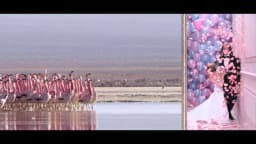
Movistar's 'Movistar Cup' campaign, created by Fahrenheit DDB in Peru in September 2014, uses football-driven film narrative to reinforce the brand's

Movistar Cup Scores With Football Storytelling in Peru
Movistar Cup is a film-format advertising campaign published in Peru in September 2014, created by Fahrenheit DDB for Movistar, using a single media asset to connect the brand's telecommunications identity with the mass cultural currency of football in the Peruvian market.
Movistar launched the campaign at a moment when its position in Peru was formidable. The brand held approximately 54.3% of total mobile subscribers at end-2014, according to Telecompaper, making it the dominant force in Peruvian telecoms by a substantial margin. The Movistar Cup campaign did not emerge from a defensive posture — it reflected the confidence of a market leader choosing emotional resonance over functional messaging. Rather than cataloguing network speeds or pricing tiers, the campaign anchored Movistar's identity to something Peruvians already cared about deeply: the collective experience of football competition.
The campaign belongs to the media and entertainment sector, and its single-film format signals a deliberate choice to invest creative weight in one concentrated narrative rather than distributing attention across multiple executions. In Peru, where football functions as shared cultural infrastructure, a brand that credibly enters that conversation earns a different quality of attention than one that merely sponsors it. Movistar Cup was constructed to earn that attention. The Clapboard Score for this campaign is 54 out of 100, reflecting a campaign that lands its cultural positioning without achieving the full creative distinction that separates good brand work from landmark brand work.
Movistar's advertising in Peru followed a football- and mass-participation-oriented communication strategy, according to LinkedIn professional records documenting the agency and brand relationship during this period. That strategic orientation was not accidental — it reflected a disciplined reading of what moves Peruvian consumers emotionally and what sustains brand salience in a highly competitive telecommunications environment.
The Peruvian telecoms market was expanding rapidly at the time. In 2014, Peru's subscription television and internet segment grew 15.42% and data transmission grew 13.6%, according to the Oxford Business Group. That growth backdrop meant audiences were increasingly engaged with screen-based entertainment, making a film campaign a tactically sound vehicle for reaching consumers who were actively adding connected services to their lives. Peru's mobile subscriber base had grown 988% between 2003 and 2014, according to the Oxford Business Group, a figure that underlines how thoroughly Movistar's core product had become embedded in Peruvian daily life by the time the campaign ran.
Against that market context, Movistar Cup positioned the brand not as a utility provider but as a facilitator of participation — the entity that makes the experience of competition, community, and belonging possible. Claro held approximately 39.2% of total mobile subscribers at end-2014, according to Telecompaper, representing the nearest competitive pressure on Movistar's dominant position. In that context, a campaign built on cultural belonging rather than feature comparison was a strategically sound choice: it is far harder for a competitor to replicate emotional association than to match a price point or a network claim.
José Zelada directed the Movistar Cup film. The production was handled by Tunche Films, with Luis Zelada serving as director of photography and Alberto Valle as editor. Sound and music were provided by La Sound Facktory. The creative team at Fahrenheit DDB in Lima was led by General Creative Director Ricardo Chadwick, with Sergio Franco as Creative Director, Luciano Leone as Head of Art, Rudy Camones as Art Director, and Gino Bernabé as Copywriter. Renato Arauco served as Planner and Fabianna Pezzia as Account Director.
The on-screen execution centres on football as a participatory event rather than a spectator sport. The film places ordinary people — not professional athletes — inside the competitive drama of a cup tournament, using the structure of organised football competition as a vehicle for depicting collective effort, community pride, and the emotional stakes that amateur sport generates in Peruvian neighbourhoods. The camera work by Luis Zelada grounds the action in a recognisably local visual register, and Alberto Valle's editing sustains the pacing that sports narratives demand: tension, release, and the punctuation of decisive moments.
The choice to work through Tunche Films, one of Peru's established production companies with a track record in ambitious local advertising, gave the campaign production infrastructure suited to location-based sports storytelling. La Sound Facktory's contribution to sound and music is integral to a football narrative — the sonic environment of crowd, whistle, and anthem carries as much emotional weight as the image. The overall craft approach prioritises authenticity over spectacle, keeping the brand's role as enabler rather than protagonist, which is consistent with Movistar's mass-participation communication strategy across the Peruvian market.
No verified performance data for the Movistar Cup campaign — such as view counts, recall scores, brand lift figures, or sales attribution — is publicly available from named industry sources. No confirmed entry or win at Cannes Lions, One Show, D&AD, Clio Awards, Webby Awards, or WARC Awards has been documented for this specific campaign. A LinkedIn profile references an Effie Gold award for a Movistar Copa entry dated May 2013, according to LinkedIn, but that date predates the September 2014 campaign and cannot be verified as referring to the same work.
Structurally, the campaign's effectiveness argument rests on its alignment between brand scale and cultural strategy. Movistar held approximately 17.14 million mobile subscribers at the end of Q3 2014, according to Telecompaper — a base large enough that a brand salience campaign built around shared cultural identity serves a retention and reinforcement function as much as an acquisition one. A single-film format, deployed in a market where subscription television was growing at 15.42% per year according to the Oxford Business Group, reaches an audience that is actively expanding its screen consumption. The football-participation framing gives the film a natural distribution logic: content that reflects how Peruvians experience sport travels more readily through social and word-of-mouth channels than content that describes a product. Those structural conditions favour the campaign's approach, even in the absence of verified outcome metrics.
Movistar Cup is a film campaign published in Peru in September 2014, created by Fahrenheit DDB for Movistar. It uses football competition as a narrative frame to connect Movistar's brand identity with the collective experience of sport in the Peruvian market, expressed through a single film asset.
José Zelada directed the Movistar Cup film. The production was handled by Tunche Films, with Luis Zelada as director of photography and Alberto Valle as editor. The creative team was led by General Creative Director Ricardo Chadwick and Creative Director Sergio Franco at Fahrenheit DDB in Lima.
Movistar held approximately 54.3% of total mobile subscribers in Peru at end-2014, according to Telecompaper. That dominant position, combined with a subscription television and internet growth rate of 15.42% that year per the Oxford Business Group, shaped a campaign strategy built on cultural reinforcement rather than competitive differentiation.
No confirmed award has been publicly documented for the September 2014 Movistar Cup campaign. A LinkedIn profile references an Effie Gold for a Movistar Copa entry from May 2013, according to LinkedIn, but that predates this campaign and cannot be verified as the same work. No Cannes Lions or Clio record has been found.
Movistar's advertising in Peru followed a football- and mass-participation-oriented communication strategy, according to LinkedIn records. Football functions as shared cultural infrastructure in Peru, giving a brand campaign built around the sport access to emotional associations that functional telecoms messaging cannot replicate, particularly in a market growing as rapidly as Peru's in 2014.
The Movistar Cup campaign receives a Clapboard Score of 54 out of 100. That rating reflects a campaign that achieves credible cultural positioning through its football-participation narrative and strong local production craft, while stopping short of the creative distinction that characterises the most awarded brand storytelling work in the media and entertainment sector.
.webp)
Creative Collaboration Platform: The Backbone of Modern Creative WorkWhat is a creative collaboration platform?Clapboard defines a creative collaboration platform as the operational core for today’s distributed creative teams. This is not a collection of digital collaboration tools stitched together; Clapboard’s system


Understanding the Creative Production MarketplaceWhat is a Creative Production Marketplace?Clapboard defines a creative production marketplace as a structured ecosystem where brands, agencies, and production talent converge to execute video, advertising, and branded content at scale. Unlike the legacy agency or freelanREAD FULL ARTICLE

The Urgent Need for a Creative Production Operating SystemWhy Traditional Creative Production Models Break DownClapboard sees the creative production landscape shifting under pressure. Content velocity is no longer a buzzword—it’s a mandate. Modern advertising demands relentless output across dozens of channels, each wREAD FULL ARTICLE