 ARCHIVE
BMW Middle East Preserves M Engine Roar in the Museum of Sound
How BMW Middle East's Museum of Sound Captured M Engine Heritage as an NFT Collection BMW Middle...
How Nissan Turned House-Hunting Into a Test Drive in Dubai
Nissan's 2012 Househunter Test-Drive campaign is a contextual digital activation created by TBWA\RAAD in Dubai that matched a user's property search criteria — budget, neighbourhood, residence type, and family size — with the most suitable Nissan model, then invited that user to take a test drive en route to viewing their prospective new home in the United Arab Emirates.
The campaign launched in July 2012, targeting one of the most distinctive demographic realities in the UAE: a large and continuously arriving population of expatriates who face the simultaneous pressure of sourcing a new home and acquiring a new vehicle. Rather than approaching these two decisions as separate consumer journeys, Nissan and TBWA\RAAD identified the overlap and engineered a single, integrated digital touchpoint that served both needs at once. The activation was built on a banner-sized budget, demonstrating that strategic ingenuity rather than media spend was the primary lever, and it ran across a three-week period documented in campaign materials cited by youtube.com.
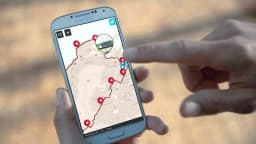
The mechanics centred on a partnership with the most popular house-hunting website in the Gulf region. TBWA\RAAD developed a new media format — embedded directly within the property site's search interface — that communicated in real time with the site's search engine. As a user entered their home-search parameters, the Househunter Test-Drive unit processed those inputs and surfaced the Nissan model best aligned with the user's lifestyle and practical requirements. The campaign featured seven distinct Nissan models, ensuring relevance across a broad spectrum of budgets and family configurations. Critically, the test drive itself was not an interruption: the Nissan was dispatched to collect the prospective buyer and deliver them to the property viewing, making the drive functionally purposeful rather than a detour. This detail transformed the conventional automotive test drive — historically an isolated, often inconvenient event — into a genuinely useful service moment. The Clapboard Score for this campaign is 79 out of 100, reflecting its strong strategic originality and efficient use of a constrained production budget within the United Arab Emirates market.
Nissan identified a behavioural truth specific to Dubai's population structure. The United Arab Emirates hosts one of the highest proportions of expatriate residents of any country in the world, and that population is in continuous motion — arriving, relocating, and resettling with regularity. For each wave of new arrivals, two immediate consumer decisions dominate: where to live and what to drive. TBWA\RAAD's strategic insight was that these decisions do not merely coincide in time — they share the same underlying variables of budget, geography, and household composition, making them structurally compatible inputs for a single digital matching system.
The United Arab Emirates automotive market was expanding sharply at the time of the campaign. According to cnbc.com, UAE total industry vehicle volume was estimated at approximately 305,000 units in 2012, compared with approximately 243,000 units in 2011, representing growth of roughly 25 percent year over year — a market dynamic that made competitive differentiation at the consideration stage especially valuable. Within that competitive environment, Nissan faced pressure from established rivals including Toyota, which has historically held strong volume positions across Gulf Cooperation Council markets, and Hyundai, which was aggressively expanding its UAE footprint during the same period. Generating incremental test-drive demand through unconventional digital touchpoints offered Nissan a cost-efficient route to standout at a moment when the addressable buyer pool was growing rapidly.
The choice of media partner was itself a strategic act. By anchoring the campaign inside the Gulf region's leading property-search platform rather than within conventional automotive media, TBWA\RAAD reached consumers at a moment of maximum life-transition intent — a point in the consumer journey where receptivity to both practical information and brand positioning is demonstrably high. The campaign's digital format, as reported by campaignme.com in its coverage of the Cannes Lions shortlist in June 2012, was noted for its contextual precision: the system did not display generic Nissan advertising but instead generated a personalised model recommendation derived directly from the user's own declared preferences. This distinction between interruption advertising and contextually earned relevance sits at the heart of the campaign's strategic architecture.
TBWA\RAAD built a bespoke interactive media unit for the Househunter Test-Drive campaign. The format was not an adaptation of an existing ad template but an original technical construct designed to read and respond to live search-engine data from the host property website, making the creative execution inseparable from its media placement. This integration between the ad unit and the site's underlying search logic was the defining craft achievement of the campaign: the banner did not merely sit alongside search results but was animated by them.
The creative team at TBWA\RAAD's Dubai office responsible for this execution included Felipe Galiano as Interactive Art Director, Rafael Guida as Senior Interactive Art Director, and Melanie Clancy as Senior Content Strategist. The technical build was led by Sarabjeet Singh as Senior Flash Developer, with Juan Behrens contributing graphics and motion design. Preethi Mariappan served as Head of Digital, providing strategic oversight across the interactive execution. Account management was handled by Bassam Ayass as Account Director and Iman Al Shaybani as Account Executive. The client was Arabian Automobiles, Nissan's UAE distributor, represented by CEO Michel Ayat, as documented in credits published on adruby.com.
The user experience was engineered around the principle of minimum friction. A person searching for a three-bedroom apartment in a specific Dubai neighbourhood within a defined monthly budget would, without leaving the property site or completing a separate form, receive a Nissan model recommendation tailored to those precise parameters. From that point, a single interaction could initiate a test-drive booking, with the vehicle arriving to collect the user en route to their viewing appointment. The motion and interface design, credited to Behrens and the broader digital team, needed to communicate this layered value proposition within the dimensional constraints of a banner placement — a creative compression challenge that the team resolved by prioritising clarity of the core mechanic over decorative execution. A campaign video documenting the concept was published on youtube.com on 29 April 2012, extending the campaign's reach beyond the property site itself and providing a shareable record of the format's functionality.
Nissan's Househunter Test-Drive generated more than 1,200 booked test drives during its three-week activation window in the United Arab Emirates, as documented in campaign materials referenced by youtube.com and En Nissan-Dubai. For a campaign operating on a banner-sized budget — without conventional media spend across broadcast or out-of-home channels — this volume of direct consumer response represents a structurally efficient outcome. The result is particularly significant in market context: the UAE automotive sector was recording strong volume growth in 2012, according to cnbc.com, meaning each incremental test-drive booking carried meaningful conversion value in a competitive field.
Industry recognition followed. The campaign was shortlisted in the Promo and Activation category at the 2012 Cannes Lions International Festival of Creativity, with Campaign Middle East reporting the shortlist on 18 June 2012. No verified Lions win is recorded across available sources. The campaign subsequently received the Media Cristal award at the Cristal Festival, as reported by campaignme.com in February 2013 — an honour specifically recognising media innovation, which aligns directly with the campaign's core mechanic of building a new interactive format within an existing digital platform.
Structurally, the campaign's effectiveness derives from the alignment between its insight, its media placement, and its call to action. By resolving the test-drive booking at the precise moment a consumer was already engaged in a parallel high-intent purchasing decision, the format reduced the psychological cost of commitment. The seven-model range ensured that the personalisation engine could deliver a genuinely relevant recommendation across the full spectrum of Dubai's diverse expatriate households, rather than defaulting to a single hero product. As reported by arabnews.com in coverage of the campaign, Arabian Automobiles CEO Michel Ayat indicated confidence in the creative approach as a reflection of the brand's willingness to meet consumers within their own digital journeys rather than demanding that consumers seek out Nissan on the brand's own terms.
The Nissan Househunter Test-Drive was a 2012 digital campaign by TBWA\RAAD in Dubai. It embedded a custom interactive format inside the Gulf region's leading property-search website, matching users' home-search criteria — budget, neighbourhood, and family size — with a recommended Nissan model and enabling a test-drive booking in a single step.
The Nissan Househunter Test-Drive generated more than 1,200 booked test drives during its three-week run in the United Arab Emirates, as documented in campaign materials referenced by youtube.com and en.nissan-dubai.com. The activation featured seven Nissan models, allowing the matching system to serve a wide range of household profiles across Dubai.
TBWA\RAAD's Dubai office created the Nissan Househunter Test-Drive for Arabian Automobiles, Nissan's UAE distributor. Key credits include Preethi Mariappan as Head of Digital, Felipe Galiano and Rafael Guida as Interactive Art Directors, and Sarabjeet Singh as Senior Flash Developer, with account direction by Bassam Ayass, as documented on adruby.com.
The Nissan Househunter Test-Drive was shortlisted in the Promo and Activation category at the 2012 Cannes Lions, as reported by Campaign Middle East on 18 June 2012. No verified Lions win is recorded in available sources. The campaign later won the Media Cristal award at the Cristal Festival, as reported by campaignme.com in February 2013.
Nissan targeted Dubai's expatriate population because new arrivals in the United Arab Emirates simultaneously face two high-stakes purchasing decisions: finding a home and acquiring a vehicle. TBWA\RAAD identified that both decisions share the same variables — budget, neighbourhood, and family size — making a single integrated digital touchpoint strategically efficient and contextually relevant for this audience.
The Nissan Househunter Test-Drive receives a Clapboard Score of 79 out of 100. The score reflects the campaign's strong strategic originality in the UAE automotive market, its efficient use of a constrained production budget, and its technically precise integration of a custom media format within an existing high-intent digital platform in Dubai.
.webp)
Creative Collaboration Platform: The Backbone of Modern Creative WorkWhat is a creative collaboration platform?Clapboard defines a creative collaboration platform as the operational core for today’s distributed creative teams. This is not a collection of digital collaboration tools stitched together; Clapboard’s system


Understanding the Creative Production MarketplaceWhat is a Creative Production Marketplace?Clapboard defines a creative production marketplace as a structured ecosystem where brands, agencies, and production talent converge to execute video, advertising, and branded content at scale. Unlike the legacy agency or freelanREAD FULL ARTICLE

The Urgent Need for a Creative Production Operating SystemWhy Traditional Creative Production Models Break DownClapboard sees the creative production landscape shifting under pressure. Content velocity is no longer a buzzword—it’s a mandate. Modern advertising demands relentless output across dozens of channels, each wREAD FULL ARTICLE