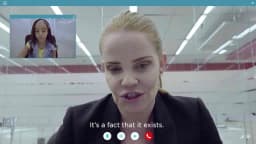
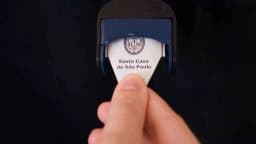
Obra do Berço's SOS by SMS campaign, created by DM9Rio in Brazil in 2013, used Bluetooth antennas at traffic lights to send emergency messages to passing

How DM9Rio Turned Red Lights Into Emergency Calls for Obra do Berço
SOS by SMS is a 2013 ambient public interest campaign created by DM9Rio for Brazilian child-care and social-service organisation Obra do Berço, in which Bluetooth antennas placed near traffic lights automatically sent SOS text messages to the mobile phones of drivers stopped at red lights, alerting them to the presence of vulnerable street children nearby and prompting direct engagement with the cause.
Obra do Berço operates as a Brazilian non-profit dedicated to the care and social reintegration of children in need. In April 2013, the organisation partnered with São Paulo-based agency DM9Rio to find a way of reaching Brazilians not through traditional broadcast media but at a precise moment of proximity and stillness — the red light, according to LinkedIn. The strategic premise was straightforward: drivers stopped at traffic signals in Brazil frequently encountered street children begging or working alongside their vehicles, yet rarely acted. The campaign sought to convert that moment of involuntary pause into a moment of civic awareness and potential action.
The ambient mechanism was both technically elegant and emotionally direct. Bluetooth antennas, installed near traffic intersections where children were known to gather, detected mobile devices in the surrounding area and pushed an SMS carrying an urgent appeal on behalf of Obra do Berço. The message arrived as a genuine SOS — a distress signal — and carried information about how drivers could support the organisation's work. The campaign ran in Brazil in 2013, operating in the ambient medium and classified within the public interest category. It represents one of the earlier examples in the Brazilian market of using mobile proximity technology as the primary delivery mechanism for a social cause communication, requiring no media buy in the conventional sense and no consumer opt-in beyond owning a Bluetooth-enabled device.

DM9Rio built the SOS by SMS strategy around a consumer truth that required no research brief to validate: Brazilians in urban centres share physical space with street children daily, most acutely at traffic intersections, yet social distance and habituated indifference keep awareness from converting into action. The campaign's strategic intelligence lay in identifying the red light not as a passive moment to be interrupted but as an active context already laden with tension, negotiation, and moral discomfort for many drivers, according to Janela Com Br.
In Brazil, street children and adolescents living in conditions of social vulnerability have historically represented one of the most visible yet underserved public welfare challenges. Brazilian civil society organisations including Obra do Berço have long operated in a landscape where public funding for child welfare competes against entrenched structural inequalities. DM9Rio's choice of ambient execution over paid broadcast directly reflects this resource context: by deploying Bluetooth antennas rather than purchasing television or outdoor inventory, the agency created a campaign whose cost of impression was structurally low and whose moment of delivery was guaranteed by traffic infrastructure rather than media scheduling.
The competitive landscape for charitable attention in Brazil in 2013 included established organisations such as UNICEF Brasil and the Abrinq Foundation, both of which relied heavily on traditional media partnerships, celebrity endorsement, and event-driven fundraising to generate public engagement. SOS by SMS deliberately departed from this playbook. Rather than asking audiences to seek out the cause, it brought the cause to audiences at the precise geographic and temporal coordinates where the problem was most visible. That inversion — the charity reaching the citizen rather than the citizen seeking the charity — gave the campaign a structural distinctiveness that conventional public service advertising in Brazil had rarely attempted at this level of technical specificity, according to Uk News Yahoo.
Creative direction on SOS by SMS was led by Álvaro Rodrigues and Diogo Mello, according to production records associated with the campaign, according to Sunmatrix. The execution demanded a form of creative restraint unusual in public interest advertising: the message itself — an SOS — had to do the full emotional work, arriving on a stranger's phone without preamble, context, or the visual language that charity communications typically depend upon, according to WARC. Writing an SMS that read as genuine distress rather than spam, and that converted surprise into empathy rather than irritation, represented the central creative challenge.
Project management was handled by Eduardo Grendelle, with video production carried out by Yes Filmes, executive production by Caio Abreia, and sound production by Silence, per documented production credits. The involvement of a video producer indicates that a documentary or case film was produced to record the campaign's real-world deployment and capture authentic driver reactions — a standard practice for ambient campaigns of this type, particularly those intended for award submission, as the ambient execution itself is ephemeral and location-bound.
The physical production of the campaign centred on the Bluetooth antenna hardware and its positioning at intersections known for high concentrations of street children in Brazil. No elaborate set construction or talent casting was required. Instead, the creative investment was concentrated in the technical calibration of proximity detection, the copywriting of the SMS itself, and the selection of locations where the message would land with maximum contextual resonance. The result was a piece of ambient work that collapsed the distance between medium and message: the technology of personal communication became, for the duration of a red light, an instrument of collective conscience. The campaign earned a Cannes Lions Bronze Lion in 2013, recognising it in the category of Best Integrated Campaign Led by Mobile, according to records associated with the submission.
No verified performance data for SOS by SMS is publicly available in terms of donations generated, volunteer sign-ups attributed to the campaign, or measurable change in Obra do Berço's operational reach following the April 2013 activation. The ambient nature of the execution — deployed at street level in Brazil with Bluetooth as the sole delivery channel — means that conventional digital attribution metrics were not architecturally built into the campaign's design. The measure of success, as the work was conceived, was behavioural and interpersonal: a driver receiving an SOS, looking up, and seeing a child.
What is documented is the campaign's recognition at the Cannes Lions International Festival of Creativity in June 2013, where it received a Bronze Lion in the category of Best Integrated Campaign Led by Mobile, according to records associated with the submission. That recognition, awarded within months of the campaign's April 2013 launch in Brazil, confirms that the work was evaluated by an international jury as a credible and inventive application of mobile technology in service of a public interest objective. For DM9Rio, the Lions recognition also continued what records indicate was a productive and ongoing creative partnership with Obra do Berço spanning at least the period from April 2013 through March 2014.
Structurally, the campaign's effectiveness argument rests on the precision of its context engineering. By guaranteeing delivery only when a device was physically adjacent to a vulnerable child, SOS by SMS achieved a relevance score that purchased media cannot replicate. The Clapboard Score for this campaign is 71 out of 100, reflecting strong conceptual clarity and contextual innovation against a ceiling imposed by the absence of measurable outcome data and the single-asset, single-market scope of the execution.
SOS by SMS was a 2013 ambient public interest campaign created by DM9Rio for Obra do Berço in Brazil. Bluetooth antennas placed near traffic lights sent SOS text messages to drivers' phones when they stopped at red lights near street children, prompting awareness of and engagement with the organisation's child-welfare mission.
The campaign deployed Bluetooth antennas at traffic intersections in Brazil where street children were known to gather. When a driver stopped at a red light, the antenna detected nearby Bluetooth-enabled mobile phones and pushed an SOS SMS message to those devices, delivering Obra do Berço's appeal without a media buy or consumer opt-in.
Creative direction on SOS by SMS was led by Álvaro Rodrigues and Diogo Mello at DM9Rio. Project management was handled by Eduardo Grendelle, with video production by Yes Filmes, executive production by Caio Abreia, and sound production by Silence, all working on the 2013 Brazil campaign for Obra do Berço.
SOS by SMS won a Cannes Lions Bronze Lion in June 2013, recognised in the category of Best Integrated Campaign Led by Mobile. The award was granted within months of the campaign's April 2013 launch in Brazil, confirming international jury recognition for DM9Rio's use of mobile proximity technology in public interest advertising.
The Clapboard Score for SOS by SMS is 71 out of 100. The score reflects strong conceptual clarity and genuine contextual innovation in the ambient public interest category, with the ceiling set by the absence of publicly verified outcome metrics and the campaign's single-market, single-asset scope within the Brazil activation.
DM9Rio's documented relationship with Obra do Berço spans at least April 2013 through March 2014, encompassing SOS by SMS and the earlier Donate Your View campaign from March 2013. SOS by SMS is the most awarded work from that partnership, earning Cannes Lions recognition for its mobile-led ambient execution in Brazil.
.webp)
Creative Collaboration Platform: The Backbone of Modern Creative WorkWhat is a creative collaboration platform?Clapboard defines a creative collaboration platform as the operational core for today’s distributed creative teams. This is not a collection of digital collaboration tools stitched together; Clapboard’s system


Understanding the Creative Production MarketplaceWhat is a Creative Production Marketplace?Clapboard defines a creative production marketplace as a structured ecosystem where brands, agencies, and production talent converge to execute video, advertising, and branded content at scale. Unlike the legacy agency or freelanREAD FULL ARTICLE

The Urgent Need for a Creative Production Operating SystemWhy Traditional Creative Production Models Break DownClapboard sees the creative production landscape shifting under pressure. Content velocity is no longer a buzzword—it’s a mandate. Modern advertising demands relentless output across dozens of channels, each wREAD FULL ARTICLE