OLW launched The Chewy Bag in Sweden in October 2012, a digital campaign by JMW featuring a perforated, zip-lock bag designed to create chewy Cheez Doodles

OLW Cheez Doodles and the Custom Bag Built for Chewy Fans
OLW's The Chewy Bag is a digital campaign launched in Sweden in October 2012, created by Stockholm agency JMW, that introduced a custom-designed perforated and resealable bag allowing fans to enjoy Cheez Doodles in a softer, chewier texture while keeping uninvited hands out of the snack.
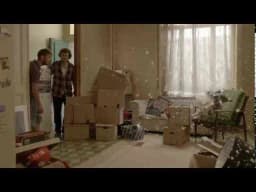
OLW Cheez Doodles is Sweden's most popular snack. The campaign recognised a genuine, unspoken consumer ritual: a segment of Cheez Doodles fans deliberately leaves an opened bag on the kitchen table for one or two days, allowing air exposure to soften the product's signature crunch into a chewier texture. That informal technique, while effective, left the snack exposed to contamination from other household members — what the campaign memorably framed as the problem of sticky fingers. The Chewy Bag addressed both sides of that problem simultaneously. Small air holes perforating the bag replicated the softening effect of leaving the product out in the open, while a zip-lock closure sealed the bag between sessions, protecting its contents from anyone reaching in uninvited. The result was a piece of functional packaging conceived as a campaign idea, designed to serve a real but previously unacknowledged niche within OLW's existing fan base in Sweden.
The campaign launched in October 2012 as a single digital media asset, targeted squarely at the Swedish market. It represents a strand of product-led advertising in which the creative concept and the physical product are inseparable — the bag itself is the communication. The Chewy Bag carries a Clapboard Score of 61 out of 100, reflecting a campaign that earns marks for conceptual clarity and consumer insight while operating within a tightly scoped, single-market, single-asset digital format.
OLW holds the market-leading position in Sweden's snacks category. Cheez Doodles sells more than ten million bags per year in Sweden, a volume equivalent to approximately one bag every three seconds, according to reporting cited across snack trade sources including orklasnacks.com. That scale of consumption means even a niche behavioural preference — the deliberate softening of Cheez Doodles through prolonged air exposure — represents a meaningful audience segment worth addressing directly.
The strategic insight behind The Chewy Bag is rooted in something rarely acknowledged in confectionery advertising: not all consumers within the same loyal fan base want the same eating experience. OLW's decision to validate the chewy preference, rather than simply reinforce the product's standard crispy positioning, demonstrates a nuanced reading of its own audience. Rather than treating the open-bag technique as an aberration, the brand elevated it into a recognisable ritual deserving its own purpose-built solution. This approach aligns with a broader creative philosophy that JMW had already demonstrated in its work with OLW: the agency created The Crunchometer for OLW in October 2011, an interactive sampling machine built around consumer engagement with physical product interaction, according to records documented on clapboard.com. The Chewy Bag follows the same logic — identify a real, specific consumer behaviour and engineer a campaign around enabling it rather than explaining it.
In Sweden's competitive snack and confectionery market, maintaining relevance with an already dominant product requires finding tension within the brand's own story. The Chewy Bag creates that tension efficiently: it argues that loving Cheez Doodles enough to wait a day for the right texture is a form of dedication worth protecting. That framing transforms a packaging mechanic into a fan-service gesture, deepening brand affinity without repositioning the product or diluting its core identity in the Swedish market.
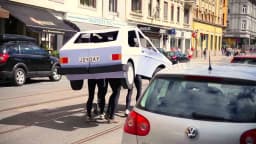
JMW conceived The Chewy Bag as a product solution that functions simultaneously as its own advertisement. The creative execution centres on the bag itself: a custom-manufactured Cheez Doodles package fitted with small air holes to allow the controlled airflow that produces a chewier texture, combined with a zip-lock closure that seals the product between uses. On screen, the campaign presents this dual-function packaging as the direct answer to a recognisable domestic frustration — the open bag left on the kitchen table, vulnerable to anyone passing through. The creative logic is demonstrative rather than narrative: show the problem, show the object, let the object make the argument. No elaborate storyline is required because the product's design is self-explanatory to any Cheez Doodles fan who has lived the scenario.
The campaign was produced as a single digital media asset, a compact format that demanded the idea carry full weight without the support of extended storytelling or multi-platform amplification. In that constraint, JMW's approach reflects a school of advertising craft that prizes economy — one precise idea, one execution, no redundancy. The creative team responsible for The Chewy Bag includes Joakim Karlsson as executive creative director, Samuel Garlöv as creative director, Jonas Böttiger as art director, and Björn Mellstrand as account director. The combination of a senior creative leadership structure applied to a single-asset digital campaign suggests the concept was treated with the same rigour as a larger-scale production, with the packaging design itself serving as the primary creative deliverable. The air-hole perforation pattern and the zip-lock mechanism are not incidental product features — they are the executional proof of the campaign's central claim that OLW understands and serves even the most specific preferences of its Swedish audience.
No verified performance data for The Chewy Bag is publicly available. No independently verifiable reviews or results from trade publications such as Campaign or Ad Age have been identified in available sources documented on clapboard.com. The campaign's impact must therefore be assessed on structural grounds.
The Chewy Bag operates on a model where effectiveness is embedded in the product rather than measured through conventional campaign metrics. If the custom bag reached its intended audience — fans of chewy Cheez Doodles in Sweden — the act of receiving or encountering the packaging would itself constitute the campaign's delivered message. There is no gap between the medium and the proposition: the bag is the proof. This structural integrity makes The Chewy Bag relatively resistant to the kind of awareness decay that affects message-led campaigns, because the physical object carries the idea forward beyond any media window. The campaign's limitation, conversely, lies in its reach: a single digital asset launched in one market in October 2012 has an inherently bounded audience ceiling. Its strength is depth of relevance with a specific consumer segment rather than breadth of reach across the full Swedish snack-buying public. OLW Cheez Doodles' position as Sweden's best-selling snack, with annual sales exceeding ten million bags per year according to orklasnacks.com, provides the volume base from which even a narrowly targeted campaign can generate meaningful engagement. The Chewy Bag earns a Clapboard Score of 61 out of 100, a result consistent with a campaign that solves a real problem with clarity and wit but operates within a deliberately minimal format and geographic scope.
The Chewy Bag is a digital campaign launched by OLW in Sweden in October 2012, created by agency JMW. It introduced a custom Cheez Doodles bag fitted with small air holes to produce a chewier texture and a zip-lock closure to prevent contamination, addressing a real consumer habit of deliberately softening the snack.
OLW created The Chewy Bag because a segment of Cheez Doodles fans in Sweden deliberately leaves opened bags out to soften the product into a chewier texture. That technique exposed the snack to sticky-fingered household members. The custom bag replicated the softening effect while sealing the contents safely between sessions.
JMW, a Stockholm-based advertising agency, created The Chewy Bag campaign for OLW. The creative team included Joakim Karlsson as executive creative director, Samuel Garlöv as creative director, Jonas Böttiger as art director, and Björn Mellstrand as account director. The campaign launched in Sweden as a single digital media asset in October 2012.
The Chewy Bag uses small perforations in the packaging to allow controlled airflow around the Cheez Doodles inside. Exposure to air softens the product's texture from its standard crispness into the chewier consistency preferred by some OLW fans. A zip-lock closure then seals the bag to protect contents between eating occasions.
OLW is Sweden's market-leading snacks brand. Cheez Doodles is described as Sweden's best-selling snack, with annual sales exceeding ten million bags per year — roughly one bag every three seconds — according to orklasnacks.com. OLW originated in 1967 and became part of Orkla following an acquisition in 2005.
The Chewy Bag received a Clapboard Score of 61 out of 100. The score reflects the campaign's strong conceptual clarity and genuine consumer insight, balanced against the constraints of a single-asset digital format and a narrowly defined geographic scope limited to the Swedish market at the time of its October 2012 launch.
.webp)
Creative Collaboration Platform: The Backbone of Modern Creative WorkWhat is a creative collaboration platform?Clapboard defines a creative collaboration platform as the operational core for today’s distributed creative teams. This is not a collection of digital collaboration tools stitched together; Clapboard’s system


Understanding the Creative Production MarketplaceWhat is a Creative Production Marketplace?Clapboard defines a creative production marketplace as a structured ecosystem where brands, agencies, and production talent converge to execute video, advertising, and branded content at scale. Unlike the legacy agency or freelanREAD FULL ARTICLE

The Urgent Need for a Creative Production Operating SystemWhy Traditional Creative Production Models Break DownClapboard sees the creative production landscape shifting under pressure. Content velocity is no longer a buzzword—it’s a mandate. Modern advertising demands relentless output across dozens of channels, each wREAD FULL ARTICLE