 ARCHIVE
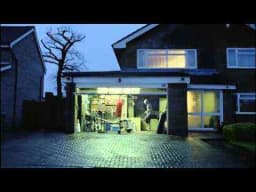
Virgin Media 'Our House' Reframes the Home as a Place Worth Living In
How Virgin Media's 'Our House' Campaign Redefined Home Entertainment in the UK Virgin Media's 'Our...
Omnitel Duel Puts Lithuania's 4G Moment on Film
Omnitel's 'Duel' is a film campaign created by Vilnius agency Milk and published in Lithuania in March 2013, positioning Omnitel's mobile internet and 4G LTE services through a single cinematic media asset directed by Ricardo Maldonado, according to Nasdaqbaltic.
Omnitel occupies a foundational place in the Lithuanian telecommunications landscape. Founded in 1991 as Lithuania's first private telecommunications company, it entered the 2013 market cycle as a TeliaSonera-affiliated operator competing in a sector defined by tightening margins and accelerating network investment. The 'Duel' campaign arrived at a moment when Lithuanian operators were spending aggressively on infrastructure: telecommunications-market investment in Lithuania reached LTL 105.7 million for the first nine months of 2013, up four percent year over year, according to Nasdaq Baltic. Against that backdrop, Omnitel needed creative work that communicated technological advancement with urgency and distinction, according to LinkedIn.
The campaign's title frames its central proposition as a contest — a duel between speeds, between networks, or between the connected and the left behind. The choice of film as the sole medium signals an intent to build emotional resonance alongside functional messaging, using the grammar of cinema rather than specification sheets to communicate 4G LTE capability. With one asset carrying the full weight of the campaign, every creative decision — casting, direction, post-production — carried outsized strategic significance. 'Duel' earns a Clapboard Score of 53 out of 100, reflecting solid craft ambition within a campaign where verified performance data remains unavailable.
Lithuania's telecommunications sector in 2013 presented a paradox of saturation and opportunity. Mobile voice penetration in Lithuania reached 167.2 subscriptions per 100 inhabitants during the first nine months of 2013, according to Nasdaq Baltic, a figure reflecting widespread multiple-SIM ownership rather than untapped audiences. With Lithuanian mobile penetration at approximately 155 percent at year-end 2013, as reported by Telecompaper, the subscriber growth story was largely told. The strategic imperative shifted from acquiring new users to upgrading existing ones — from voice and basic data to high-speed 4G LTE services.
Total telecommunications-market revenue in Lithuania stood at LTL 1.078 billion for the first nine months of 2013, down 4.9 percent from LTL 1.133 billion in the comparable 2012 period, according to Nasdaq Baltic. That revenue contraction shaped the competitive climate in which 'Duel' was conceived. Operators could not rely on a growing market to lift results; they needed to win on value perception and network quality. For Omnitel, positioning 4G LTE as a decisive advantage — rather than an incremental feature — became the logical creative brief. A campaign built around the concept of a duel speaks directly to that dynamic: it converts a technical specification into a winner-takes-all narrative, one that resonates with consumers already familiar with the idea of choosing between operators, according to Themilk.
Milk, the Vilnius-based agency behind the campaign, brought a local strategic sensibility to what became an internationally produced creative execution, recognising that Lithuanian audiences in 2013 were sophisticated mobile users ready to be persuaded on performance rather than access.
Ricardo Maldonado directed 'Duel' for Omnitel, working from a creative framework established by Milk's Vilnius team. The campaign's creative direction was led by Rimantas Stanevičius, with art direction by Michael Spitzer and copy by Antonio Bechtle — a collaboration that brought together Lithuanian strategic thinking and broader creative influences within a single cohesive film.
On screen, 'Duel' stages its central tension as a direct confrontation — a scenario built to dramatise the speed and decisiveness of Omnitel's 4G LTE network. The film uses the structure of a classic face-off to give an invisible technological advantage a visible, felt presence, translating network performance into human stakes. The production was handled by Cine 70, with Prisma Producciones serving as the production service company — an arrangement that brought international production infrastructure to bear on a Lithuanian market campaign. Abel Irribarren Taboada served as director of photography, and Roxana Rivera produced the film, while post-production was completed by Estudio Tosta.
The sonic dimension of 'Duel' was shaped by Ruidos Amaestrados and Victor Villavisencio, whose music contribution underscores the film's competitive tempo. The decision to assemble a production team of this scale — spanning direction, cinematography, sound design, and post-production across multiple specialist partners — reflects Milk's intent to deliver a film that could hold its own against the premium production values increasingly expected of telecommunications advertising in Central and Eastern Europe. The result is a campaign that uses craft as an argument: if the film itself feels fast, precise, and assured, those qualities transfer to the brand it represents.
No verified performance data for 'Duel' is publicly available. No published figures for sales lift, subscriber growth, or market-share change have been documented in connection with this campaign, and no awards are recorded from Cannes Lions, Effies, One Show, D&AD, Clios, Webby, or WARC submissions.
Structurally, however, 'Duel' was designed to operate in a market where the persuasion task was sharply defined. With Lithuanian telecommunications-market revenue contracting in 2013, according to Nasdaq Baltic, campaigns that could shift consumers toward higher-value services — specifically 4G LTE plans — carried direct commercial relevance. The single-asset format concentrates creative and media impact, a choice that disciplines both storytelling and audience attention. By framing 4G speed as the outcome of a duel, the campaign gives an abstract network specification a competitive identity that is straightforward to recall and repeat. The international production partnership between Cine 70, Prisma Producciones, and Estudio Tosta suggests a production investment consistent with brand-building objectives rather than short-cycle promotional activity. For a first-mover narrative in the Lithuanian 4G space, that level of craft ambition is structurally appropriate, even where quantified outcomes remain undocumented.
Omnitel's 'Duel' is a film campaign created by Milk in Vilnius and published in Lithuania in March 2013. It positioned Omnitel's mobile internet and 4G LTE services through a single cinematic asset directed by Ricardo Maldonado, using the metaphor of a direct contest to dramatise network speed and performance.
Ricardo Maldonado directed the 'Duel' film for Omnitel. The production was handled by Cine 70, with Prisma Producciones as the production service company and Estudio Tosta managing post-production. Abel Irribarren Taboada served as director of photography on the project.
Rimantas Stanevičius served as creative director on 'Duel' at Milk, Vilnius. Michael Spitzer was the art director and Antonio Bechtle was the copywriter. Together they shaped the campaign's core concept, translating Omnitel's 4G LTE positioning into the competitive duel framework that defines the film.
Lithuania's mobile penetration stood at approximately 155 percent at year-end 2013, according to Telecompaper, reflecting widespread multiple-SIM ownership. Total telecommunications-market revenue was contracting, according to Nasdaq Baltic, making differentiation on network quality — the strategic ground 'Duel' occupied — commercially critical for Omnitel.
No awards for 'Duel' are documented from Cannes Lions, Effies, One Show, D&AD, Clios, Webby, or WARC. The campaign earned a Clapboard Score of 53 out of 100, reflecting solid creative craft within a single-asset film format, though no verified effectiveness metrics or trade-press recognition have been publicly recorded.
.webp)
Creative Collaboration Platform: The Backbone of Modern Creative WorkWhat is a creative collaboration platform?Clapboard defines a creative collaboration platform as the operational core for today’s distributed creative teams. This is not a collection of digital collaboration tools stitched together; Clapboard’s system


Understanding the Creative Production MarketplaceWhat is a Creative Production Marketplace?Clapboard defines a creative production marketplace as a structured ecosystem where brands, agencies, and production talent converge to execute video, advertising, and branded content at scale. Unlike the legacy agency or freelanREAD FULL ARTICLE

The Urgent Need for a Creative Production Operating SystemWhy Traditional Creative Production Models Break DownClapboard sees the creative production landscape shifting under pressure. Content velocity is no longer a buzzword—it’s a mandate. Modern advertising demands relentless output across dozens of channels, each wREAD FULL ARTICLE