 ARCHIVE
How Oskar Blues Used SOB to Rewrite Craft Spirits Storytelling
Oskar Blues launched SOB — Spirits by Oskar Blues — in July 2017 through a six-film campaign created by Agency Squid, designed to introduce a ready-to-drink spirits brand to the United States market by deliberately parodying the sanitised, interchangeable language that dominates alcohol advertising.
The campaign carries the distinctive title "Farmer's Second Attempt, Ally's Attempt, Farmer's First A..." — a naming convention that signals its anti-formula intent from the outset. Rather than positioning SOB through the polished, aspirational registers that major alcohol companies rely upon, the work draws its identity from Oskar Blues' established personality: irreverent, direct, and grounded in craft authenticity. According to Clapboard's editorial record, the campaign comprised six individual video assets, each contributing to a broader narrative platform that sought to transfer Oskar Blues' culture wholesale into a new product category.
The strategic objective was precise. Oskar Blues recognised that big beer companies deploy identical language — clean, crisp, smooth — to present fundamentally different products, erasing distinction across the category. SOB was engineered to occupy the space that language leaves vacant. By refusing those conventions, Agency Squid and Oskar Blues created a brand voice for SOB that could not be mistaken for a macro-brand product, even as it competed in the same retail and on-premise environments across the United States. The Clapboard Score for this campaign is 54 out of 100, reflecting its creative distinctiveness within a category that rarely rewards genuine departure from formula.
ARCHIVEAgency Squid built the SOB brand platform on a single, clearly defined consumer insight: alcohol advertising in the United States has converged on a narrow vocabulary that serves conformity rather than character. As documented in a case study published by Craft Brewing Business in April 2018, the primary brand-development project for SOB ran from February through June 2017, with the campaign publishing in July — a compressed timeline that demanded strategic clarity from the outset.
The competitive context was significant. In the United States craft beer and emerging craft spirits space, Oskar Blues sat alongside rivals including Boston Beer Company, which according to research and market reporting remained the largest independent US craft brewer by volume during this period, and a growing field of independent ready-to-drink spirits producers. Where those competitors often borrowed the visual and verbal language of large incumbent brands to signal credibility, Oskar Blues and Agency Squid made the opposite choice. SOB's positioning was built on distance from that language, not proximity to it.
According to reporting by Craft Brewing Business, the global craft beer segment was growing at approximately five percent compound annual growth rate from 2017 through 2021, based on retrospective estimates cited by blue weave consulting — indicating the broader category appetite that SOB was entering. Within that expanding market, differentiation through voice and narrative rather than through production scale represented a viable and defensible strategy for an independent brand. Agency Squid, headquartered in Minneapolis and noted on Clutch Co for its work with regional and emerging food and drink brands, channelled Oskar Blues' existing irreverence into a tone that felt native to the brand rather than performed.
Director Nate Maydoyle helmed the six video assets that constitute the SOB campaign, working alongside a production team assembled under production company Don't Blink TV. Creative direction and copywriting were led by Miles Marmo, principal at Agency Squid, with art direction by Phil Jones and production coordination by producer Sam Kovar — a core team whose roles are documented in Agency Squid's own published case materials.
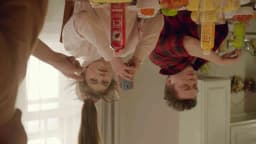
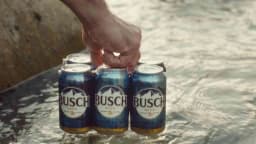
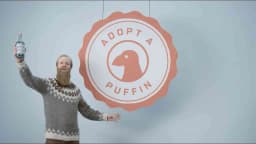
The creative execution parodies standardised alcohol-category language directly, according to documentation published by Craft Brewing Business in April 2018. The campaign's titles — "Farmer's Second Attempt," "Ally's Attempt," "Farmer's First A..." — are themselves a formal rejection of the naming conventions that commodity alcohol brands use to signal heritage and quality. Where a macro-brand might deploy a sweeping rural landscape and a voiceover about craftsmanship, the SOB films engage with those tropes critically, using narrative structure to expose and deflate the clichés rather than reproduce them.
The Film medium was the right vehicle for this approach. Six discrete assets allowed the campaign to develop its satirical register across multiple vignettes rather than compressing it into a single execution that might read as a one-note joke. Each film extends the SOB brand voice into a different scenario or character frame, building cumulative familiarity with the brand's personality in the United States market. Production credits for the full visual treatment — including cinematography and post-production specifics — are not publicly documented beyond the core creative team named above. The structural ambition of the campaign, coordinating six narrative films under a single coherent brand platform, is consistent with Agency Squid's documented approach to brand-launch work for independent food and drink clients, as described on agencysquid.com.
No verified performance data for the Oskar Blues SOB campaign — including sales lift, market-share movement, media reach, or independent effectiveness measurements — is publicly available. The campaign carries no documented recognition across Cannes Lions, the Effie Awards, the One Show, D&AD, the Clio Awards, the Webby Awards, or WARC's effectiveness databases, as confirmed by Clapboard's archival research.
Structural analysis provides a meaningful alternative lens. The decision to produce six film assets for a brand launch rather than a single hero film is a deliberate investment in depth of narrative — a signal that Agency Squid and Oskar Blues prioritised sustained cultural presence over a single media moment. For an independent spirits brand entering a competitive United States market in 2017, that volume of content creates multiple points of audience contact without requiring the media budget that large alcohol companies deploy to achieve comparable reach.
The campaign's satirical approach to category language is structurally effective for brand recall. Parody demands active cognitive engagement from viewers in a way that conventional aspirational advertising does not, making the SOB brand voice more memorable at lower exposure frequency. The Clapboard Score of 54 out of 100 reflects a campaign that executes its creative concept with clarity and commitment, while operating without the distribution scale or measured outcomes that would push the score into the upper range. As documented on agencysquid.com, the SOB work represented a foundational brand-identity project, and its effectiveness is best understood as a platform-building exercise rather than a single-campaign performance event.
The campaign is a six-film brand launch for SOB, Spirits by Oskar Blues, created by Agency Squid and published in the United States in July 2017. It parodies standardised alcohol-category language to distance SOB from big beer and spirits conventions, establishing a distinct irreverent voice for the new ready-to-drink brand.
Agency Squid, based in Minneapolis, created the SOB campaign. Creative direction and copywriting were handled by Miles Marmo, with art direction by Phil Jones, direction by Nate Maydoyle, production by Sam Kovar, and production company Don't Blink TV. These credits are documented in Agency Squid's published case materials and reporting by Craft Brewing Business.
SOB stands for Spirits by Oskar Blues. Oskar Blues launched SOB in 2017 as a ready-to-drink spirits brand, extending the brewery's established irreverent culture into a new alcohol category. The brand development ran from February through June 2017, according to documentation on agencysquid.com and reporting by Craft Brewing Business.
The strategy targeted the homogenised vocabulary of alcohol advertising in the United States. By parodying phrases like "clean" and "crisp" that macro-brands use interchangeably, the SOB campaign carved a distinct niche. The six-film structure allowed the satirical brand voice to develop across multiple narrative scenarios rather than a single execution.
The Clapboard Score for the SOB campaign is 54 out of 100. The score reflects the campaign's clear creative concept and committed execution within an independent brand context, while acknowledging the absence of verified performance data and major awards recognition that would indicate broader measurable industry impact or commercial effectiveness at scale.
No awards for the Oskar Blues SOB campaign have been verified across Cannes Lions, the Effie Awards, the One Show, D&AD, the Clio Awards, the Webby Awards, or WARC databases, according to Clapboard's archival research. The campaign's value is documented as a brand-platform launch rather than an awards-circuit entry.
.webp)
Creative Collaboration Platform: The Backbone of Modern Creative WorkWhat is a creative collaboration platform?Clapboard defines a creative collaboration platform as the operational core for today’s distributed creative teams. This is not a collection of digital collaboration tools stitched together; Clapboard’s system


Understanding the Creative Production MarketplaceWhat is a Creative Production Marketplace?Clapboard defines a creative production marketplace as a structured ecosystem where brands, agencies, and production talent converge to execute video, advertising, and branded content at scale. Unlike the legacy agency or freelanREAD FULL ARTICLE

The Urgent Need for a Creative Production Operating SystemWhy Traditional Creative Production Models Break DownClapboard sees the creative production landscape shifting under pressure. Content velocity is no longer a buzzword—it’s a mandate. Modern advertising demands relentless output across dozens of channels, each wREAD FULL ARTICLE