 ARCHIVE
Otrivin Desert Beach Escalator Campaign by Saatchi Switzerland
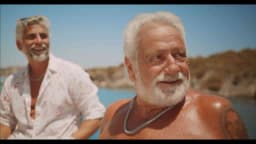
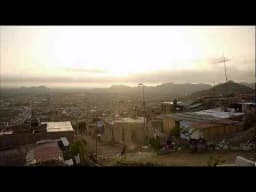
Otrivin's "Desert, Beach, Escalator" is a three-part pharmaceutical film campaign created by Saatchi & Saatchi Switzerland and published in the Swiss market in February 2013, using vivid environmental storytelling to dramatise the immediate relief the nasal decongestant delivers to blocked airways.
Otrivin is a topical nasal decongestant historically associated with the active ingredient xylometazoline, according to adruby.com, and was marketed within the Novartis consumer health portfolio around the time of this campaign's release. The brand's strategic challenge is a familiar one in pharmaceutical advertising: transforming an invisible physiological benefit — the sensation of breathing freely — into a visual experience that earns attention in a crowded healthcare category. The 2013 campaign met that challenge by anchoring each of its three film assets to a distinct sensory environment: an arid desert, an open beach, and an everyday escalator. Each setting functions as a metaphor for the before-and-after experience of using Otrivin, moving the viewer from constriction to openness.
The campaign was produced in Switzerland under the creative leadership of Saatchi & Saatchi, the agency whose working relationship with Otrivin is documented from at least 2010, according to adruby.com. Directed by Ken Lidster through the production company Bent Image Lab, with producers Ray Di Carlo and Andrew Harvey overseeing delivery, the work carries a level of production ambition unusual for an over-the-counter pharmaceutical brand in the Swiss market. In deploying film as its sole medium across three distinct executions, the campaign signals a commitment to emotional resonance over product-feature enumeration — a creative philosophy that would become increasingly central to healthcare advertising throughout the 2010s. Clapboard has assigned this campaign a score of 71 out of 100, reflecting its strong conceptual foundation and competent execution within a category not historically known for creative risk.
ARCHIVEOtrivin operates in the competitive over-the-counter nasal decongestant segment of the Swiss pharmaceutical market. In Switzerland, the self-medication and consumer health sector is a well-established commercial space governed by strict pharmaceutical advertising regulations, which place significant constraints on the claims brands can make and the manner in which they can be made. Within those constraints, the creative strategy deployed by Saatchi & Saatchi Switzerland in 2013 is notably intelligent: rather than asserting product efficacy directly, the campaign invites viewers into a felt experience of relief.
The strategic rationale draws on a fundamental insight about how people understand nasal blockage. Congestion is experienced as a form of environmental confinement — the world feels smaller, duller, more pressured. Otrivin's campaign inverts that metaphor by transporting the viewer to environments defined by space and openness: a desert landscape, a wide beach, the upward movement of an escalator. Each location is chosen not for geographic specificity but for its sensory register, communicating liberation and flow. This approach sidesteps the regulatory constraints common to pharmaceutical advertising while delivering an emotionally coherent brand message. According to adruby.com, a parallel Otrivin campaign titled "When Allergies Take Over" was created by Saatchi & Saatchi Johannesburg in 2013 and similarly positioned the brand around allergy-related nasal blockage, suggesting a consistent global strategic framework applied across regional markets that year.
The competitive environment in the Swiss nasal decongestant category included rival brands such as Rhinomer, which addresses nasal congestion through saline-based formulations, and Vibrocil, another established Swiss-market product competing for share of the same pharmacy shelf. Against these alternatives, Otrivin's investment in high-production film advertising in 2013 represented a deliberate bid for brand salience rather than simply product differentiation. According to adruby.com, a campaign titled "Otrivin does the trick" was created by Y&R Belgium in October 2012, confirming that multiple agency partners and creative approaches were simultaneously active across the Otrivin brand's European market at this time — a context that makes Saatchi & Saatchi Switzerland's film-led 2013 work all the more strategically purposeful in carving out a distinctive visual identity.
Director Ken Lidster led the creative production of the "Desert, Beach, Escalator" campaign through Bent Image Lab, the production company responsible for bringing the three-film suite to life. Lidster's directorial approach is central to the campaign's effectiveness: each of the three executions must do the same narrative work — communicating the transition from blockage to relief — while doing so through an entirely different environmental vocabulary. The desert, the beach, and the escalator are not interchangeable; each carries its own visual rhythm, light quality, and emotional temperature, and the craft challenge is to maintain tonal coherence across all three.
The creative team assembled by Saatchi & Saatchi Switzerland brought a clear division of responsibilities to the work. Creative director Leon Jacobs oversaw the campaign's conceptual integrity, while art director Gustavo Figueiredo shaped its visual language and copywriter Massimo Caiati defined its verbal register. Global account director Andrea Pedrazzini held the strategic and client relationship together across the production process. Producers Ray Di Carlo and Andrew Harvey at Bent Image Lab managed the logistical complexity of delivering three distinct film environments within a single campaign framework.
The film medium was the only medium deployed in this campaign, a choice that concentrates the entire creative and production investment into moving image storytelling. In the Swiss pharmaceutical advertising landscape of 2013, this was a relatively uncompromising approach: film demands attention in a way that static press or digital display does not, and the environmental metaphors chosen for this campaign — wide open natural spaces and the upward propulsion of an escalator — depend on motion to fully communicate their meaning. The lineage of this creative approach within the Saatchi and Otrivin relationship is worth noting: according to adruby.com, a 2010 Otrivin campaign titled "Sea-horse, Crab, Octopus," created by BBR Saatchi & Saatchi Tel Aviv, used sea creatures to represent nasal relief and earned a bronze Clio in the Press category in 2011, as reported by saatchi.com. The 2013 Swiss work by Saatchi & Saatchi extends and evolves that tradition of nature-rooted sensory metaphor.
No verified performance data for the "Desert, Beach, Escalator" campaign is publicly available. No sales lift figures, media reach metrics, or brand tracking data have been published in connection with this work. No award wins are documented across Cannes Lions, the Effies, The One Show, D&AD, the Clios, the Webby Awards, or WARC for this specific campaign.
Structural analysis of the campaign nonetheless supports a qualified assessment of its effectiveness potential. The decision to deploy three distinct film executions rather than a single hero spot reflects an understanding that frequency and contextual variation work together to build brand memory in a category where purchase decisions are often made quickly at the pharmacy counter. Each execution targets a different sensory trigger — arid heat, coastal air, upward momentum — which broadens the campaign's potential to resonate across a diverse Swiss audience without fragmenting its core message.
The campaign's greatest structural strength is its avoidance of explicit product demonstration. In Swiss pharmaceutical advertising, where regulatory boundaries shape what can be shown and claimed, the choice to communicate relief through environmental metaphor rather than symptomatic illustration is both strategically sound and creatively mature. This approach also has measurable implications for brand recall: campaigns built on distinctive visual worlds, rather than generic product shots, are more likely to generate lasting memory encoding, a point consistently supported by research into advertising effectiveness published by the Institute of Practitioners in Advertising in the United Kingdom. Clapboard assigns this campaign a score of 71 out of 100, recognising its creative discipline and strategic coherence while acknowledging the absence of verified results data and documented industry recognition.
Otrivin's "Desert, Beach, Escalator" is a three-part film campaign created by Saatchi & Saatchi Switzerland and published in the Swiss market in February 2013. It uses three distinct natural and urban environments — a desert, a beach, and an escalator — to dramatise the sensation of clear, unobstructed breathing that Otrivin delivers.
Ken Lidster directed the Otrivin campaign through production company Bent Image Lab. The campaign was produced by Ray Di Carlo and Andrew Harvey. Creative direction was handled by Leon Jacobs at Saatchi & Saatchi Switzerland, with art direction by Gustavo Figueiredo and copywriting by Massimo Caiati, according to campaign documentation.
Saatchi & Saatchi used open natural settings to communicate the feeling of relief from nasal blockage without making explicit pharmaceutical claims. The desert, beach, and escalator each function as a sensory metaphor for unobstructed breathing, allowing the campaign to work within Swiss pharmaceutical advertising regulations while delivering an emotionally resonant brand message.
Clapboard assigns the Otrivin "Desert, Beach, Escalator" campaign a score of 71 out of 100. The score reflects the campaign's strong conceptual foundation and strategic coherence. The absence of publicly verified performance data and documented industry award recognition are factors that constrain a higher rating.
Saatchi & Saatchi's relationship with Otrivin dates to at least 2010, according to adruby.com. A campaign titled "Sea-horse, Crab, Octopus," created by BBR Saatchi & Saatchi Tel Aviv, used sea creatures as nasal-relief metaphors and won a bronze Clio in the Press category in 2011, as reported by saatchi.com. The 2013 Swiss work continues that nature-rooted creative tradition.
No award wins for the Otrivin "Desert, Beach, Escalator" campaign are documented across Cannes Lions, the Effies, The One Show, D&AD, the Clios, the Webby Awards, or WARC. No verifiable trade press reviews citing recognition for this specific 2013 Saatchi & Saatchi Switzerland campaign have been identified in publicly available records.
.webp)
Creative Collaboration Platform: The Backbone of Modern Creative WorkWhat is a creative collaboration platform?Clapboard defines a creative collaboration platform as the operational core for today’s distributed creative teams. This is not a collection of digital collaboration tools stitched together; Clapboard’s system


Understanding the Creative Production MarketplaceWhat is a Creative Production Marketplace?Clapboard defines a creative production marketplace as a structured ecosystem where brands, agencies, and production talent converge to execute video, advertising, and branded content at scale. Unlike the legacy agency or freelanREAD FULL ARTICLE

The Urgent Need for a Creative Production Operating SystemWhy Traditional Creative Production Models Break DownClapboard sees the creative production landscape shifting under pressure. Content velocity is no longer a buzzword—it’s a mandate. Modern advertising demands relentless output across dozens of channels, each wREAD FULL ARTICLE