Cerveza Patagonia's 'The Mountain Experiment' sent stressed Brazilians to Cambará do Sul for a week to measure nature's effect on anxiety and wellbeing.

Cerveza Patagonia Turns Mountain Immersion Into a Mental Wellness Campaign
The Mountain Experiment is a 2021 integrated campaign by Cerveza Patagonia, produced in Brazil, in which three participants selected from a pool of twenty high-stress volunteers spent one week living in wooden cabins in the mountain city of Cambará do Sul to test whether immersion in nature could measurably reduce anxiety and stress.
Cerveza Patagonia positions itself not simply as an alcoholic beverage but as a brand rooted in nature and lived experience. The Mountain Experiment extends that positioning into genuinely testable territory. Rather than asserting a lifestyle connection through imagery alone, the campaign constructs a structured social experiment in which real people with clinically observed stress and anxiety levels are removed from urban environments and placed in the mountains of southern Brazil. The campaign launched in September 2021, created by Beta Collective, and takes the form of a documentary film supported by an integrated media rollout. The Clapboard Score for The Mountain Experiment is 63 out of 100, reflecting a campaign that earns attention through conceptual rigour rather than production spectacle.
The geographic market is Brazil, a country where the beer category is both intensely competitive and culturally embedded. Cerveza Patagonia, an Argentine beer brand marketed in Brazil, uses the campaign to claim differentiated territory by aligning the product with mental wellbeing — a consumer concern that had intensified sharply in the period surrounding the campaign's release. Brazilian philosopher Viviane Mosé partnered with the brand to frame the experiment's intellectual and emotional foundations, lending the project academic credibility alongside its advertising purpose. The campaign contains one primary media asset and was developed as an integrated effort spanning documentary content and social channels.

Cerveza Patagonia identifies anxiety as the central consumer tension The Mountain Experiment is designed to address. The strategic logic begins with a simple observation: stress and anxiety had become defining features of Brazilian urban life by 2021, and brands capable of offering genuine relief — not merely distraction — stood to build meaningful emotional equity. Rather than sponsoring escapism, Cerveza Patagonia proposes something more rigorous: proof.
Brazil ranked among the five largest beer-producing countries in the world in 2021, according to brauwelt.com, which establishes the scale of the competitive environment in which The Mountain Experiment operates. In a category where differentiation through taste or price is increasingly difficult to sustain, purpose-led platforms offer a more durable form of brand distinction. Cerveza Patagonia's nature-and-experience platform had already established a consistent creative direction; The Mountain Experiment deepens that platform by grounding it in observable human outcomes rather than aspirational imagery.
The decision to partner with Viviane Mosé, a Brazilian philosopher with a public profile in the conversation around mental health and human behaviour, is strategically deliberate. Her involvement signals that the brand is engaging with the anxiety question seriously, not opportunistically. The campaign sits within a broader creative lineage developed by Beta Collective across 2021 and 2022, which also includes related Cerveza Patagonia campaigns built around mountain environments and experiential escape, as reported by musebyclios.com. That lineage gives The Mountain Experiment the coherence of a platform rather than the novelty of a one-off execution, strengthening its strategic credibility in the Brazilian market.
The Mountain Experiment unfolds as a documentary social experiment directed by Irmãos Meirelles and produced by Café Royal. On screen, a psychologist interviews twenty Brazilians identified as carrying high levels of stress and anxiety. Three participants are then selected and transported to wooden cabins in Cambará do Sul, a mountain city in the south of Brazil, where they live for one week surrounded by natural landscape. The film tracks their experience before, during, and after the immersion, measuring six specific dimensions of wellbeing: patience, sleep quality, fatigue, irritability, self-criticism, and compulsive eating.
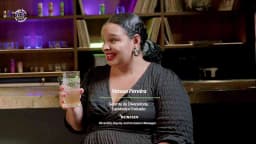
The visual grammar of the film relies on the landscape of southern Brazil as both setting and argument. Director of photography Juliano Dutra frames the mountains of Cambará do Sul as an active presence rather than a backdrop, allowing the environment itself to carry the persuasive weight of the narrative. The participants' candid responses — observed and recorded across the week — give the documentary its emotional texture. Brazilian philosopher Viviane Mosé appears in the film to contextualise the experiment's findings within a broader intellectual framework concerning human beings' relationship to natural environments.
Creative direction and copywriting on The Mountain Experiment were led by Bernardo Tavares, with Victor Yves serving as art director. Executive production was handled by Moa Ramalho and Giovana Grigolin, with production coordination by Alex Missaka and Chélide Teixeira. The integrated format — combining documentary content with social distribution — was managed through Beta Collective's collaborative model, with post-production overseen by Hub VFX. The result is a piece of branded content that earns its documentary label by committing to genuine measurement rather than performed authenticity.
No verified sales lift, market-share change, or brand-tracking data for The Mountain Experiment has been made publicly available. The campaign recorded 3,242 views and 10 likes on its documented platform presence, figures that reflect its positioning as a long-form content asset rather than a mass-reach media buy. No published numerical results from the participant wellbeing measurements have been confirmed in available sources.
Structural effectiveness, however, can be assessed with confidence. The Mountain Experiment deploys a documentary format grounded in a real experimental protocol — screened participants, a psychologist, six measured variables, a defined location, and a fixed time period. That architecture gives the campaign a truth claim that most branded content cannot make: its assertions about nature's effect on anxiety are not stated, they are tested. For Cerveza Patagonia in Brazil, this structure builds brand equity in a category where most competitors rely on occasion-based or aspiration-based messaging.
The campaign's integration across documentary and social formats extends its reach beyond a single media moment, while its partnership with Viviane Mosé provides cultural endorsement from outside the advertising ecosystem. As reported by musebyclios.com, The Mountain Experiment sits within a sustained creative platform developed by Beta Collective for Cerveza Patagonia, which amplifies the cumulative effectiveness of any individual execution. The Clapboard Score of 63 out of 100 reflects a campaign that succeeds through strategic and conceptual strength, with room for broader measurable impact had the experimental results been published and amplified as campaign content in their own right.
The Mountain Experiment is a 2021 integrated campaign by Cerveza Patagonia in Brazil. Beta Collective created the campaign, which selected three high-stress participants to spend one week in wooden cabins in Cambará do Sul, measuring changes in patience, sleep quality, fatigue, irritability, self-criticism, and compulsive eating before, during, and after mountain immersion.
Irmãos Meirelles directed The Mountain Experiment. The film was produced by Café Royal, with Juliano Dutra serving as director of photography. Creative direction and copywriting were led by Bernardo Tavares, with Victor Yves as art director, all working under the Beta Collective agency for Cerveza Patagonia in Brazil.
Viviane Mosé is a Brazilian philosopher who partnered with Cerveza Patagonia on The Mountain Experiment. Her role was to frame the campaign's intellectual and emotional foundations, contextualising the experiment's findings within a broader perspective on human beings' relationship to natural environments, lending the branded documentary academic credibility beyond its advertising purpose.
The Mountain Experiment was filmed in Cambará do Sul, a mountain city in southern Brazil. The location directly serves the campaign's strategic proposition: that immersion in natural mountain environments can measurably reduce stress and anxiety. Cambará do Sul's elevated landscape provided both the visual setting and the environmental stimulus central to the experiment's design.
The Mountain Experiment holds a Clapboard Score of 63 out of 100. The score reflects the campaign's strength in conceptual strategy and documentary craft, while indicating that broader measurable impact — particularly had the participant wellbeing results been published and amplified — could have elevated its overall effectiveness in the Brazilian market.
Cerveza Patagonia is an Argentine beer brand marketed in Brazil and is entirely separate from Patagonia, the outdoor apparel company. Cerveza Patagonia shares a name and a nature-rooted brand identity but operates in the alcoholic drinks category, with The Mountain Experiment representing one execution within its broader nature-and-experience creative platform in Brazil.
.webp)
Creative Collaboration Platform: The Backbone of Modern Creative WorkWhat is a creative collaboration platform?Clapboard defines a creative collaboration platform as the operational core for today’s distributed creative teams. This is not a collection of digital collaboration tools stitched together; Clapboard’s system


Understanding the Creative Production MarketplaceWhat is a Creative Production Marketplace?Clapboard defines a creative production marketplace as a structured ecosystem where brands, agencies, and production talent converge to execute video, advertising, and branded content at scale. Unlike the legacy agency or freelanREAD FULL ARTICLE

The Urgent Need for a Creative Production Operating SystemWhy Traditional Creative Production Models Break DownClapboard sees the creative production landscape shifting under pressure. Content velocity is no longer a buzzword—it’s a mandate. Modern advertising demands relentless output across dozens of channels, each wREAD FULL ARTICLE