 ARCHIVE
Peruvian Institute of Art and Design Challenges Creative Norms in 2014
The Peruvian Institute of Art and Design's 2014 campaign 'The First DJ Reading Without a Radio Host' is an audio advertisement produced by Youpanqui in Peru that uses the image of a self-sufficient DJ to argue that the right education liberates creative talent from conventional gatekeepers.
Published in March 2014, the campaign carries a single, direct proposition: with inspiration, talent goes far. The Peruvian Institute of Art and Design — known by its Spanish-language acronym IPAD — positions itself not merely as a teaching institution but as the catalyst that allows aspiring artists, designers, and media creators to operate on their own terms. The creative concept is precise in its logic: a DJ who reads without a radio host is a professional who has internalised enough skill and confidence to perform without the traditional intermediary who would otherwise frame, introduce, and validate the act. That figure stands in for every student who enters IPAD seeking to do the same in their own discipline.
The campaign runs as a single audio asset, a format that reinforces its own argument. Sound is the medium of radio, of DJs, of the very world the concept inhabits, and choosing audio over print or film is itself a creative decision that mirrors the theme of working fluently within a discipline. Art Director Mario Cedron and Creative Director Renato Farfán developed the campaign under the executive creative direction of Miguel Leon at Youpanqui. The geographic market is Peru, and the campaign speaks directly to the aspirations of young Peruvians who see creative education as a route to professional independence. The Clapboard Score for this campaign is 58 out of 100, reflecting its conceptual clarity and disciplined use of medium against a limited documented production footprint.
ARCHIVEThe Peruvian Institute of Art and Design targets a specific tension in the minds of aspiring creatives. Young people drawn to art, design, and media production often encounter institutional and industry structures that reward conformity and defer to established authorities rather than individual expression. The DJ-without-a-radio-host concept addresses that tension directly by making autonomous performance the proof of a good education rather than a credential issued by an authority figure.
The strategic choice of audio as the campaign's sole medium carries additional weight when placed against the Peruvian advertising landscape of 2014. According to Trade Ec Europa Eu, Peruvian internet advertising investment reached 186 million soles — approximately US$59 million — in 2014, representing year-over-year growth of 40 percent. Education and cultural activity accounted for 13 percent of Peruvian online advertising revenue in that same period, also according to trade.ec.europa.eu, indicating that the sector was an active and competitive space for media spend. Within that environment, an audio-first campaign that refuses the visual conventions of education advertising positions IPAD as a practitioner of the values it teaches.
The competitive landscape for creative higher education in Peru in 2014 included institutions such as Cibertec, Toulouse Lautrec, UPC, USIL, and CAED. According to linkedin.com, Toulouse Lautrec was established in 1983 as one of Peru's early dedicated design schools. Cibertec's marketing curriculum received formal authorisation from Peru's Ministry of Education for the 2014-I academic period, according to Contenidos Mineducacion Gov Co. Against that backdrop, Youpanqui's approach for IPAD chose narrative depth over institutional credential-listing, staking out a differentiating creative position in a crowded market.
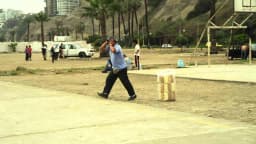
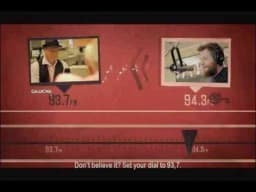
The campaign deploys audio as its sole format, and the on-screen execution is built entirely in sound. A DJ performs a reading — the act itself the concept — without the presence of a radio host to introduce, contextualise, or legitimise what is happening. The absence of the host is not presented as a deficiency but as an achievement, a demonstration that the performer has developed enough independent command to make the intermediary redundant.
The creative team at Youpanqui structured the execution so that the medium enacts the message. Listening to the spot, the audience experiences directly what IPAD promises to produce: a creative professional who does not need the conventional apparatus to do meaningful work. Art Director Mario Cedron shaped the aesthetic logic of the piece, while Creative Director Renato Farfán guided the conceptual framework. Executive Creative Director Miguel Leon oversaw the broader creative direction. Copywriting was handled by Renato Farfan Basauri and Analu Ramos, with design work from Andrés Ortiz. The account was directed by Monica Roggero.
Production was carried out by No Problem, with Jesus Plaza directing. Manco Quispe Mamani served as editor, and audio and home production responsibilities were assigned to a production team credited within the campaign documentation. The campaign was produced and published in Peru in March 2014, entirely in Spanish, reinforcing its address to a Peruvian audience of aspiring creatives. The tagline — 'With inspiration your talent goes far' — functions as the spoken thesis of the audio piece, a statement that completes the conceptual arc begun by the DJ-without-a-host scenario. The result is a campaign in which every production decision, from format to language to the deliberate removal of a conventional figure, serves the central argument about what education at IPAD actually delivers.
No independently audited performance data for 'The First DJ Reading Without a Radio Host' — such as broadcast reach figures, enrolment uplift, or media spend attribution — is publicly available from verified third-party sources. The campaign's documented engagement record reflects its relatively contained initial distribution: the asset registered 2,054 views, 3 likes, and no comments on the platform where it was submitted, figures drawn from the campaign's own metadata.
Structurally, the campaign demonstrates several qualities associated with effective niche education advertising. It achieves concept-medium alignment — the audio format enacts the creative autonomy it promises — which typically improves message retention by reducing the cognitive distance between what an ad says and what it does. In the Peruvian market of 2014, where education and cultural activity represented 13 percent of online advertising revenue according to trade.ec.europa.eu, a campaign that differentiated on creative register rather than on feature lists carried a measurable strategic logic even where quantified results are unavailable.
No awards for this campaign are documented in the available public record. The Clapboard Score of 58 out of 100 acknowledges the campaign's genuine conceptual strength — a tight, self-consistent creative idea executed with discipline — while reflecting the limited evidence of broad market impact, production scale, or verified audience response. The campaign stands as an example of a small-budget audio execution that uses strategic coherence to compensate for limited reach, a model that remains relevant for education brands operating in emerging markets like Peru.
'The First DJ Reading Without a Radio Host' is a 2014 audio campaign by the Peruvian Institute of Art and Design, created by Youpanqui in Peru. It uses the concept of a DJ performing without a radio host to argue that IPAD's education enables creative autonomy, with the tagline 'With inspiration your talent goes far.'
The campaign was created by Youpanqui. Art Director Mario Cedron and Creative Director Renato Farfán led creative development, with Executive Creative Director Miguel Leon overseeing direction. Copywriting was by Renato Farfan Basauri and Analu Ramos. Production was handled by No Problem, directed by Jesus Plaza, and published in Peru in March 2014.
IPAD chose audio because the format directly mirrors the campaign's concept. A DJ performing without a radio host is a sound-based act, so delivering the message through audio makes the medium enact the argument. This alignment between format and idea is a defining creative decision made by Youpanqui for the Peruvian market in 2014.
In Peru in 2014, the creative higher education sector included institutions such as Cibertec, Toulouse Lautrec, UPC, USIL, and CAED. According to contenidos.mineducacion.gov.co, Cibertec's marketing curriculum was formally authorised by Peru's Ministry of Education for 2014. IPAD differentiated itself through a narrative, concept-led campaign rather than institutional credential messaging.
The IPAD DJ Reading campaign holds a Clapboard Score of 58 out of 100. The score recognises the campaign's strong concept-medium alignment and strategic coherence — a DJ without a radio host as a metaphor for IPAD's educational promise — while accounting for its limited documented reach, modest engagement figures, and absence of verified third-party performance data.
In Peru in 2014, internet advertising investment reached 186 million soles, approximately US$59 million, with 40 percent year-over-year growth, according to trade.ec.europa.eu. Education and cultural activity held 13 percent of that online revenue. Within that expanding but competitive environment, Youpanqui's audio-first, narrative-driven approach gave IPAD a distinctive creative position.
.webp)
Creative Collaboration Platform: The Backbone of Modern Creative WorkWhat is a creative collaboration platform?Clapboard defines a creative collaboration platform as the operational core for today’s distributed creative teams. This is not a collection of digital collaboration tools stitched together; Clapboard’s system


Understanding the Creative Production MarketplaceWhat is a Creative Production Marketplace?Clapboard defines a creative production marketplace as a structured ecosystem where brands, agencies, and production talent converge to execute video, advertising, and branded content at scale. Unlike the legacy agency or freelanREAD FULL ARTICLE

The Urgent Need for a Creative Production Operating SystemWhy Traditional Creative Production Models Break DownClapboard sees the creative production landscape shifting under pressure. Content velocity is no longer a buzzword—it’s a mandate. Modern advertising demands relentless output across dozens of channels, each wREAD FULL ARTICLE