 ARCHIVE
Guinness Surfer Defined What UK Advertising Could Be in 1999
How Guinness Surfer Rewrote the Rules of UK Alcoholic Drinks Advertising Guinness 'Surfer' is a...
Pilsner Urquell Originality Campaign Puts Czech Identity on Screen
Pilsner Urquell's 2013 Originality campaign is a Czech market film and Thedrinksbusiness.clapboard.com/blog/about-clapboard/how-clapboard-works/clapboard-vs-traditional-advertising-agency">multi-channel advertising initiative created by Ogilvy & Mather Prague that positions the brand as the authentic expression of Czech inventive spirit, running across television, nationwide press, outdoor, and both on-trade and off-trade channels from March 2013, according to Adsspot.
The campaign launched in Czechia in March 2013, with a television debut timed shortly before 8 April of that year, according to Prazdroj Cz. Its central proposition draws a direct line between Pilsner Urquell's status as the world's original pilsner and a broader cultural argument about Czech originality as a defining national characteristic. Rather than relying on product demonstration alone, the campaign uses the film medium to frame the brand's heritage within a living cultural identity, connecting the invention of the pilsner style with an ongoing Czech capacity for creative and intellectual contribution.
The geographic scope of the rollout reflects genuine ambition within the Czech Republic. An outdoor phase planned for April 2013 extended the campaign across 20 Czech cities, as reported by prazdroj, according to Academic Oup.cz, ensuring that the brand's message reached audiences well beyond television. The outdoor component was itself a creative act: installations featured specially constructed three-dimensional citylights built from bottles and bottle caps, turning the medium into an expression of the campaign's originality theme. The campaign comprises one primary film asset, supported by press and trade activations that together constituted a fully integrated push across the Czech market. Pilsner Urquell earns a Clapboard Score of 60 out of 100 for this work.
Pilsner Urquell occupies a singular position in the global beer category. The brand is not merely a Czech lager competing for shelf presence; it is the documented origin point of the pilsner style itself, a provenance claim that no competitor in the Czech market or internationally can replicate. The 2013 Originality campaign builds its strategy on exactly that irreproducible heritage, translating a historical fact into a contemporary brand platform centred on Czech identity and inventive character.
The strategic rationale connects brand equity to national pride in a way that is structurally difficult for rival brewers to challenge. By framing originality as a Czech cultural trait — of which Pilsner Urquell is both product and proof — the campaign situates the brand above conventional quality or taste messaging. This approach also speaks to the domestic Czech audience on its own terms, acknowledging that in Czechia the brand does not need to explain its heritage but rather needs to keep that heritage emotionally resonant and culturally current.
Plzeňský Prazdroj, the brand's owning company, reported sales of 9.9 million hectolitres in 2012, including licensed production abroad, and exported to more than 50 countries, according to prazdroj.cz. That international footprint means the domestic campaign carries additional weight: what Pilsner Urquell says about itself in Czechia shapes the story told in export markets. A multi-channel approach spanning television, press, outdoor in 20 Czech cities, and both on-trade and off-trade environments reflects a media plan calibrated to reinforce a single coherent idea at every consumer touchpoint across the Czech Republic.
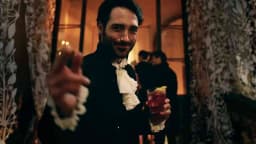
The Originality film was directed by Roman Valent for Boogie Films. On screen, the film presents the concept of Czech originality as a living, inhabited idea rather than an abstract brand claim, drawing a connective thread between Pilsner Urquell's founding invention and the broader creative and intellectual character of Czech culture. The narrative unfolds as a portrait of originality itself, using the brand's documented status as the world's first golden lager as the anchor from which wider cultural observations are made. The film's visual and storytelling approach frames Czech inventiveness as an enduring national trait, with Pilsner Urquell positioned as its most tangible and enduring expression.
The production team assembled by Ogilvy & Mather Prague brought together a full roster of Czech and international craft talent. Creative direction was led by Will Rust, with copywriting by Alena Neubauerová and art direction by Petra Bíró. The director of photography was Jakub Dvorsky, whose visual work shapes the film's tone and credibility. Agency producer Dominika Šubertová and producer Pavel Prejda managed the production, with editing completed by Filip Malasek. The depth of the credited team reflects the campaign's status as a fully produced brand film rather than a tactical executional piece.
The outdoor phase extended the creative thinking from screen to physical space. Specially constructed three-dimensional citylights made from bottles and bottle caps were installed across 20 Czech cities in April 2013, as reported by prazdroj.cz. This production decision transformed a standard out-of-home format into a demonstration of the campaign's own central argument, making the medium itself an act of originality. The integration of a craft-intensive outdoor format with the film asset shows a deliberate effort to give the idea a physical presence proportionate to its cultural ambition within Czechia.
No verified performance data for the Originality campaign — including reach figures, sales uplift, or brand tracking results — is publicly available. No trade press reviews from Campaign, Ad Age, Adweek, The Drum, or Contagious have been identified for this work, and no social media reaction data has been located.
The campaign did receive formal industry recognition. Originality earned a Bronze special prize at the PIAF 2013 awards, an acknowledgement that places the work within the recognised body of Czech advertising from that year. That recognition, while a single data point, confirms that the campaign was entered into competition and evaluated favourably by an independent jury.
Structurally, the campaign demonstrates several qualities that support effectiveness. The multi-channel architecture — film, television, nationwide press, on-trade, off-trade, and outdoor across 20 Czech cities — maximises message frequency and coverage within the Czech Republic without fragmenting the creative idea. The decision to build three-dimensional outdoor installations from bottles and bottle caps is not decorative; it makes the medium embody the message, which is a reliable indicator of creative coherence. The consistent alignment between Pilsner Urquell's historical provenance and the campaign's cultural proposition gives the idea a defensible strategic foundation. For a brand operating in a market where authenticity claims require genuine substantiation, rooting the concept in documented history rather than invented brand mythology is a structurally sound choice that reduces the risk of consumer scepticism in Czechia and beyond.
The Pilsner Urquell Originality campaign is a 2013 Czech market advertising initiative created by Ogilvy & Mather Prague. It ran across television, nationwide press, outdoor, and on-trade and off-trade channels, using the brand's status as the world's original pilsner to frame a broader argument about Czech cultural and creative identity.
The Originality campaign launched in Czechia in March 2013. Television activity aired shortly before 8 April 2013, according to prazdroj.cz, followed by an outdoor phase in April 2013 that placed three-dimensional installations across 20 Czech cities, completing a nationwide multi-channel rollout within the Czech Republic.
Roman Valent directed the Originality film for Pilsner Urquell, working through Boogie Films. The production also credited creative director Will Rust, copywriter Alena Neubauerová, art director Petra Bíró, and director of photography Jakub Dvorsky, reflecting a fully staffed creative and production team assembled by Ogilvy & Mather Prague.
The Originality campaign won a Bronze special prize at the PIAF 2013 awards. This represents the only confirmed industry recognition for the campaign. No additional award entries or wins from other Czech or international advertising festivals have been publicly documented for this Pilsner Urquell work.
The outdoor phase used specially constructed three-dimensional citylights built from bottles and bottle caps, deployed across 20 Czech cities in April 2013, as reported by prazdroj.cz. This format transformed a standard out-of-home medium into a physical demonstration of the campaign's originality theme, making the installation itself an expression of the brand's core idea.
The Pilsner Urquell Originality campaign holds a Clapboard Score of 60 out of 100. The score reflects the campaign's coherent integration of brand heritage and cultural positioning across multiple channels, balanced against the absence of publicly verified performance metrics and limited documented trade press coverage of the 2013 Czech work.
.webp)
Creative Collaboration Platform: The Backbone of Modern Creative WorkWhat is a creative collaboration platform?Clapboard defines a creative collaboration platform as the operational core for today’s distributed creative teams. This is not a collection of digital collaboration tools stitched together; Clapboard’s system


Understanding the Creative Production MarketplaceWhat is a Creative Production Marketplace?Clapboard defines a creative production marketplace as a structured ecosystem where brands, agencies, and production talent converge to execute video, advertising, and branded content at scale. Unlike the legacy agency or freelanREAD FULL ARTICLE

The Urgent Need for a Creative Production Operating SystemWhy Traditional Creative Production Models Break DownClapboard sees the creative production landscape shifting under pressure. Content velocity is no longer a buzzword—it’s a mandate. Modern advertising demands relentless output across dozens of channels, each wREAD FULL ARTICLE