Qantas launched its 2016 Safety Video in partnership with Tourism Australia, filming at 17 destinations to transform a routine briefing into a destination

Qantas Turns Its 2016 Safety Video Into a Love Letter to Australia
Qantas launched its 2016 Safety Video as a destination-led film produced in partnership with Tourism Australia, transforming the routine pre-flight safety briefing into an immersive showcase of Australian landscapes, people, and culture designed to engage passengers from the first moment of their journey.
Published in February 2016 and introduced across the airline's domestic and international fleet from that month, the campaign marked a deliberate strategic shift for Qantas. Rather than treating the onboard safety demonstration as a compliance obligation, the airline repositioned it as a brand moment — one capable of generating emotional connection, national pride, and genuine audience engagement. The video was produced without a conventional advertising agency, with the creative direction emerging from a partnership between the airline and Tourism Australia. Safety demonstrations were filmed at 17 destinations around Australia, embedding iconic and lesser-known locations into a format that passengers worldwide are conditioned to ignore. The Clapboard Score for this campaign is 76 out of 100, reflecting its strong strategic rationale and broad cultural resonance.
In the Australian market, where Qantas operates as the flag carrier and a defining symbol of national identity, the campaign carried particular weight. By placing ordinary Australians and extraordinary Australian scenery at the centre of a mandatory viewing experience, the airline created a piece of content that functioned simultaneously as a safety briefing, a tourism advertisement, and a statement of brand character. The dual mandate — to satisfy aviation regulatory requirements while compelling viewers to actually watch — gave the creative team a uniquely demanding brief, and the resulting film answered both objectives with a single narrative approach.
Qantas built the 2016 Safety Video on a clear consumer insight. Travel audiences increasingly expect meaningful, immersive content even at routine brand touchpoints, and an airline's captive onboard audience represents one of the most reliable viewing environments available to any marketer. The safety briefing, mandatory for every passenger on every flight, offered Qantas a guaranteed impression — the challenge was converting obligation into genuine attention.
The partnership with Tourism Australia was central to the strategic logic. By aligning the airline's onboard content with the national tourism body's mandate to showcase Australia as a destination, Qantas created a film that served two institutional purposes at once. Alan Joyce, then CEO of Qantas, described the opportunity as a chance to celebrate Australia itself, telling Skift on January 29, 2016 that the team saw an opening to produce something genuinely special rather than functional. Joyce told Skift the ambition was to create content that was warm, funny, and down to earth because it centred on everyday Australians, while still meeting the core objective of focusing passenger attention on safety information every Qantas customer needs to know.
The targeting logic was deliberately broad. The video needed to resonate with domestic travellers already familiar with Australia's landscapes and with international passengers encountering those landscapes for the first time. Filming at 17 locations across the country gave the production geographic range to serve both audiences. In Australia, Qantas operated as the dominant full-service carrier, and as reported by Australian Aviation, the airline carried approximately 30 million passengers annually — each of whom was required to watch the safety video onboard — giving the campaign a guaranteed distribution footprint that no paid media buy could replicate. The competitive travel market in Australia, served by both full-service and low-cost operators, made differentiation at the brand experience level increasingly important, and the safety video represented exactly that kind of differentiation.
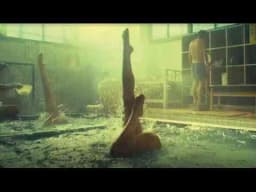
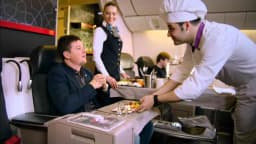
The 2016 Qantas Safety Video places ordinary Australians in recognisable and extraordinary settings across the country, with each safety procedure — seatbelt fastening, emergency exit identification, electronic device protocols — demonstrated not in a cabin mock-up but against the backdrop of real Australian life and landscape.
On screen, Australians demonstrate standard aviation safety procedures at locations including Bondi Icebergs in Sydney, Tasmania's Museum of Old and New Art, and Hamilton Island in Queensland, among the 17 destinations where filming took place. The warmth and informality of the talent grounds the safety instructions in a human register rather than a procedural one, making the familiar content feel fresh and the destinations feel vivid. The tone, as Alan Joyce described to Skift, is warm and down to earth, and the visual language supports that — wide shots of coastline and outback alternate with intimate moments of Australians going about their lives while incidentally modelling correct safety behaviour.
The creative team behind the film included Josh Whiteman and Josh Robbins, with Paul Chappell, and production was handled by ++ape. Executive producer Jason Byrne oversaw the shoot, with Marin Johnson serving as director of photography. The sound design was by Kathleen Burrows, composition by Bruce Heald, editing by Rohan Zerna, and production design by Otello Stolfo. The 2016 film represented a clear departure from the 2013 Qantas safety video, titled Safety in Style, which had emphasised the airline's refreshed uniforms and brand aesthetics rather than Australian destinations and people, as reported by Mumbrella. Where the 2013 execution leaned into polished presentation, the 2016 Safety Video leaned into authentic human warmth — a creative evolution that reflected the broader industry shift toward storytelling over production gloss.
The 2016 Qantas Safety Video generated more than 90 million views across the airline's inflight and social media platforms by 2021, according to Australian Aviation. That figure encompasses both the mandatory onboard viewing environment — where approximately 30 million annual Qantas passengers, as reported by Australian Aviation, encountered the film as a condition of travel — and the voluntary online audience that chose to watch on digital platforms.
On YouTube, the video accumulated 784,998 views, 4,601 likes, and 486 comments, figures that place it well above the engagement benchmarks typical of functional airline content. The voluntary online viewership is particularly significant: a safety video that passengers seek out and share represents a meaningful inversion of the category norm, where such content is habitually tuned out.
No third-party campaign effectiveness study measuring brand lift, booking intent, or recall uplift for this specific campaign is publicly available. However, the structural effectiveness of the approach is evident in the numbers. The combination of a guaranteed captive audience across a large fleet and genuinely compelling content designed for social sharing created a distribution model that functioned at two distinct levels simultaneously. The campaign's longevity — cited and viewed years after its February 2016 launch — also indicates durable creative quality. As a branded content asset built in partnership with Tourism Australia, the video achieved the dual mandate of safety compliance and destination marketing more visibly than most comparable airline productions, and the sustained view count across platforms reflects that rare alignment of institutional purpose and genuine audience interest.
The Qantas 2016 Safety Video is a destination-led safety briefing film produced in partnership with Tourism Australia. It was published in February 2016 and introduced across Qantas's domestic and international fleet from that month, with safety demonstrations filmed at 17 locations around Australia to showcase the country as a travel destination.
The 2016 Qantas Safety Video was created without a conventional advertising agency. The creative team included Josh Whiteman, Josh Robbins, and Paul Chappell, with production by ++ape. Executive producer Jason Byrne led the production alongside director of photography Marin Johnson, editor Rohan Zerna, and composer Bruce Heald.
The Qantas 2016 Safety Video generated more than 90 million views across inflight and social media platforms by 2021, according to Australian Aviation. On YouTube alone, the video recorded 784,998 views, 4,601 likes, and 486 comments, reflecting strong voluntary engagement well beyond its captive onboard audience.
The Qantas 2016 Safety Video was filmed at 17 destinations across Australia. Confirmed locations include Bondi Icebergs in Sydney, Tasmania's Museum of Old and New Art, and Hamilton Island in Queensland. The broad geographic spread was designed to appeal to both domestic travellers and international passengers discovering Australia for the first time.
The 2016 Qantas Safety Video replaced the 2013 Safety in Style execution, which focused on the airline's refreshed uniforms and polished brand aesthetics, as reported by Mumbrella. The 2016 film shifted to a destination-led narrative featuring everyday Australians and iconic landscapes, representing a move from brand presentation toward authentic cultural storytelling.
Qantas partnered with Tourism Australia to serve two institutional objectives simultaneously: meeting aviation safety compliance requirements and promoting Australia as a travel destination. CEO Alan Joyce told Skift the team saw an opportunity to celebrate Australia itself, using the guaranteed captive onboard audience of approximately 30 million annual passengers to deliver tourism messaging at scale.
.webp)
Creative Collaboration Platform: The Backbone of Modern Creative WorkWhat is a creative collaboration platform?Clapboard defines a creative collaboration platform as the operational core for today’s distributed creative teams. This is not a collection of digital collaboration tools stitched together; Clapboard’s system


Understanding the Creative Production MarketplaceWhat is a Creative Production Marketplace?Clapboard defines a creative production marketplace as a structured ecosystem where brands, agencies, and production talent converge to execute video, advertising, and branded content at scale. Unlike the legacy agency or freelanREAD FULL ARTICLE

The Urgent Need for a Creative Production Operating SystemWhy Traditional Creative Production Models Break DownClapboard sees the creative production landscape shifting under pressure. Content velocity is no longer a buzzword—it’s a mandate. Modern advertising demands relentless output across dozens of channels, each wREAD FULL ARTICLE