 ARCHIVE
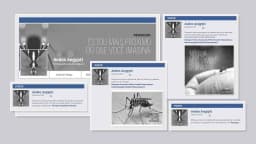
City of Sorocaba Turns Dengue Mosquito Into a Facebook Persona
How the City of Sorocaba Weaponised Social Media Against Dengue Fever in 2015 The City of...
Red Cross Brazil Reframes Donation as a Daily Digital Act
Red Cross Brazil's #donateexample campaign is a March 2013 digital public interest initiative created by Arcos, Recife, that invited people across Brazil to support life-saving work remotely, positioning everyday digital participation as a meaningful and accessible form of humanitarian contribution.
The campaign launched via the dedicated platform clube25.org, channelling its message through a single digital asset designed to lower the barrier between intention and action. Rather than relying on the conventional emotional spectacle associated with charity advertising, #donateexample pursued a direct proposition: that supporting the Red Cross required no physical fundraising interaction, only the willingness to act from home. This strategic framing placed the campaign firmly within a wider shift in Brazilian public interest communications, where digital channels were beginning to displace traditional collection drives as the primary point of donor contact.
In Brazil, the campaign arrived at a moment when NGOs and humanitarian organisations were actively exploring how digital media could extend their reach beyond urban donation events. Red Cross Pernambuco, the regional operation behind #donateexample, worked with Arcos to construct a campaign identity built around participation rather than guilt, agency rather than pity. The Clapboard Score for #donateexample is 60 out of 100, reflecting a campaign that demonstrates clear strategic coherence and an intelligent use of the digital medium, balanced against limited documented evidence of measurable public impact.
Red Cross Brazil structured #donateexample around a single insight: that the friction of physical donation was the primary obstacle between willing supporters and meaningful action. By anchoring the campaign on clube25.org and distributing it through digital channels, Arcos enabled a form of humanitarian participation that required no journey, no cash, and no scheduled event. The campaign proposition, as documented at adruby.com, was explicitly framed around helping save lives through an action that could be taken from home.
This approach reflected a broader truth about Brazilian digital adoption in the early 2010s. According to Nielsen's Global AdView Pulse report, global advertising spending increased 2.8 percent year over year during January through June 2013, a period in which digital formats were capturing an increasing proportion of that growth across developing markets including Brazil. For a regional Red Cross operation working within the constraints typical of a public service budget, the digital channel offered scale and precision that physical activations could not match.
The competitive landscape for humanitarian communications in Brazil at the time was characterised by emotionally led television appeals and street-level fundraising. #donateexample deliberately departed from this convention. Rather than manufacturing urgency through suffering imagery, Arcos and Red Cross Pernambuco built the campaign around positive agency, inviting donors to see their digital action as an example worth setting — a reframe that positioned social participation as the campaign's primary currency.
Arcos assembled a focused creative team for #donateexample, led by general creative director Carlos Renato Rocha alongside creative director Berg Carvalho. The campaign's visual and written dimensions were handled by art director Thiago Reis and copywriter João Saraiva, with illustration contributed by Eugênio Lima and 3D illustration by Saulo Lísias. Web development was delivered by David Vieira, while audio production was handled by Onomatopéia and video production by Três Caras — a full-service production infrastructure that reflects the ambition of the digital execution despite its NGO context.
The campaign's single media asset was delivered through clube25.org, a purpose-built platform that served as both the creative canvas and the donation mechanism. The on-screen execution presents humanitarian support as a reachable, domestic act, inviting the viewer to engage without leaving their immediate environment. The platform's design placed direct action at the centre of the experience, ensuring that the journey from awareness to contribution involved as few steps as possible.
The decision to build a dedicated campaign URL rather than route traffic through the Red Cross's main digital properties signals an intentional effort to create an immersive, campaign-specific environment. This production choice, common in digitally native public interest work of the period, allowed Arcos to control the full user experience from first impression to completed donation, maintaining the campaign's tonal consistency — direct, uncluttered, and oriented toward action rather than narrative spectacle.
No verified performance data for #donateexample is publicly available. As documented at adruby.com, no reliable data exists for the campaign's budget, impressions, donations generated, conversion rate, or geographic reach. No contemporaneous coverage of the campaign has been located in trade publications including Campaign, Ad Age, Adweek, The Drum, or Contagious, and no awards recognition for the campaign has been identified in major industry programmes.
Structural analysis, however, supports the campaign's core design decisions. By removing physical friction and concentrating the entire donor journey within a single digital environment at clube25.org, #donateexample created the conditions for conversion efficiency that emotionally led broadcast campaigns rarely achieve. The hashtag mechanic embedded in the campaign name invited organic social amplification, allowing each participant's act of donation to function simultaneously as a public declaration — a mechanism well suited to the Brazilian social media landscape of 2013, where peer visibility was an increasingly powerful driver of charitable behaviour.
The Red Cross Pernambuco operation's choice to work with Arcos Recife on a digitally native format, rather than adapting a television or print concept to the web, represents a production philosophy that prioritises channel coherence. Whether #donateexample translated that coherence into measurable humanitarian impact remains undocumented. The campaign's 60 out of 100 Clapboard Score reflects this balance: strong strategic and creative foundations, with public evidence of real-world results that the available record does not yet confirm.
#donateexample was a Red Cross Brazil digital campaign created by Arcos Recife in March 2013. It invited people to support humanitarian causes remotely through the platform clube25.org, positioning donation as a simple, home-based digital action rather than a physical fundraising interaction, and framing each participant's contribution as a shareable public example.
Arcos, based in Recife, Brazil, created #donateexample for Red Cross Pernambuco. General creative director Carlos Renato Rocha led the team alongside creative director Berg Carvalho, art director Thiago Reis, and copywriter João Saraiva. Video production was handled by Três Caras, with audio by Onomatopéia and web development by David Vieira.
#donateexample activated through clube25.org, a purpose-built digital platform. The site served as both the creative environment and the donation mechanism, allowing Red Cross Brazil to control the full user journey from initial awareness to completed contribution within a single, campaign-specific digital destination built by web developer David Vieira.
No awards recognition for #donateexample has been identified in major industry programmes. The campaign also has no documented reviews in trade publications such as Campaign, Ad Age, or Adweek. Despite this, the work demonstrates clear strategic coherence in its use of digital media for public interest communications in Brazil in 2013.
#donateexample receives a Clapboard Score of 60 out of 100. This reflects strong strategic logic and an intelligent digital execution by Arcos for Red Cross Brazil, balanced against the absence of publicly verified performance metrics such as donation volumes, impressions, or conversion data for the March 2013 campaign.
.webp)
Creative Collaboration Platform: The Backbone of Modern Creative WorkWhat is a creative collaboration platform?Clapboard defines a creative collaboration platform as the operational core for today’s distributed creative teams. This is not a collection of digital collaboration tools stitched together; Clapboard’s system


Understanding the Creative Production MarketplaceWhat is a Creative Production Marketplace?Clapboard defines a creative production marketplace as a structured ecosystem where brands, agencies, and production talent converge to execute video, advertising, and branded content at scale. Unlike the legacy agency or freelanREAD FULL ARTICLE

The Urgent Need for a Creative Production Operating SystemWhy Traditional Creative Production Models Break DownClapboard sees the creative production landscape shifting under pressure. Content velocity is no longer a buzzword—it’s a mandate. Modern advertising demands relentless output across dozens of channels, each wREAD FULL ARTICLE