 ARCHIVE
Get Personal - Mobil 1 | Clapboard Ad Archive
Mobil 1’s Get Personal campaign, launched in the United Kingdom in 2013 by BBDO, reimagines...
Renault Tears Down the Barriers to Electric Driving with The Wall
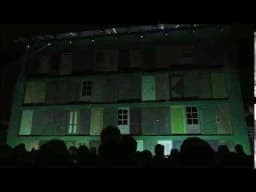
Renault's "The Wall" is a 2013 French film campaign created by Publicis Conseil that uses a wall as a sustained visual metaphor for the practical, psychological, logistical, and infrastructural barriers preventing French drivers from embracing electric vehicle ownership, anchored to the launch of the Renault ZOE.
Published in France in March 2013, the campaign centres on a single film asset. Its subject is the Renault ZOE, the brand's fully electric city car positioned as an accessible entry point into the Renault Z.E. electric mobility programme. Rather than presenting the ZOE through conventional performance or design-led narratives, the creative team at Publicis Conseil chose to confront consumer doubt directly. The wall, as a concept, functions simultaneously as a physical obstacle, a psychological hesitation, and a symbolic divide between the internal combustion era and an electric future. By naming the barrier rather than sidestepping it, the campaign attempts something less common in automotive advertising: an honest conversation with a sceptical audience.
The geographic market is France, where Renault holds a structurally important position as a domestic manufacturer with deep cultural equity. Releasing the campaign in March 2013 placed it within a period of active European debate around urban emissions, fuel costs, and the viability of electric infrastructure. The creative decision to build an entire film around the metaphor of a wall gives the campaign a singular identity that distinguishes it from product-specification advertising typical of the automotive category. The Clapboard Score for "The Wall" is 58 out of 100, reflecting a campaign that demonstrates strategic coherence and creative clarity of concept, while operating within the constraints of a single-asset film execution.
Renault's strategic rationale for "The Wall" rests on a consumer insight specific to the early electric vehicle market in France. The insight is that rational product arguments alone cannot overcome the emotional and practical resistance consumers feel toward a fundamentally unfamiliar technology. Rather than attempting to outperform competitors on specification claims, Publicis Conseil chose to surface and then dissolve the anxiety itself.
The French automotive market in 2013 presented a complex backdrop for this strategy. According to Media Renaultgroup, Renault Group sold 2,628,208 vehicles globally in 2013, a rise of 3.1 percent from 2012. The European passenger car and light commercial vehicle market declined 1.7 percent in 2013 according to automotiveworld.com, placing additional pressure on manufacturers to defend volume and justify investment in emerging technologies. In France specifically, Renault's domestic market position gave the brand both the credibility and the responsibility to lead the electric vehicle conversation rather than follow it.
Competitors including PSA Peugeot Citroën, with its Peugeot iOn and Citroën C-Zero models, and Nissan, whose Leaf was establishing itself as the best-selling electric vehicle globally according to Global Nissannews, were competing for the same prospective EV buyer. Against this landscape, Renault's decision to frame "The Wall" around psychological and infrastructural hesitation rather than head-to-head range or price comparisons represents a distinctive strategic posture. The campaign does not argue that the ZOE is superior to rival products. It argues instead that the wall — the accumulated weight of unfamiliarity, charging concern, and habitual thinking — is the real obstacle, and that crossing it is possible. This positions the Renault ZOE as the vehicle on the other side of a barrier already waiting to be climbed.
"The Wall" is directed by Ne-O, working through production company Stink, with TV production handled by Pierre Marcus and Florence Pottié-Sperry. The creative team at Publicis Conseil was led by chief creative officer Olivier Altmann, with art direction by Bénédicte Potel, assisted by Magali Valencia, and copywriting by Thierry Lebec. Managing director Patrick Lara oversaw the account, with account management handled by Aurore Duhamel, Grégoire Verdet, and Carine de Oliveira.
The discipline of the creative execution lies in its commitment to a single governing idea. The wall is not used as a passing visual device or a brief opening metaphor — it structures the entire film. This kind of sustained conceptual rigour requires precise alignment between the written brief, as shaped by Thierry Lebec's copy, and the visual interpretation brought by Bénédicte Potel and Magali Valencia's art direction. The choice to work with director Ne-O through Stink, a production company with a strong European creative reputation, signals an intention to execute the metaphor with atmospheric weight rather than literal functionality.
For a campaign promoting the Renault ZOE in France, the visual language needs to feel grounded in recognisable French urban or suburban environments to maintain the emotional credibility of the barrier metaphor. If the wall is abstract or fantastical, the connection to real consumer hesitation is weakened. The craft challenge for Olivier Altmann's team at Publicis Conseil was therefore to keep the metaphor legible without reducing it to illustration. The single archived media asset represents a complete, self-contained creative argument — a structural choice that concentrates the campaign's communicative force rather than distributing it across multiple executions.
No verified performance data for "The Wall" is publicly available. No published sales lift figures, market-share change data, or brand-tracking shifts have been documented in connection with this campaign, and no award wins or finalist placements have been verified at Cannes Lions, the Effie Awards, The One Show, D&AD, the Clio Awards, the Webby Awards, or WARC.
Structural analysis offers a basis for assessing likely effectiveness. The campaign's core strength is conceptual economy: a single metaphor, a single film, a single market, a single product. In the French automotive advertising landscape of 2013, where the European market was contracting according to automotiveworld.com and electric vehicle scepticism remained a genuine consumer barrier, a campaign that names rather than avoids the central objection carries inherent strategic integrity. The decision by Publicis Conseil's team, led by Olivier Altmann, to place psychological honesty at the centre of a Renault ZOE launch film is a structurally sound creative choice that aligns with behavioural principles around consumer trust-building.
The campaign's limitation, as reflected in its Clapboard Score of 58 out of 100, is the absence of a documented media footprint or measurable outcome to validate whether the conceptual clarity translated into commercial or cultural impact. A single film asset, however well-crafted by director Ne-O and produced by Stink, requires sufficient distribution and amplification to convert creative intention into audience effect. Without verified data on reach, recall, or conversion, the campaign registers as a credible creative act that cannot be fully assessed against the commercial ambitions it was presumably designed to serve.
"The Wall" is a 2013 Renault film campaign created by Publicis Conseil in France. It uses a wall as a metaphor for the practical, psychological, and infrastructural barriers to electric vehicle adoption, promoting the Renault ZOE to a French audience during a period of active EV market development.
Publicis Conseil in Paris created the campaign. Chief creative officer Olivier Altmann led the creative team, with art direction by Bénédicte Potel, copywriting by Thierry Lebec, and assistant art direction by Magali Valencia. Director Ne-O executed the film through production company Stink, with account management by Aurore Duhamel, Grégoire Verdet, and Carine de Oliveira.
"The Wall" promotes the Renault ZOE, a fully electric city car and part of Renault's broader Z.E. electric mobility programme. The campaign was published in France in March 2013, positioning the ZOE as an accessible entry point for drivers willing to move beyond habitual resistance to electric vehicles.
No award wins or finalist placements for "The Wall" have been verified at Cannes Lions, the Effie Awards, The One Show, D&AD, the Clio Awards, the Webby Awards, or WARC, according to Clapboard. A separate Renault campaign, Fast Drive Emotions, received CCP shortlist nominations in 2016, but those are unrelated to this film.
Renault's "The Wall" receives a Clapboard Score of 58 out of 100. The score reflects the campaign's conceptual clarity and strategic honesty in addressing electric vehicle hesitation, balanced against the absence of verified performance data and the campaign's single-asset scope, which limits full assessment of its measurable impact.
"The Wall" sits within Renault's Z.E. electric mobility programme and targets the French market, where Renault holds strong domestic brand equity. Released in March 2013, the campaign addresses consumer anxiety directly rather than relying on specification-led arguments, reflecting a broader Renault strategy to lead rather than follow France's electric vehicle conversation.
.webp)
Creative Collaboration Platform: The Backbone of Modern Creative WorkWhat is a creative collaboration platform?Clapboard defines a creative collaboration platform as the operational core for today’s distributed creative teams. This is not a collection of digital collaboration tools stitched together; Clapboard’s system


Understanding the Creative Production MarketplaceWhat is a Creative Production Marketplace?Clapboard defines a creative production marketplace as a structured ecosystem where brands, agencies, and production talent converge to execute video, advertising, and branded content at scale. Unlike the legacy agency or freelanREAD FULL ARTICLE

The Urgent Need for a Creative Production Operating SystemWhy Traditional Creative Production Models Break DownClapboard sees the creative production landscape shifting under pressure. Content velocity is no longer a buzzword—it’s a mandate. Modern advertising demands relentless output across dozens of channels, each wREAD FULL ARTICLE