Sandy Hook Promise Reframes School Shootings as Preventable Events
Sandy Hook Promise's Tomorrow's News is a 2017 public service film, created pro bono by BBDO New York, that presents a fictional local-news broadcast reporting a school shooting one day before it happens, arguing that recognising warning signs today can change what appears on screen tomorrow.
The campaign launched on December 11, 2017, as reported by sandyhookpromise.org, shortly before the fifth anniversary of the Sandy Hook Elementary School shooting of December 14, 2012. That timing was deliberate. Sandy Hook Promise, the nonprofit co-founded by Mark Barden and other families of victims, had built its entire organisational identity around the proposition that gun violence in schools is not inevitable. Tomorrow's News gave that proposition a cinematic form: a fully produced local-news segment, anchors and all, delivering a tragedy that has not yet occurred. The film aired first on ABC's Good Morning America during the 8 a.m. hour on December 11, 2017, as documented by sandyhookpromise.org, bringing the message directly into morning news-viewing households across the United States.
The campaign's central mechanism is chronological inversion. Where conventional PSAs replay what has already happened, Tomorrow's News projects forward, placing the audience inside a news moment that still exists in the future tense. That structural choice carries significant emotional weight: viewers are not being asked to grieve, they are being asked to intervene. The film's tagline directed audiences to sandyhookpromise.org/tomorrow, where they could learn Sandy Hook Promise's Know the Signs programme. In the United States, where the debate over school safety had intensified through 2016 and 2017, the campaign's framing of a shooting as an event that is expected but changeable met audiences inside an anxiety they already felt and redirected it toward agency.
Sandy Hook Promise built Tomorrow's News on a strategic pivot that BBDO New York's creative leadership made explicit. Peter Alsante, Creative Director at BBDO New York, stated in Campus Safety Magazine on December 12, 2017: "Last year's ad was more about awareness, this year is more a turn to action." That single sentence describes the campaign's entire strategic architecture. Tomorrow's News was not designed to shock audiences into acknowledging that school shootings happen in the United States. It was designed to make those same audiences believe they could stop one.
The campaign continued directly from Sandy Hook Promise's earlier BBDO-produced PSA, Evan, which according to sandyhookpromise.org received more than 150 million views. Evan used retrospective replay to reveal warning signs hidden in the background of an apparently ordinary student story. Tomorrow's News inverted that structure: instead of looking back at signs that were missed, it looked forward at a tragedy that need not occur. The two films together form a strategic arc, moving the audience from recognition to intervention across consecutive years.
In the broader United States public-interest landscape, Sandy Hook Promise operated among well-resourced competitors. According to The Chronicle of Philanthropy, five major national gun-violence organisations collectively raised more than 160 million dollars annually in the period analysed. Everytown for Gun Safety described itself in 2017, per everytown.org, as the largest gun violence prevention organisation in the United States, raising approximately 27 million dollars annually according to The Chronicle of Philanthropy, compared with Sandy Hook Promise's approximately 15 million dollars annually per the same source. Brady and its counterparts raised approximately 13 million dollars annually in 2011, before the post-Sandy Hook expansion of the movement, again according to The Chronicle of Philanthropy. Within that competitive field, Sandy Hook Promise distinguished itself not through funding scale but through creative strategy: its BBDO partnership, initiated in late 2015 when public-relations executive Dini von Mueffling approached co-founder Nicole Hockley as reported by prweek.com, produced work that consistently commanded disproportionate cultural attention relative to the organisation's size.
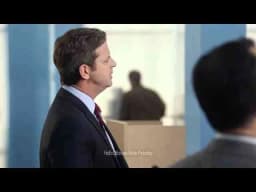
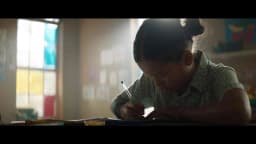
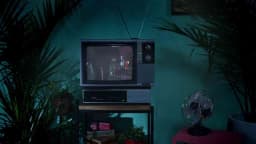
Tomorrow's News was directed by Henry-Alex Rubin of production company Smuggler, as documented by The One Club and shots.net. Rubin brought to the project a documentary sensibility that made the fictional news broadcast feel indistinguishable from live television. The film's production design replicates the visual grammar of local American news with precision: the lower-third graphics, the anchor desk staging, the reporter-in-the-field cutaways, and the cadence of a breaking-news segment all function as signals of authenticity that make the fictional shooting feel immediately plausible to a United States audience conditioned by years of real coverage.
The creative leadership at BBDO New York included Chief Creative Officer Worldwide David Lubars and Chief Creative Officer New York Greg Hahn, as credited by oneclub.org. Peter Alsante served as Creative Director. BBDO donated its services and creative teams for the campaign, as reported by shots.net, meaning the entire production represented pro bono creative investment in a public interest cause rather than a commercial engagement.
The narrative structure is the film's primary craft achievement. By presenting a school shooting as tomorrow's news rather than yesterday's tragedy, the script forces a tonal register that television news itself rarely occupies: the conditional future. Anchors report what will happen unless something changes. That grammatical mode, expressed through the visual language of a medium audiences trust as a recorder of facts, creates a productive dissonance. The viewer knows this is fiction, but the form says otherwise. Mark Barden, co-founder of Sandy Hook Promise, described the campaign's creative logic to Yahoo News on December 10, 2018: "They're all centered around the idea of knowing the signs before it's too late." That principle — sign recognition as the creative and behavioural through-line — governs every narrative and production choice in the film.
Tomorrow's News earned the Webby Awards People's Voice Winner in the Film and Video — Public Service and Activism (Branded) category in 2018, as recorded by Winners Webbyawards. The People's Voice designation is determined by public vote, meaning the award reflects genuine audience engagement rather than jury selection alone. That distinction matters for a campaign whose entire strategic logic rests on activating an audience to act.
No comprehensive verified third-party performance audit of the campaign's downstream behavioural impact — measurable changes in sign-reporting or intervention rates attributable directly to the film — is publicly available. What the public record does confirm, as documented by sandyhookpromise.org, is that the film accumulated over 511,000 views on the platform where it was submitted, and that its debut on ABC's Good Morning America provided immediate national reach in the United States at no paid-media cost. The earned-media placement on a morning news programme was structurally coherent with the campaign's creative conceit: a film designed to look like a news broadcast appeared inside an actual news broadcast.
Clapboard rates Tomorrow's News 78 out of 100, recognising its structural originality and tonal discipline while noting that the campaign's impact on measurable prevention behaviour, though directionally supported by Sandy Hook Promise's broader Know the Signs programme data, remains difficult to isolate at the individual campaign level. The strategic continuity with Evan — building a multi-year creative arc around a single behavioural objective — represents a model of public interest communications that prioritises cumulative influence over single-campaign metrics.
Tomorrow's News is a 2017 public service film by Sandy Hook Promise, created pro bono by BBDO New York. It presents a fictional local-news broadcast reporting a school shooting one day before it occurs, arguing that recognising warning signs today can prevent the event from happening at all.
Tomorrow's News launched on December 11, 2017, as reported by sandyhookpromise.org. It debuted on ABC's Good Morning America during the 8 a.m. hour, giving the campaign immediate national reach in the United States through earned media on a major broadcast news programme, consistent with its news-broadcast creative format.
Henry-Alex Rubin of Smuggler directed Tomorrow's News, as documented by oneclub.org. BBDO New York created the campaign pro bono, with David Lubars serving as Chief Creative Officer Worldwide, Greg Hahn as Chief Creative Officer New York, and Peter Alsante as Creative Director, per oneclub.org.
Tomorrow's News won the Webby Awards People's Voice Winner in Film and Video — Public Service and Activism (Branded) in 2018, according to winners.webbyawards.com. The People's Voice award is determined by public vote, reflecting genuine audience engagement with the campaign's message about school shooting prevention in the United States.
Evan used retrospective replay to reveal missed warning signs, building awareness. Tomorrow's News inverts that structure to drive action. Peter Alsante of BBDO New York stated in Campus Safety Magazine in 2017 that the earlier campaign prioritised awareness while Tomorrow's News represented a deliberate strategic turn toward intervention and behaviour change.
Clapboard rates Tomorrow's News 78 out of 100. The score recognises the campaign's structural originality and tonal discipline in using a fictional news format to reframe school shootings as preventable events, while noting the difficulty of isolating its direct behavioural impact from Sandy Hook Promise's broader Know the Signs programme outcomes.
.webp)
Creative Collaboration Platform: The Backbone of Modern Creative WorkWhat is a creative collaboration platform?Clapboard defines a creative collaboration platform as the operational core for today’s distributed creative teams. This is not a collection of digital collaboration tools stitched together; Clapboard’s system


Understanding the Creative Production MarketplaceWhat is a Creative Production Marketplace?Clapboard defines a creative production marketplace as a structured ecosystem where brands, agencies, and production talent converge to execute video, advertising, and branded content at scale. Unlike the legacy agency or freelanREAD FULL ARTICLE

The Urgent Need for a Creative Production Operating SystemWhy Traditional Creative Production Models Break DownClapboard sees the creative production landscape shifting under pressure. Content velocity is no longer a buzzword—it’s a mandate. Modern advertising demands relentless output across dozens of channels, each wREAD FULL ARTICLE