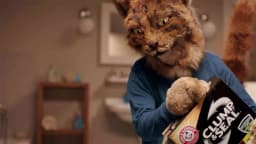
The Sherwin-Williams "Adventure" campaign, launched in 2015 and created by McKinney, positions the brand as an enabler of transformation and bold expression within the home environment. Leveraging the narrative genre, the campaign conveys a promise that choosing Sherwin-Williams paints unlocks a sense of exploration and creativity, encouraging homeowners to view painting not as a chore but as an adventurous opportunity to personalize and revitalize their living spaces.
Strategically, the campaign taps into a key insight that household product consumers increasingly seek emotional and experiential connections to routine home improvement tasks. By framing painting as an adventure, Sherwin-Williams distinguishes itself from competitors that focus narrowly on technical features or price. The creative angle emphasizes the personal journey and emotional reward of home projects, appealing to motivated DIYers and homeowners who value aesthetic transformation as a form of self-expression.
Targeting the United States market, the campaign addresses an audience that associates quality household products with reliability but also desires inspiration in everyday activities. The film medium underscores the narrative approach, allowing a visual storytelling style that dramatizes the brand’s role in facilitating creative home enhancement. This approach aims to deepen brand affinity and reinforce Sherwin-Williams as more than a paint supplier—as a partner in the homeowner’s pursuit of imaginative possibilities.
FORMAT#9 SYMBOLIZE THE BENEFIT — Uses symbols or exaggerated visuals to represent the product’s positive impact.
The campaign’s title, “Adventure,” alongside its placement within the house and garden category for Sherwin-Williams, strongly suggests the use of metaphor or imaginative visuals to elevate the brand’s promise. Without explicit cues of a literal problem/solution, testimonial, competitive comparison, or recurring character, and absent any direct indication of a full narrative arc where paint solves a conflict, the campaign most likely turns paint colors into a metaphorical “adventure.” This creative device uses exaggerated or symbolic storytelling to make painting (and the colors themselves) feel exciting and transformative, thus symbolizing the benefit of Sherwin-Williams products as “opening up a world of adventure” within one’s home, rather than presenting a literal demonstration or linear story.
ADVERTISING FORMATS EXPLAINED: https://www.clapboard.com/blog/branding-and-advertising/brand-strategy/12-advertising-creative-formats
1. Benjamin Moore – Known for its premium, high-quality paint products, Benjamin Moore positions itself as a brand that delivers superior color richness and durability. It emphasizes innovation, eco-friendly formulas, and a personalized customer experience through professional retailers and color experts.
2. Behr – Behr targets cost-conscious homeowners and DIYers by offering affordable, easy-to-use paint solutions available primarily through large retailers like Home Depot. Its strategic focus is on value without compromising quality, supported by extensive product variety and strong retail presence.
3. Valspar – Valspar competes by blending performance and style with a broad portfolio of paints and stains. It highlights innovation in paint technology and color design services, partnering with both professional contractors and homeowners to deliver versatile, reliable solutions.
4. PPG Paints – PPG leverages its global industrial expertise to offer technologically advanced coatings with an emphasis on durability and environmental responsibility. Its market positioning includes catering to both residential and commercial sectors with a diverse product range.
5. Dunn-Edwards – Focused on the Western U.S. market, Dunn-Edwards is positioned as a specialty paint manufacturer known for its environmentally friendly, premium-quality products. The brand emphasizes sustainability and superior performance tailored to regional climates.
Q: What is Adventure about?
A: Adventure is a professional film campaign created for Sherwin-Williams by the agency McKinney and released in the United States in 2015. Art directed by J.D. Humphreys, the campaign targets the house and garden sector, aiming to inspire homeowners and DIY enthusiasts to reimagine their living spaces through the transformative power of color. The film uses evocative imagery and narrative to position Sherwin-Williams as a partner in creative home improvement, emphasizing the emotional and aesthetic possibilities that paint can unlock. Adventure was designed to connect with consumers seeking both inspiration and quality in their home projects.
Q: What creative device does Adventure use?
A: Adventure employs the creative device classified as FORMAT#9 SYMBOLIZE THE BENEFIT according to Clapboard’s 12-format taxonomy. This approach uses symbols or exaggerated visuals to represent the positive impact of Sherwin-Williams paint, turning the act of painting into a metaphorical adventure. Rather than focusing on literal demonstrations or problem-solving narratives, the campaign leverages imaginative storytelling to make color selection and home transformation feel exciting and aspirational, reinforcing the brand’s promise of unlocking new possibilities within the home.
Q: What is the campaign proposition for Adventure?
A: The campaign proposition for Adventure centers on positioning Sherwin-Williams as an enabler of transformation and bold personal expression within the home. By framing painting as an adventure, the campaign speaks directly to homeowners and DIYers who seek emotional and experiential value from their home improvement projects. This strategic angle differentiates Sherwin-Williams from competitors that focus on technical features or price, instead highlighting the creative journey and personal reward of revitalizing living spaces. The narrative-driven film aims to deepen brand affinity and reinforce Sherwin-Williams as a source of inspiration and quality in the household product category.
Q: How does Adventure rank in Clapboard's archive?
A: Adventure holds a Clapboard Campaign Score of 63/100 in Clapboard’s global ad archive. This score reflects the campaign’s creative ambition, execution quality, and its relevance within the context of contemporary advertising for the house and garden sector.
Q: Who are the competitors in Sherwin-Williams's category?
A: In the household product category, Sherwin-Williams competes with brands such as Benjamin Moore, which is recognized for its premium paints and personalized service; Behr, which appeals to value-driven DIYers through affordability and accessibility at major retailers; Valspar, known for its blend of performance and style with a wide product range; PPG Paints, which leverages global expertise to deliver technologically advanced and environmentally responsible coatings; and Dunn-Edwards, which focuses on sustainability and premium quality tailored to regional needs in the Western U.S.


 ARCHIVE
.webp)