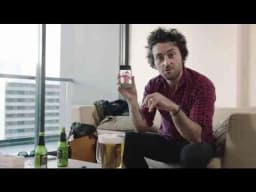
SK Telecom's Mobile Orchestra campaign used 34 vintage devices to perform the brand's song, marking South Korea's 30th year of mobile history in April 2014.

SK Telecom Mobile Orchestra Turns 30 Years of Mobile History Into Music
SK Telecom's "Mobile Orchestra" is a 2014 digital campaign created by agency INNORED that assembles 34 vintage mobile devices — including phones, pagers, and car phones — to perform the brand's signature song through vibrations, ringtones, and sound effects, celebrating South Korea's 30th anniversary of commercial mobile communication.
Published in April 2014, the campaign carries the full title "Mobile Orchestra – Celebrating 30 years of mobile history" and stands as one of the most inventive anniversary executions in South Korean telecommunications advertising. The brief was grounded in a specific cultural and commercial milestone: three decades since mobile telephony first took root in South Korea, a nation that had come to define global expectations for network speed and mobile innovation. SK Telecom, long positioned as the country's leading mobile operator, chose not to celebrate that milestone with conventional retrospective advertising but instead transformed the devices themselves into the medium of tribute.
The campaign launched as a single digital media asset — a two-minute, five-second video uploaded to YouTube on April 7, 2014 — and was targeted squarely at audiences in South Korea. Its proposition was immediate: the brand that helped build the mobile era could also orchestrate it, literally. By converting handsets spanning three decades of consumer technology into a functioning musical ensemble, the campaign compressed the entire arc of South Korean mobile history into a single, watchable performance. The Clapboard Score for the Mobile Orchestra campaign is 79 out of 100, reflecting its creative distinctiveness and demonstrable audience engagement.
SK Telecom held approximately 50.04% of the South Korean mobile market as of January 2014, with roughly 27.4 million subscribers, according to data from telecomlead.com citing Ministry of Science, ICT and Future Planning figures. KT held 30.06% with 16.4 million subscribers, and LG Uplus accounted for 19.89% with 10.9 million. In a three-operator market of that concentration, brand differentiation cannot rest on coverage or price alone — it demands cultural authority.
That strategic reality shapes every decision in the Mobile Orchestra campaign. By anchoring the work to South Korea's 30-year mobile history, INNORED and SK Telecom chose a frame that competitors could not credibly occupy. South Korea had approximately 54.8 million mobile-phone users at the start of 2014, according to koreaherald.com, meaning mobile penetration was effectively universal. Speaking to those users as a nation of mobile pioneers — rather than as consumers of a commodity service — elevated the brand above network-speed claims into the territory of shared cultural identity.
The strategic insight is rooted in nostalgia combined with technological pride. The 34 devices gathered for the performance — collected from across South Korea and spanning manufacturers including Samsung, LG, Motorola, and Nokia — represent the lived experience of a population that adopted and upgraded through each generation of handset. Each device in the ensemble is a recognisable artefact. By giving those artefacts a second performance, the campaign invites audiences to locate their own memories within the brand's story, transforming a corporate anniversary into a collective one. The digital format amplified that invitation, allowing the video to circulate beyond any single broadcast moment and reach audiences on the very devices the campaign celebrated.
Creative Director Min Seo led the Mobile Orchestra project at INNORED, working alongside Art Director SM Park, Copywriter TJ Yun, and Senior Account Manager HG Kim. The ensemble at the centre of the film comprises 34 devices collected across South Korea, including four pagers, two car phones, and handsets manufactured by Samsung, LG, Motorola, and Nokia — a physical catalogue of three decades of consumer mobile technology.
On screen, the devices are arranged in the manner of a conventional orchestra, each positioned and activated in sequence to contribute a specific sonic element. Vibrations, ringtones, alert tones, and built-in sound effects become the instruments. Together, the 34 devices perform SK Telecom's brand song — a choice that ties the musical output directly to the company's identity rather than selecting a neutral or nostalgic melody. The two-minute, five-second video proceeds as a conducted performance, with the phones and pagers producing their sounds in coordinated succession, the cumulative effect building from individual device tones into a recognisable musical composition.
The production achieves its impact through restraint. There is no heavy post-production artifice — the sounds heard are the sounds the devices actually make. That authenticity is load-bearing: it transforms what could have been a visual gimmick into a demonstration of the brand's claim to technological heritage. The choice to collect genuine vintage hardware from across the country rather than simulate older devices adds documentary weight to the execution. Per Innored Co Kr, the campaign represents one of INNORED's signature archival executions, using real objects to tell a brand history that spans the full commercial life of South Korean mobile telecommunications.
Verified performance data for the Mobile Orchestra campaign is available from YouTube, where the video accumulated 5,850,607 views, 7,551 likes, and 320 comments, as recorded in the campaign's archive documentation. For a branded content film released in April 2014 — before algorithmic video discovery matured to its current scale — a view count approaching 5.9 million represents a significant organic audience, particularly for a campaign operating within a single national market.
The engagement ratio rewards closer examination. According to youtube.com engagement benchmarks of that era, a like-to-view ratio of approximately 0.13% and 320 comments on a branded film indicates active rather than passive consumption — viewers who encountered the video did not simply scroll past but chose to register a response. For a 30th-anniversary campaign in South Korea, where SK Telecom held more than half the subscriber base, that depth of engagement suggests the nostalgic creative strategy connected with audiences who recognised the devices on screen as part of their personal experience with mobile technology.
No independent media spend figures, earned media valuations, or brand-lift measurements for the Mobile Orchestra campaign are publicly available. Structural effectiveness, however, is evident in the campaign's format choices. A single, self-contained digital asset with a clear premise — 34 devices performing music — requires no explanatory copy, translates across age groups, and carries an inherent shareability driven by the novelty of the execution. The campaign's longevity in advertising archives, still referenced more than a decade after its April 2014 launch, is itself a measure of creative durability.
SK Telecom's Mobile Orchestra is a 2014 digital campaign by INNORED that assembles 34 vintage mobile devices to perform the brand's song. Published in South Korea in April 2014, it marks the 30th anniversary of commercial mobile communication in the country, using device vibrations, ringtones, and sound effects as instruments.
The Mobile Orchestra used 34 devices in total, collected from across South Korea. The ensemble included four pagers, two car phones, and handsets from manufacturers including Samsung, LG, Motorola, and Nokia, all activated to perform SK Telecom's brand song through their native vibrations, ringtones, and built-in sound effects.
Min Seo served as Creative Director on the Mobile Orchestra campaign at INNORED. The wider creative team included Art Director SM Park, Copywriter TJ Yun, and Senior Account Manager HG Kim, all working under the INNORED agency for client SK Telecom on this April 2014 South Korea campaign.
The Mobile Orchestra video accumulated 5,850,607 views, 7,551 likes, and 320 comments on YouTube, as recorded in campaign archive documentation. For a single branded digital asset launched in South Korea in April 2014, that audience scale reflects strong organic reach for a national anniversary campaign with no sequel or series format.
SK Telecom held approximately 50.04% of the South Korean mobile market in January 2014, with roughly 27.4 million subscribers, according to telecomlead.com citing Ministry of Science, ICT and Future Planning data. That dominant position made the 30th-anniversary milestone a natural platform for asserting cultural as well as commercial leadership in the market.
INNORED used genuine vintage hardware collected across South Korea to give the performance documentary authenticity. Using real devices — pagers, car phones, and handsets spanning three decades — rather than replicas meant the sounds audiences heard were actual device tones, grounding SK Telecom's heritage claim in tangible, recognisable technology rather than a simulated recreation.
.webp)
Creative Collaboration Platform: The Backbone of Modern Creative WorkWhat is a creative collaboration platform?Clapboard defines a creative collaboration platform as the operational core for today’s distributed creative teams. This is not a collection of digital collaboration tools stitched together; Clapboard’s system


Understanding the Creative Production MarketplaceWhat is a Creative Production Marketplace?Clapboard defines a creative production marketplace as a structured ecosystem where brands, agencies, and production talent converge to execute video, advertising, and branded content at scale. Unlike the legacy agency or freelanREAD FULL ARTICLE

The Urgent Need for a Creative Production Operating SystemWhy Traditional Creative Production Models Break DownClapboard sees the creative production landscape shifting under pressure. Content velocity is no longer a buzzword—it’s a mandate. Modern advertising demands relentless output across dozens of channels, each wREAD FULL ARTICLE