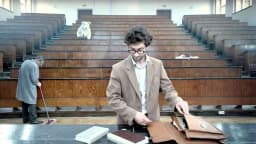
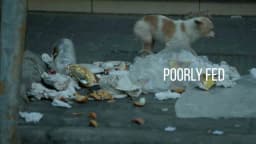
SOS Children's Villages partnered with Dziadek Do Orzechow in Poland to solve a simple but costly problem: taxpayers leaving the charity KRS field blank on PIT

SOS Children's Villages Turns a Tax Form Barrier Into a Donation Mechanic
SOS Children's Villages launched "Give your 1% tax" in Poland in March 2017 — a digital public interest campaign created by Kraków agency Dziadek Do Orzechow that solved a conversion problem inside Poland's annual PIT tax-filing process by asking taxpayers to photograph the charity's KRS registration number and retrieve that image when completing their form, according to Apcz Umk Pl.
Polish tax law permits every individual taxpayer to direct one percent of their personal income tax liability to a registered public-benefit organisation, at no additional cost to the taxpayer, simply by entering that organisation's KRS identification number on their annual PIT return. The mechanic is generous in principle, yet SOS Children's Villages faced a practical obstacle: the KRS number is long, easy to mistype, and frequently left blank by taxpayers who lack the number to hand at the moment of filing. That blank field represents a lost donation — not through indifference, but through friction.
Dziadek Do Orzechow's answer was disarmingly direct. Rather than producing a conventional emotional appeal, the agency reframed the act of supporting SOS Children's Villages as a two-step mobile behaviour: photograph the KRS number when you encounter it, then search your camera roll and copy it into the form when tax season arrives. The campaign existed within the digital medium and comprised a single media asset, concentrating its entire argument into one clear instruction. In Poland, where smartphone penetration was accelerating through 2017, the solution met taxpayers inside a habit — consulting their phones — rather than asking them to build a new one. The Clapboard Score for this campaign is 57 out of 100, reflecting a sharp strategic idea carried by lean creative execution rather than production scale, according to Sos-Childrensvillages.
 ARCHIVE
Poland's one-percent tax allocation mechanism creates a structurally unusual charitable giving environment. Established under Polish personal income tax law, the system allows taxpayers to redirect a portion of tax already owed — not an additional contribution — to an approved public-benefit organisation, as documented in research published by the Nicolaus Copernicus University press journal APCZ. That framing removes the financial objection from the donation decision entirely, yet participation rates among eligible organisations vary enormously, with the gap between awareness and completed allocation driven largely by administrative friction rather than donor intent, according to data reported by cividata.org.
For SOS Children's Villages, competing in this environment meant competing against both indifference and inconvenience. Larger, more recognisable charities with shorter or more memorable identifiers hold a structural advantage at the moment a taxpayer sits down to file. SOS Children's Villages operates in the same public-interest space as well-resourced organisations including the Polish branch of the Great Orchestra of Christmas Charity, which consistently attracts among the highest volumes of one-percent allocations in Poland each year, according to reporting by Biznes Newseria Pl. Against that backdrop, Dziadek Do Orzechow identified the KRS number itself — not brand awareness, not emotional distance — as the precise point of failure.
The strategic rationale was therefore behavioural rather than attitudinal. The campaign did not attempt to change how Polish taxpayers felt about SOS Children's Villages or about child welfare, according to Cof. It attempted to change what they did with their phones in the seconds after encountering the charity's materials, so that the KRS number would be present and retrievable at the exact moment it was needed. In Poland's digital landscape of 2017, that insight — that the camera roll is a frictionless personal database — was both timely and precise.
Dziadek Do Orzechow built the entire creative argument of "Give your 1% tax" around a single mobile behaviour. The campaign received scenario credits for Albert Stęclik and Tomasz Gębala, as documented by Clapboard, and its creative discipline is evident in the economy of the idea: one problem, one instruction, one asset.
The creative decision to operate within a single digital media unit is itself a strategic statement. Conventional public interest campaigns in Poland during the mid-2010s leaned heavily on emotionally charged imagery of children and families — the SOS Children's Villages campaign series from Ogilvy and Mather Warsaw in August 2013, for example, used dramatic visual storytelling around child poverty to generate awareness, as documented by Clapboard. Dziadek Do Orzechow's own earlier work for SOS Children's Villages, including the "First Christmas" campaign published in November 2016, operated within a similarly emotive register, per Clapboard records. "Give your 1% tax" represents a deliberate turn away from that approach.
Instead of amplifying emotional stakes, the 2017 campaign trusted the taxpayer to already hold the motivation and concentrated entirely on removing the mechanical barrier. The creative execution communicated a workaround — take a photo, find it later — in terms direct enough to function as a practical instruction rather than an advertisement. That restraint is a craft choice. It requires confidence that the audience's goodwill is already present and that the job of the creative is purely logistical. Production credits beyond the scenario writers are not publicly documented for this campaign. The digital format allowed the message to travel to Polish taxpayers at the moment of relevance, within the digital environments they already occupied during the March filing season in Poland.
No independently verified performance data for the "Give your 1% tax" campaign, such as click-through rates, incremental KRS field completion rates, or year-on-year change in one-percent allocations received by SOS Children's Villages in Poland, is publicly available from named third-party sources. The campaign's effectiveness cannot therefore be quantified here without risk of fabrication.
Structural analysis, however, supports a measured assessment of the campaign's potential. The mechanic addressed a documented abandonment behaviour — leaving the KRS field blank — rather than a hypothetical one. By converting the KRS number into a stored image, the campaign intervened at the moment of highest friction in the donation journey without requiring any change in platform, any new application, or any additional cost to the taxpayer. In a public interest context where conversion typically depends on emotional resonance alone, that behavioural specificity is a genuine differentiator.
The campaign's lean execution — a single digital asset, a two-person scenario team, a focused instruction — also implies a cost structure appropriate for a charity operating under typical non-profit budget constraints in Poland. The idea scales through sharing rather than media spend, since any taxpayer who photographs the number can pass the instruction to others. The Clapboard Score of 57 out of 100 reflects a campaign that is strategically coherent and behaviourally grounded but limited in documented reach, production ambition, and independently verified outcome data.
"Give your 1% tax" is a 2017 digital public interest campaign by SOS Children's Villages, created by Dziadek Do Orzechow in Poland. It addressed a practical barrier in Poland's tax donation system by encouraging taxpayers to photograph the charity's KRS number and retrieve it when completing their annual PIT form, eliminating the risk of leaving the field blank.
Poland's income tax law allows taxpayers to direct one percent of their personal tax liability to a registered public-benefit organisation. The taxpayer enters the organisation's KRS number on their PIT return at no additional cost. As documented by APCZ, the system removes the financial objection but leaves administrative friction as the primary barrier to completion.
SOS Children's Villages identified the KRS number as the precise point of failure in the one-percent donation journey. The number is long and frequently left blank by taxpayers who lack it at the moment of filing, as documented by Clapboard. Dziadek Do Orzechow's solution converted the number into a retrievable phone image, removing that friction entirely.
Kraków agency Dziadek Do Orzechow created the campaign, published in Poland in March 2017. Scenario credits are held by Albert Stęclik and Tomasz Gębala, as documented by Clapboard. The campaign comprised a single digital media asset and represented a strategic departure from the emotionally driven creative approach used in earlier SOS Children's Villages work in Poland.
The campaign received a Clapboard Score of 57 out of 100. The score reflects a behaviourally precise strategic idea and lean execution appropriate for a non-profit budget in Poland, offset by limited documented reach, a single media asset, and the absence of independently verified performance data confirming the campaign's impact on KRS field completion rates.
Earlier SOS Children's Villages campaigns in Poland, including Ogilvy and Mather Warsaw's 2013 work and Dziadek Do Orzechow's own November 2016 "First Christmas" campaign, relied on emotionally charged imagery, per Clapboard records. The 2017 "Give your 1% tax" campaign departed from that tradition entirely, prioritising a single behavioural instruction over emotional storytelling.
.webp)
Creative Collaboration Platform: The Backbone of Modern Creative WorkWhat is a creative collaboration platform?Clapboard defines a creative collaboration platform as the operational core for today’s distributed creative teams. This is not a collection of digital collaboration tools stitched together; Clapboard’s system


Understanding the Creative Production MarketplaceWhat is a Creative Production Marketplace?Clapboard defines a creative production marketplace as a structured ecosystem where brands, agencies, and production talent converge to execute video, advertising, and branded content at scale. Unlike the legacy agency or freelanREAD FULL ARTICLE

The Urgent Need for a Creative Production Operating SystemWhy Traditional Creative Production Models Break DownClapboard sees the creative production landscape shifting under pressure. Content velocity is no longer a buzzword—it’s a mandate. Modern advertising demands relentless output across dozens of channels, each wREAD FULL ARTICLE