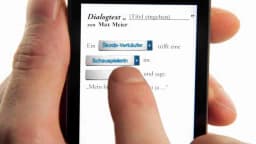
Spotify's 'Cab' ambient campaign in Germany let passengers connect their accounts to a taxi's sound system, turning shared rides into personal music

Spotify Turns Every Taxi Ride Into a Personal Concert in Germany
Spotify's 'Cab' is a 2012 Nyfadvertising.clapboard.com/archive/cableplushd-marca-personal-media">ambient media campaign created by Miami Ad School Berlin and executed in Germany, in which taxi passengers could connect their personal Spotify accounts to the cab's sound system and control the music for the duration of their ride, transforming a shared public space into a private listening experience, according to Desicreative.
Launched in September 2012 in partnership with Taxi Berlin, the activation operated under the tagline 'Your cab, your music.' The campaign's central mechanic was elegantly simple: rather than passively enduring whatever audio a driver happened to favour, passengers took command of the soundtrack. The concept treated the in-cab environment as a live media asset — a moment of captive, receptive attention that Spotify could convert into a direct, embodied demonstration of its core product promise. In doing so, the campaign shifted the brand's argument from abstract feature communication to lived experience, letting German commuters feel the platform's value rather than merely read about it.
The campaign comprised a single media asset and was confined to the German market, reflecting a focused, locally grounded approach to ambient advertising, according to Musicbusinessresearch Wordpress. At a moment when digital music was reshaping listener habits across Europe, 'Cab' positioned Spotify not as a streaming service competing for screen time but as an invisible infrastructure capable of personalising the spaces people move through every day. The Clapboard Score for this campaign stands at 71 out of 100, reflecting its creative clarity and strategic coherence against the absence of verified performance data.

Spotify identified the taxi interior as an underutilised media environment. In Germany in 2012, the streaming landscape was still establishing itself as a mainstream behaviour, and the battle for listener loyalty was fought not just through catalogue size or pricing but through moments of genuine product experience. By embedding Spotify's functionality inside a Taxi Berlin vehicle, the campaign transformed a routine urban journey into a proof-of-concept for the platform's personalisation capabilities.
The strategic rationale drew on a simple consumer insight: passengers in taxis are present but idle, neither driving nor working, often open to stimulation. That idle attention, usually claimed by radio or driver preference, represented an unconverted media moment. Miami Ad School Berlin's approach was to give control back to the passenger — a gesture that aligned precisely with Spotify's broader proposition of on-demand listening on the user's own terms. According to BBC reporting from that period, the global streaming market was growing rapidly in 2012, and the competitive pressure on platforms to demonstrate real-world relevance was intensifying. Subscription and streaming represented 25.5% of digital music revenue globally in 2012, according to thembj.org, underscoring how nascent and contested the category remained. In Germany specifically, a market with deep cultural investment in music and a mature public-transport infrastructure, the in-taxi channel offered an unusually intimate point of contact. The campaign did not attempt mass reach; it pursued depth of impression over breadth, using a single powerful interaction to communicate what no banner advertisement could replicate — the feeling of complete musical autonomy in a space you do not own.
Art directors Eszter Kazinczy and Fredrik Larsson, alongside copywriter Moritz Schafer, conceived the 'Cab' activation for Miami Ad School Berlin. The execution placed Spotify-enabled audio hardware inside Taxi Berlin vehicles, creating a seamless connection point between a passenger's existing Spotify account and the cab's sound system. The rider's personal library, playlists, and preferences became the in-journey soundtrack the moment they connected.
On screen — or rather, in the physical world the campaign inhabited — the scenario unfolds without spectacle. A passenger enters a Taxi Berlin cab. Instead of accepting whatever the radio offers, they link their Spotify account to the vehicle's system and select their music. The cab moves through German streets while the passenger listens to exactly what they would hear at home or through personal headphones. The power of the execution lies in its restraint: there are no dramatic visual effects, no elaborate set pieces, only the quiet transfer of control from the shared environment to the individual. This intimacy was the creative statement. The tagline 'Your cab, your music' compressed the entire brand argument into four words, leaving the product interaction to do the persuasive work. As a media campaign built around a single media asset, 'Cab' demonstrated that ambient advertising in the lifestyle space can achieve meaningful impact without scale, provided the core interaction is sufficiently resonant. Production credits beyond the named creatives are not publicly documented for this activation.
No verified performance data for the 'Cab' campaign is publicly available. No sales lift figures, brand-tracking shifts, reach estimates, or impressions data have been confirmed through Campaign, Ad Age, or any other named trade publication. Similarly, no verified awards recognition for this campaign appears in the records of Cannes Lions, the Effie Awards, The One Show, D&AD, the Clio Awards, the Webby Awards, or WARC Awards.
Structural analysis, however, supports a positive reading of the campaign's potential effectiveness. The mechanic required genuine user participation — connecting a personal account — which is a significantly higher-commitment interaction than passive exposure to a poster or radio spot. In the German market, where Spotify was competing to establish streaming as a default listening behaviour, that depth of engagement carried meaningful brand-building value. The activation also generated an inherently shareable moment: a passenger who experienced 'Cab' was likely to describe it to others, extending the campaign's reach through word of mouth in a way that a single media asset count does not capture. The strategic decision to partner with Taxi Berlin gave the concept a credible, locally anchored infrastructure, lending the campaign authenticity in a market that tends to reward substance over spectacle. Taken together, these structural qualities suggest a campaign designed for quality of impression rather than volume of exposure — a defensible and coherent choice for an emerging streaming platform making its case to German listeners in 2012.
Spotify's 'Cab' was an ambient media campaign launched in Germany in September 2012. Created by Miami Ad School Berlin in partnership with Taxi Berlin, it allowed taxi passengers to connect their Spotify accounts to the cab's sound system and control the music during their ride, operating under the tagline 'Your cab, your music.'
The 'Cab' campaign was created by Miami Ad School Berlin. Art directors Eszter Kazinczy and Fredrik Larsson led the concept, with copywriter Moritz Schafer contributing to the work. The campaign was executed in partnership with Taxi Berlin, which provided the vehicle infrastructure for the ambient activation in the German market.
Passengers entering a Taxi Berlin vehicle could connect their personal Spotify account to the cab's sound system. Once connected, they controlled the music for the duration of the ride, replacing driver-selected or radio audio with their own playlists and preferences. The mechanic turned a shared public space into a personalised listening environment.
No verified awards data for the 'Cab' campaign exists in publicly available records. Searches across Cannes Lions, the Effie Awards, The One Show, D&AD, the Clio Awards, the Webby Awards, and WARC Awards have not returned confirmed recognition for this Germany-market ambient activation from September 2012.
Spotify chose ambient advertising to deliver a direct product experience rather than a traditional media message. The in-taxi environment gave German passengers a moment of idle, receptive attention that the brand converted into a live demonstration of personalised streaming, making the platform's core promise — music on your own terms — immediately tangible and memorable.
.webp)
Creative Collaboration Platform: The Backbone of Modern Creative WorkWhat is a creative collaboration platform?Clapboard defines a creative collaboration platform as the operational core for today’s distributed creative teams. This is not a collection of digital collaboration tools stitched together; Clapboard’s system


Understanding the Creative Production MarketplaceWhat is a Creative Production Marketplace?Clapboard defines a creative production marketplace as a structured ecosystem where brands, agencies, and production talent converge to execute video, advertising, and branded content at scale. Unlike the legacy agency or freelanREAD FULL ARTICLE

The Urgent Need for a Creative Production Operating SystemWhy Traditional Creative Production Models Break DownClapboard sees the creative production landscape shifting under pressure. Content velocity is no longer a buzzword—it’s a mandate. Modern advertising demands relentless output across dozens of channels, each wREAD FULL ARTICLE