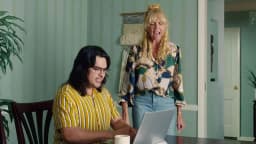
Sprint's 2013 'The Text' campaign starred Dale Earnhardt Jr. and promoted the Drive First app to combat texting while driving during Distracted Driving Month.

How Sprint Used Dale Earnhardt Jr. to Make Distracted Driving Uncool
Sprint's 'The Text' is a 30-second television spot produced by Leo Burnett and Digitas, released in the United States in April 2013, starring NASCAR driver Dale Earnhardt Jr. to promote the Sprint Drive First app and educate the public about the dangers of texting while driving during National Distracted Driving Month.
The campaign carries a proposition that is both simple and structurally clever. Driving is not the problem. Texting is not the problem. The problem, as the campaign frames it, is the word connecting them: 'and.' By isolating that conjunction as the villain, Leo Burnett gave Sprint a memorable and repeatable creative platform rather than a conventional public safety warning. The Drive First app — which blocked incoming texts and calls when a device detected motion above approximately 10 mph, while sending automatic replies to inform senders the user was driving — became the product solution to eliminating that dangerous 'and' from everyday life.
In the United States, Sprint activated the campaign specifically around April, the nationally recognised Distracted Driving Awareness Month, lending the work urgency and civic relevance beyond a standard product launch. Filming took place at Charlotte Motor Speedway in mid-March 2013, a setting that anchored the spot's authenticity in the world of competitive motorsport. The choice of Earnhardt as spokesperson was neither arbitrary nor merely celebrity casting. As one of the most prominent competitors in the NASCAR Sprint Cup Series — a property that bore Sprint's own name — he represented a natural, credible bridge between the carrier's brand identity and a road safety message that could reach audiences well beyond racing fans. The campaign united Leo Burnett's creative strategy with Digitas's digital capabilities under the collective banner of Team Sprint.
Sprint positioned the Drive First app as a behavioural solution, not merely a product feature. The strategic insight behind 'The Text' was that distracted driving required a messenger audiences would actually trust, and that the messenger's own world of high-speed motorsport gave the message implicit authority. Dale Earnhardt Jr.'s credibility on a racetrack — where distraction is genuinely lethal — translated the abstract risk of texting while driving into something visceral and immediate for American consumers.
In the United States, the wireless carrier market in 2013 was intensely competitive. According to SEC filings, the four largest US carriers — Verizon Wireless, AT&T Mobility, Sprint, and T-Mobile US — collectively represented approximately 95.3% of domestic wireless subscribers. Sprint occupied the third position in that hierarchy, behind Verizon and AT&T, which meant that brand differentiation carried particular strategic weight. While competitors focused predominantly on network speed and pricing, Sprint's investment in a cause-driven campaign tied to its NASCAR Sprint Cup Series partnership gave it a distinctive point of contrast at a moment when the broader market offered consumers few meaningful reasons to prefer one large carrier over another.
The campaign also benefited from the tailwind of the Distracted Driving Awareness Month calendar moment. By launching in April 2013, Sprint was able to place 'The Text' alongside national conversation rather than fighting for attention against it. According to reporting by Adweek, the campaign included an SMS activation that allowed fans to receive messages from Earnhardt himself, extending the Drive First proposition into a participatory channel and deepening engagement beyond the television spot. The integration of Leo Burnett's broadcast creative with Digitas's digital and direct capabilities reflected a coordinated agency model that Sprint had formalised as Team Sprint.
The creative execution of 'The Text' rests on a deliberately self-referential joke. Earnhardt, filmed at Charlotte Motor Speedway in mid-March 2013, receives a text message while behind the wheel. The content of that text — which loops back to the campaign's own premise in a circular, comedic reveal — transforms a public safety message into a piece of entertainment that earns attention rather than demanding it. The 30-second format disciplines the gag, ensuring the punchline arrives before audience patience expires. Production credits for 'The Text' are not publicly documented beyond the agency attribution to Leo Burnett and Digitas as the creative and digital partners under the Team Sprint structure.
What the execution understood is that humour disarms resistance. Conventional road safety advertising in the United States has historically leaned on shock and guilt, formats that can generate awareness but struggle to generate affinity. Leo Burnett's decision to play the spot for laughs — with Earnhardt as a willing, self-aware participant rather than a solemn authority figure — created a tonal register that matched Sprint's brand personality while still delivering a serious underlying message.
Earnhardt's own disposition toward the campaign reinforced its authenticity. As he told ESPN on March 29, 2013, in a quote that has since been widely cited: 'I'm glad they asked me first. I guess that means they look upon me as a good messenger, as someone people will listen to. I mean, you don't send the Devil to do God's work.' That candour — self-deprecating, plainspoken, and entirely on-brand for one of NASCAR's most popular figures — extended the campaign's voice beyond the spot itself and into earned media. The Charlotte Motor Speedway filming location grounded the visual world of the ad in a recognisable and meaningful setting for the audience Sprint most needed to reach.
No verified performance data for 'The Text' campaign is publicly available in terms of television ratings, Drive First app download figures, or measured shifts in brand perception attributable to the spot. Clapboard's editorial score for the campaign stands at 63 out of 100, reflecting a work that executes its brief competently and deploys its talent effectively, but whose creative ambition is bounded by the functional demands of a product demonstration spot.
Structurally, the campaign's effectiveness rests on several durable choices. The 'and is the problem' proposition is genuinely ownable — it reframes a category-wide conversation in language that only Sprint, as the naming rights holder of the NASCAR Sprint Cup Series, could deliver with full credibility alongside Dale Earnhardt Jr. The circular joke within the television spot rewards attentive viewing without punishing casual exposure, which is a meaningful threshold for a 30-second broadcast unit. The April 2013 timing against Distracted Driving Awareness Month in the United States ensured that the campaign entered a prepared information environment.
According to reporting by Mediapost, the Drive First campaign included additional activation layers beyond the television spot, including the SMS fan engagement mechanic noted in strategy. As reported by Sports Business Journal, Sprint's NASCAR Sprint Cup Series partnership provided ongoing platform infrastructure for talent-led campaigns of this type, meaning 'The Text' functioned as one expression of a longer-term brand investment rather than an isolated execution. The campaign's measurable ceiling was likely always conversational rather than transactional — generating goodwill and app awareness rather than directly driving subscriber acquisition in a market where AT&T and Verizon held structural advantages in network coverage.
Sprint's 'The Text' is a 30-second US television spot created by Leo Burnett and Digitas, released in April 2013, starring Dale Earnhardt Jr. to promote the Drive First app. The campaign argued that the danger of distracted driving lies in combining texting and driving — framing the word 'and' as the problem to eliminate.
The Sprint Drive First app detects when a device is moving above approximately 10 mph, automatically blocks incoming texts and calls, and sends automatic replies informing senders that the user is driving. It was designed to remove the temptation of texting while driving by making the choice automatic rather than voluntary.
Dale Earnhardt Jr. was chosen because his identity as a NASCAR Sprint Cup Series driver made road safety credible rather than preachy. As Earnhardt told ESPN on March 29, 2013, he saw himself as a trusted messenger for the cause. His connection to Sprint's NASCAR naming rights partnership made the casting strategically coherent as well as creatively effective.
Leo Burnett and Digitas created 'The Text' together under the collective agency model known as Team Sprint. Leo Burnett led creative strategy and the television spot production, while Digitas contributed digital and direct capabilities including an SMS activation that allowed fans to receive messages from Dale Earnhardt Jr. during the April 2013 campaign launch.
The Sprint 'The Text' commercial was filmed at Charlotte Motor Speedway in mid-March 2013. The location grounded the spot's visual world in a setting directly relevant to Dale Earnhardt Jr.'s professional life as a NASCAR driver, reinforcing the authenticity of his road safety message for US audiences watching the April broadcast.
The core idea was that neither driving nor texting is independently dangerous — the problem is the conjunction that combines them. Leo Burnett built the campaign around eliminating the 'and' in texting and driving, with the Drive First app presented as the practical means of doing so. A self-referential circular joke in the spot delivered this message through humour rather than fear.
.webp)
Creative Collaboration Platform: The Backbone of Modern Creative WorkWhat is a creative collaboration platform?Clapboard defines a creative collaboration platform as the operational core for today’s distributed creative teams. This is not a collection of digital collaboration tools stitched together; Clapboard’s system


Understanding the Creative Production MarketplaceWhat is a Creative Production Marketplace?Clapboard defines a creative production marketplace as a structured ecosystem where brands, agencies, and production talent converge to execute video, advertising, and branded content at scale. Unlike the legacy agency or freelanREAD FULL ARTICLE

The Urgent Need for a Creative Production Operating SystemWhy Traditional Creative Production Models Break DownClapboard sees the creative production landscape shifting under pressure. Content velocity is no longer a buzzword—it’s a mandate. Modern advertising demands relentless output across dozens of channels, each wREAD FULL ARTICLE