StopVEO and Publicis Conseil launched 'The Words I Won't Say' in France in May 2020, a 3-minute emotional film challenging ordinary educational violence

StopVEO Confronts Ordinary Educational Violence With a Film France Could Not Ignore
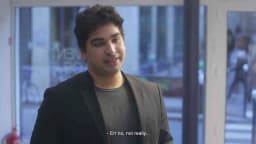
StopVEO's 'The Words I Won't Say' is a 3-minute 10-second public interest film released in France in May 2020, created by Publicis Conseil, that challenges ordinary educational violence by showing a mother and child caught between the reality of a violent moment and an imagined alternative where communication survives.
France passed its law prohibiting ordinary educational violence — defined to include slapping, spanking, pinching, and humiliation — decades after peer nations had acted, according to stopveo.org. Sweden, for example, banned corporal punishment of children forty years before France enacted equivalent legislation. The delay meant that generations of French parents had normalised these behaviours as routine tools of parental authority, not as violence at all. StopVEO exists to close the gap between legal prohibition and lived habit, supporting parents toward awareness and what the association describes as good parenting.
The strategic challenge Publicis Conseil faced was precise and difficult. French parents practising ordinary educational violence were not, in the main, indifferent to their children's wellbeing; they were operating inside cultural norms passed down across households. A campaign that lectured or accused risked triggering defensiveness and switching off the very audience it needed to reach. The creative solution the agency developed rejected confrontation in favour of emotional identification. By staging two temporalities — a present in which a mother gives in to violence and a dreamed alternative in which she does not — the film invites viewers to experience, rather than be told about, what is lost when communication collapses into a nonconstructive gesture. The campaign sits at the intersection of child protection advocacy, public interest communication, and the broader European movement toward non-violent parenting standards. Clapboard has assigned this work a score of 69 out of 100, reflecting its craft ambition and cultural relevance within the French public service landscape.
 ARCHIVE
StopVEO identified a specific creative and strategic problem: awareness of harm does not automatically produce behaviour change when the behaviour in question is embedded in cultural identity. In France, according to data cited by Fra Europa Eu, the European Union Agency for Fundamental Rights, the normalisation of physical discipline in child-rearing remained widespread at the time of the campaign's release, with deep roots in conceptions of parental authority that predated the new law by centuries. Publicis Conseil's planning team, led by Marine Catlan and Rémy Zalcman, built the campaign's strategic foundation on a single insight: guilt is not a durable motivator. Parents who feel accused withdraw; parents who feel understood engage.
The market context in France in 2020 reinforced the urgency. According to data referenced by unicef.org, approximately one in two children worldwide experienced some form of violence each year as of UNICEF's 2020 global reporting. Within France specifically, research cited by fra.europa.eu indicated that high proportions of parents reported using physical discipline — including slapping and spanking — as ordinary responses to children's behaviour, often without perceiving these acts as harmful. The legal prohibition was recent and enforcement remained limited; cultural change required communication, not only legislation.
In the broader French public interest communication space, comparable campaigns addressing child welfare had historically relied on shock imagery or statistical argument. StopVEO's earlier 2017 campaign 'Les mots qui font mal' ('The Words That Hurt'), according to lareclame.fr, had already begun to shift this approach by centring language and emotional damage rather than physical harm alone. 'The Words I Won't Say' extended that lineage by moving from verbal violence into the full spectrum of ordinary educational violence. No direct competitor association operates on an identical remit in France, but broader child-protection organisations including the Enfance et Partage foundation and the UNICEF France chapter address adjacent territory, making StopVEO's distinctive positioning around parental support — rather than parental blame — a meaningful strategic differentiator.
Laura Sicouri directed 'The Words I Won't Say' for production company Insurrection, bringing to the film a craft sensibility capable of holding two emotional registers simultaneously without resolving them cheaply. The film's central formal device — alternating between a present-tense scene of a mother-child conflict tipping into educational violence and a dreamed or imagined alternative in which the same relationship remains open — requires a director who can make both timelines feel equally real and equally inhabited. Sicouri, whose work through Insurrection had demonstrated an ability to find psychological weight in domestic spaces, was an precise choice for this material.
Director of photography Mélodie Preel lensed the film, and the cinematographic choices serve the narrative logic directly. The two temporalities are distinguished not through aggressive colour grading or disorienting cuts but through tonal and textural shifts that keep the viewer emotionally present in both realities. The effect is that the dreamed alternative does not feel like fantasy; it feels like a possibility that remains genuinely available, which is exactly the emotional argument the campaign needed to make.
Executive creative director Fabrice Delacourt and CEO Marco Venturelli provided creative oversight at Publicis Conseil, with copywriter Kevin Salembier and art director Julien Boissinot responsible for the film's creative development. TV production was handled by Benjamin Auberdiac at Prodigious. The music selection — 'German Winter' by Andhim and 'Between the Buttons' by French 79, according to thecreativesroom.com — anchors the film's emotional pacing, with the French 79 track in particular lending an ache to the dream sequence that textualises loss without requiring dialogue to do so. The combined effect of these craft decisions is a 3-minute 10-second film that refuses sentimentality while remaining deeply affecting, a balance that is considerably harder to achieve than the finished work makes it appear.
Verified platform engagement data for 'The Words I Won't Say' shows 6,713 views and 33 likes on record as of available reporting. These figures reflect documented reach rather than campaign totals across all distribution channels, and the film's deployment within a French public interest context — where broadcast and institutional placement frequently supplements online metrics — means platform numbers alone do not capture full audience exposure.
No independently audited broadcast reach figures or verified post-campaign attitudinal measurement data for this specific film are publicly available. What structural analysis can confirm is that the campaign earned recognition from the One Club for Creativity, according to oneclub.org, which is an externally verifiable indicator of peer-assessed creative quality. Recognition at that level for a French public service film addressing non-violent parenting and child protection places the work within a relatively small cohort of public interest campaigns that cross national critical attention.
According to Stratégies, Publicis Conseil had maintained a relationship with StopVEO extending back approximately ten years by 2021, a duration that speaks to sustained strategic investment in the association's communication rather than a single-campaign engagement. The film's structural effectiveness rests on its refusal to generate guilt, which research in behaviour-change communication consistently identifies as a liability in campaigns targeting habitual parenting behaviours. By locating the audience inside a felt sense of loss rather than outside a framework of accusation, 'The Words I Won't Say' positions itself to generate reflection rather than resistance — the prerequisite for any durable attitude shift toward good parenting and child protection in France.
StopVEO's 'The Words I Won't Say' is a public interest film released in France in May 2020 addressing ordinary educational violence. Created by Publicis Conseil and directed by Laura Sicouri, the film uses two alternating timelines to show parents what is lost when communication gives way to physical or psychological violence during child-rearing.
Laura Sicouri directed the film for production company Insurrection. Sicouri worked alongside director of photography Mélodie Preel, with executive creative director Fabrice Delacourt and copywriter Kevin Salembier at Publicis Conseil shaping the creative, and TV production handled by Benjamin Auberdiac at Prodigious.
France passed its law prohibiting ordinary educational violence decades after comparable European countries, according to stopveo.org. Despite the new legislation, habitual behaviours including slapping and spanking remained widespread in French homes. StopVEO launched the campaign to support cultural change that law alone could not produce, reaching parents without triggering guilt or defensiveness.
The campaign received recognition from the One Club for Creativity, according to oneclub.org. This places the work among a small group of French public interest films to earn peer-assessed international creative recognition, affirming the craft quality Publicis Conseil and director Laura Sicouri brought to the non-violent parenting subject matter.
The film stages two timelines simultaneously — a present moment of violence and an imagined alternative where communication survives — inviting emotional identification rather than accusation. Publicis Conseil's strategic team built the campaign on the insight that guilt closes audiences down, while felt experience of loss opens the possibility of reflection and behaviour change toward good parenting.
.webp)
Creative Collaboration Platform: The Backbone of Modern Creative WorkWhat is a creative collaboration platform?Clapboard defines a creative collaboration platform as the operational core for today’s distributed creative teams. This is not a collection of digital collaboration tools stitched together; Clapboard’s system


Understanding the Creative Production MarketplaceWhat is a Creative Production Marketplace?Clapboard defines a creative production marketplace as a structured ecosystem where brands, agencies, and production talent converge to execute video, advertising, and branded content at scale. Unlike the legacy agency or freelanREAD FULL ARTICLE

The Urgent Need for a Creative Production Operating SystemWhy Traditional Creative Production Models Break DownClapboard sees the creative production landscape shifting under pressure. Content velocity is no longer a buzzword—it’s a mandate. Modern advertising demands relentless output across dozens of channels, each wREAD FULL ARTICLE