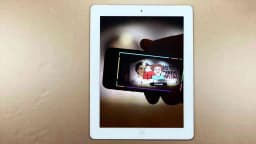
Surf Life Saving's 2017 'Tap to be a life safer' OOH campaign transformed Australian bus stops into interactive donation points via touchscreen tap-and-go

Surf Life Saving Turns Bus Stops Into Lifesaving Donation Points
Surf Life Saving Australia's 'Tap to be a life safer' campaign is a January 2017 out-of-home activation that placed interactive touchscreen donation displays at bus stops across Australia, allowing commuters to contribute to the organisation through a tap-and-go payment mechanism built in partnership with Commonwealth Bank and Card Access Services.
Launched on January 25, 2017, the campaign was created by JCDecaux Creative Solutions with OMD serving as media agency. The execution centred on a single media asset — an interactive OOH display combining a touchscreen game format with direct Tap-and-Go donation functionality. By embedding a financial transaction inside a public interest creative unit, the campaign collapsed the distance between awareness and action, inviting Australians at bus stops to participate in surf lifesaving rather than simply observe a message. The Clapboard Score for this campaign is 73 out of 100, reflecting its structural ambition and category relevance within Australian public service advertising.
In Australia, the campaign arrived at a moment of genuine civic urgency. According to surflifesaving.com.au, by the 2016–17 season surf lifesavers had performed more than 13,000 rescues — approximately 36 rescues every single day. That operational scale underpinned the campaign's core argument: that voluntary donations, made frictionlessly at a bus stop, translate directly into lives protected on Australian beaches.

Surf Life Saving Australia operates at the intersection of community volunteerism and professional emergency response. As of January 2017, the organisation comprised 311 local clubs and approximately 46,000 patrolling surf lifesavers, logging more than 1.3 million volunteer patrol hours annually, as reported by a contemporaneous DHL and Surf Life Saving Australia release documented at dhl.com. That volunteer infrastructure requires sustained public financial support, and the strategic challenge for the 2017 campaign was converting passive goodwill — which Australians hold in abundance toward surf lifesaving — into active, low-friction giving.
The 'Tap to be a life safer' campaign answered that challenge by meeting donors where they already were: waiting at bus stops, smartphone-conditioned, and accustomed to contactless payment. The Tap-and-Go mechanism, delivered in partnership with Commonwealth Bank and Card Access Services, removed every conventional barrier to charitable donation. No app download, no form, no envelope — simply a tap on a familiar payment interface embedded within an engaging interactive display. This approach reflected a broader strategic understanding, well established in the Australian public interest sector, that reducing cognitive and transactional friction is among the most reliable methods for increasing charitable participation.
The competitive landscape for charitable giving in Australia is broad, with numerous emergency service and community safety organisations competing for public attention and discretionary donation. Rather than relying on emotional broadcast media alone, Surf Life Saving and JCDecaux Creative Solutions chose outdoor advertising as the primary vehicle, positioning the brand inside the daily commute and transforming passive exposure into participatory experience.
JCDecaux Creative Solutions designed the campaign's sole media asset as an interactive touchscreen game display installed at bus stops across Australia. The unit presented passersby with a game-format touchscreen experience, and upon engagement the display invited a Tap-and-Go donation using Commonwealth Bank and Card Access Services technology. The screen effectively gamified the act of giving: a commuter waiting for a bus could tap to play, and that tap simultaneously registered as a charitable contribution to Surf Life Saving Australia. The creative mechanic made the donation feel native to the interaction rather than appended to it, dissolving the conventional separation between entertainment and philanthropy within a single physical touchpoint.
The on-screen execution placed the donor in an active role. Rather than presenting a passive image or static appeal, the display required physical engagement — a touch, a decision, a transaction — compressing the entire donor journey into the duration of a bus stop wait. The word 'safer' in the campaign title 'Tap to be a life safer' functioned simultaneously as a pun and a promise, telling the participant that their tap made them, literally, a life-safer: both a person who is safer and a person who saves lives.
Production credits for 'Tap to be a life safer' are not fully documented in available public sources beyond the confirmed agency roles. The campaign was created by JCDecaux Creative Solutions Australia, with OMD as media agency. No director, creative director, or photographer is individually credited in publicly available records for this activation.
No verified performance data for 'Tap to be a life safer' is publicly available. No quantified donation increase, reach figures, impressions data, engagement rate, or behavioural-change tracking results have been published, and no verified award wins or finalist placements have been confirmed across Cannes Lions, the Effies, The One Show, D&AD, the Clios, the Webby Awards, or WARC Awards.
Structural analysis of the campaign, however, points to several characteristics that distinguish it within the Australian public service advertising category. The integration of Tap-and-Go payment technology directly within an OOH unit eliminated the most common dropout point in charitable campaigns: the gap between intent and action. By partnering with Commonwealth Bank and Card Access Services, the campaign embedded financial infrastructure into the creative unit itself, a relatively rare execution in the Australian outdoor advertising market in January 2017.
The campaign also benefited from an inherently high-credibility brand platform. As reported by surflifesaving.com.au, Surf Life Saving Australia's volunteer network was performing more than 13,000 rescues per season by the 2016–17 period — a figure with immediate resonance for Australian beach communities. That operational reality provided the campaign's interactive mechanic with genuine narrative weight: each tap connected to a documented, ongoing lifesaving mission rather than an abstract organisational cause. The bus stop placement further ensured that the message reached urban Australians who, while geographically distant from patrolled beaches in any given moment, remained culturally connected to surf lifesaving as a defining national institution.
'Tap to be a life safer' is a January 2017 Australian out-of-home campaign created by JCDecaux Creative Solutions for Surf Life Saving Australia, with OMD as media agency. Interactive touchscreen displays at bus stops allowed commuters to make Tap-and-Go donations via Commonwealth Bank and Card Access Services technology, turning passive pedestrian traffic into active charitable participation.
The interactive displays were placed at bus stops across Australia. The bus stop placement was deliberate, targeting commuters in a dwell-time environment where engagement with an interactive touchscreen game and a subsequent tap-and-go donation required minimal effort and fitted naturally within the rhythm of a daily commute.
The campaign was created by JCDecaux Creative Solutions Australia for Surf Life Saving, with OMD serving as media agency. Technology partners Commonwealth Bank and Card Access Services enabled the Tap-and-Go donation functionality embedded within the interactive outdoor display unit launched on January 25, 2017.
The interactive bus stop display combined a touchscreen game format with a contactless payment system built by Commonwealth Bank and Card Access Services. A commuter's tap on the screen registered simultaneously as gameplay and as a charitable donation to Surf Life Saving Australia, removing every conventional barrier between intent and financial contribution.
As reported by surflifesaving.com.au, by the 2016–17 season Surf Life Saving Australia comprised 311 local clubs with approximately 46,000 patrolling lifesavers performing more than 13,000 rescues annually — roughly 36 rescues per day. More than 1.3 million volunteer patrol hours were logged annually, as documented in a DHL and Surf Life Saving Australia release at dhl.com.
.webp)
Creative Collaboration Platform: The Backbone of Modern Creative WorkWhat is a creative collaboration platform?Clapboard defines a creative collaboration platform as the operational core for today’s distributed creative teams. This is not a collection of digital collaboration tools stitched together; Clapboard’s system


Understanding the Creative Production MarketplaceWhat is a Creative Production Marketplace?Clapboard defines a creative production marketplace as a structured ecosystem where brands, agencies, and production talent converge to execute video, advertising, and branded content at scale. Unlike the legacy agency or freelanREAD FULL ARTICLE

The Urgent Need for a Creative Production Operating SystemWhy Traditional Creative Production Models Break DownClapboard sees the creative production landscape shifting under pressure. Content velocity is no longer a buzzword—it’s a mandate. Modern advertising demands relentless output across dozens of channels, each wREAD FULL ARTICLE