 ARCHIVE
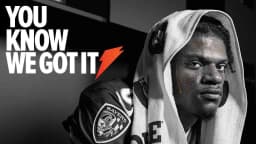
Gatorade Brings the Inner Game to the NFL Season With You Know We Got IT
How Gatorade's You Know We Got IT Redefines Performance for the 2024 NFL Season Gatorade's "You...
How Tango Orange Man Rewrote the Rules of Soft Drink Advertising
Tango Orange's 1992 "Orange Man" campaign, created by agency HHCL for Britvic and first aired in the United States and United Kingdom in 1992, is a forty-second television commercial in which an orange-painted man runs across a park and slaps a Tango drinker across the face, dramatising the visceral taste impact of the drink through physical absurdist comedy.
Britvic briefed agencies to communicate what brand marketer Tony Hillyer described, as reported by Campaign magazine, as "the hit of real oranges in Tango" — a positioning rooted in consumer research that framed the drink as a genuine taste sensation. Before the campaign launched, Tango was, according to Campaign magazine, a tired, low-profile brand gathering dust on the shelves of chip shops. The Orange Man was designed to change that perception entirely, repositioning the drink as one that delivers an almost overwhelming sensory hit. The campaign launched in September 1992, establishing what would become the long-running platform line "You Know When You've Been Tango'd," as documented by sources including En Wikipedia and The Drum.
The creative strategy positioned the work as a deliberate anti-ad, standing apart from the large-budget, aspirational soft-drink advertising that dominated the United States and UK markets at the time. Where competitors invested in lifestyle imagery and emotional warmth, HHCL chose confrontation, absurdism, and a tone of voice that spoke directly and irreverently to its audience. The campaign was submitted to Clapboard.com as containing one film media asset, and the archive records its publication date as September 1992. Clapboard assigns the Tango Orange Man campaign a score of 57 out of 100, reflecting its cultural durability and structural originality against the broader canon of Food and Drink advertising.
HHCL built the Tango Orange Man campaign around a single, clarifying consumer insight. Research identified by brand marketer Tony Hillyer and reported by Campaign magazine found that drinkers experienced Tango Orange as a sharp, almost physical taste hit — a sensation no existing soft-drink advertising had ever attempted to dramatise literally. Rather than softening that insight into a pleasant lifestyle moment, HHCL amplified it into something confrontational and genuinely surprising.
The competitive context made this strategic boldness necessary. In the United States in 1991, the soft-drink market was approximately 12.2 billion gallons with retail receipts of approximately 47.2 billion dollars, according to thebrandgym.com. Coca-Cola, the dominant force in the category, reported selling more than six billion unit cases globally in 1992, according to the Coca-Cola 1992 annual report. Within the orange segment specifically, Coca-Cola's own 1992 annual report documented orange flavour as representing approximately 32 percent of the worldwide carbonated soft-drink industry by segment. Against these entrenched, heavily resourced competitors — including Pepsi, whose marketing budgets in the United States dwarfed what Britvic could deploy — Tango needed a creative approach that generated attention disproportionate to its media spend.
HHCL's answer was to reject the conventions of the category entirely. As documented across sources including en.wikipedia.org and campaignlive.co.uk, the agency conceived the work as an anti-ad: self-aware, deliberately lo-fi in register, and structured around a visual metaphor so unexpected that it could not be ignored. The original concept involved a kick rather than a slap, but the relevant advertising authority rejected that execution, as reported by Hatads Org Uk. The slap device that replaced it proved, in hindsight, more memorable and more transferable into the playground culture that would define the campaign's legacy across both the United Kingdom and the United States.
Director Matt Forrest helmed the production, working from a creative brief developed by HHCL's creative directors Axel Chaldecott and Steve Henry, as documented by en.wikipedia.org and Little Black Book. The commercial's forty-second runtime is tightly constructed: a man drinks Tango Orange in a park setting, and moments later an orange-painted figure — actor Peter Geeves — charges across the frame and delivers a full open-handed slap to the drinker's face, played by actor Ben Fox, as recorded by adranking.co.uk. The slap is immediately framed as a sporting event, with commentator voices provided by Hugh Dennis and Ray Wilkins, and the endline delivered by Gil Scott-Heron, all according to adranking.co.uk.
The art direction was handled by Trevor Robinson, with copywriting credited to Al Young, also listed as Alan Young, as documented by en.wikipedia.org and lbbonline.com. Planner John Leach is credited on the brief, per lbbonline.com. Production was carried out by production company Limelight, with the commercial produced in 1991 and first aired in 1992, according to adranking.co.uk. The deliberate use of a sports commentary register — complete with slow-motion replay and an authoritative voiceover — gave the commercial a parodic structure that audiences immediately recognised and that amplified the absurdist comedy of the central image.
The choice to paint Geeves entirely orange rather than costume him was a production decision that made the visual unmistakable on a small television screen, the dominant domestic viewing format of the period. Campaign magazine, writing in November 2018, described the Orange Man as the solution to the specific creative problem of how to visualise taste — a problem the HHCL team solved not through abstraction or metaphor but through deliberate, almost confrontational literalism. The commercial received a British Arrows Silver award in the Soft Drink category in 1992, with advertiser Britvic and agency HHCL named in the credit record, as documented by hatads.org.uk.
Tango Orange Man carries a Clapboard Score of 57 out of 100, a result that reflects the campaign's demonstrable cultural impact set against the limits of its documented reach within the United States market specifically.
Campaign magazine reported that the Tango Orange Man advertisement entered playground culture at scale, was subsequently withdrawn by Britvic following concerns about children imitating the slap, and increased sales by approximately one-third — a figure reported editorially by Campaign magazine rather than verified through independent audit, and one that must be read in the context of Tango's then-modest baseline. The campaign was ranked third in a 2000 poll of significant advertising work, as reported by marketing-beat.co.uk. The British Arrows Silver award in the Soft Drink category in 1992, with Britvic as advertiser and HHCL as agency, provides an independently verifiable marker of industry recognition at the time of release, as documented by hatads.org.uk.
The withdrawal of the commercial — driven by the playground imitation craze it generated — is itself a measure of cultural penetration that most advertising never achieves. As documented by en.wikipedia.org and campaignlive.co.uk, the Orange Man became a reference point in discussions of disruptive and anti-advertising strategy, studied in both the United Kingdom and the United States as an example of a small brand achieving outsized impact through creative specificity rather than media weight. The structural effectiveness of the campaign — a single, transferable, visually reducible idea built on a genuine consumer insight — explains why it retains analytical interest more than three decades after its initial airing.
Tango Orange Man was a 1992 television commercial created by HHCL for Britvic's Tango Orange soft drink. The forty-second film featured an orange-painted actor slapping a Tango drinker to dramatise the taste hit of real oranges. It launched the "You Know When You've Been Tango'd" platform, as documented by en.wikipedia.org and campaignlive.co.uk.
Matt Forrest directed the Tango Orange Man commercial for production company Limelight. Creative directors were Axel Chaldecott and Steve Henry at HHCL, with art direction by Trevor Robinson and copywriting by Al Young, all as documented by en.wikipedia.org and lbbonline.com. The commercial was produced in 1991 and first aired in 1992.
Britvic withdrew the Tango Orange Man commercial after it generated a playground imitation craze among children replicating the slap. Campaign magazine reported the withdrawal followed widespread concern about the behaviour it inspired. The original concept had featured a kick, rejected before broadcast, with the slap substituted, as reported by hatads.org.uk.
The Tango Orange Man campaign received a British Arrows Silver award in the Soft Drink category in 1992, with Britvic credited as advertiser and HHCL as agency, as documented by hatads.org.uk. The commercial was also ranked third in a 2000 industry poll of significant advertising work, according to marketing-beat.co.uk.
HHCL positioned Tango Orange Man as a deliberate anti-ad, designed to contrast with large-budget aspirational soft-drink advertising from competitors including Coca-Cola and Pepsi. The strategy, rooted in consumer research identifying Tango as a visceral taste hit, used absurdist comedy and a sports-commentary structure to generate attention beyond Britvic's available media spend.
Campaign magazine reported that the Tango Orange Man commercial increased Tango Orange sales by approximately one-third following its 1992 launch. This figure was reported editorially rather than through independently audited data. Before the campaign, Campaign magazine described Tango as a low-profile brand, making the sales increase significant relative to its pre-campaign baseline.
.webp)
Creative Collaboration Platform: The Backbone of Modern Creative WorkWhat is a creative collaboration platform?Clapboard defines a creative collaboration platform as the operational core for today’s distributed creative teams. This is not a collection of digital collaboration tools stitched together; Clapboard’s system


Understanding the Creative Production MarketplaceWhat is a Creative Production Marketplace?Clapboard defines a creative production marketplace as a structured ecosystem where brands, agencies, and production talent converge to execute video, advertising, and branded content at scale. Unlike the legacy agency or freelanREAD FULL ARTICLE

The Urgent Need for a Creative Production Operating SystemWhy Traditional Creative Production Models Break DownClapboard sees the creative production landscape shifting under pressure. Content velocity is no longer a buzzword—it’s a mandate. Modern advertising demands relentless output across dozens of channels, each wREAD FULL ARTICLE