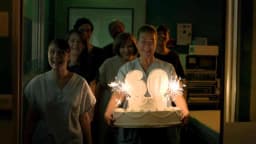
British Pregnancy Advisory Service launched 'On the Shoulders of Giants' in February 2016, using a documentary format and Gemma Chan to call for UK abortion

British Pregnancy Advisory Service Champions Reproductive Rights in On the Shoulders of Giants
The British Pregnancy Advisory Service released 'On the Shoulders of Giants' in February 2016, a documentary-format film created by agency Don't Panic that called on audiences across the United Kingdom to support the We Trust Women campaign and overturn laws criminalising women who end their own pregnancies without legal authorisation.
The campaign addresses one of the most contested areas of healthcare policy in the United Kingdom: the legal framework governing abortion, which at the time of publication meant that a woman who terminated her own pregnancy without authorisation could face imprisonment. The British Pregnancy Advisory Service positioned itself not merely as a clinical provider but as an active defender of women's autonomy, framing the existing legislation as an outdated, patriarchal barrier incompatible with contemporary values of gender equality. The campaign's title draws on the metaphor of standing on the shoulders of those who fought before — suffragettes, campaigners, advocates — to argue that the fight for equality remains unfinished. Actress Gemma Chan served as the public face of the film, lending visibility and emotional credibility to the call to action. Audiences were directed to wetrustwomen.org.uk, connecting the film directly to a broader coalition demanding legislative change. The campaign ran as a single film asset, making disciplined use of one piece of content to generate conversation rather than relying on volume of output.
The British Pregnancy Advisory Service built its strategic case on a legal reality that many people in the United Kingdom were unaware of. In every country within the UK, a woman who ended her own pregnancy without legal authorisation remained subject to criminal prosecution under laws that predated widespread recognition of gender equality as a social norm. The strategy made that legal reality the central argument, treating public ignorance of the law as both the problem and the opportunity.
According to Committees Parliament Uk, BPAS provided care to nearly 80,000 women annually across clinics in England, Wales and Scotland, a scale of operation that gave the organisation institutional authority to speak on reproductive healthcare with direct experiential weight. That authority was channelled into advocacy rather than service promotion, a deliberate move that repositioned BPAS within public discourse as a civil-rights participant rather than simply a clinical operator. The documentary and social-experiment format was chosen because it carries an implicit register of evidence and testimony, lending the film a journalistic seriousness that straightforward advertising cannot replicate. By invoking the long arc of the fight for equality — from suffrage onward — the campaign connected reproductive rights to a lineage of causes that British audiences widely regard as settled history, making the unresolved legal status of abortion feel anomalous and urgent. No named direct competitors appear in available research; the competitive landscape for reproductive health advocacy in the United Kingdom at this time comprised a range of charities, clinical providers and campaigning organisations, against which BPAS differentiated itself through the scale of its clinical reach and the directness of its legal argument.
Don't Panic, the London agency responsible for the creative execution, structured the campaign around a single film asset built in the documentary and social-experiment tradition, a format that prioritises testimony and observable reality over scripted narrative persuasion.
On screen, actress Gemma Chan anchors the film, speaking directly to the audience about the legal constraints that govern women's reproductive choices in the United Kingdom. The film draws on the historical struggle for women's equality, framing contemporary abortion law as a continuation of the same patriarchal systems that earlier generations of campaigners fought to dismantle. The argument is presented as self-evidently logical: if Britain considers itself an equal society, its laws should reflect that equality. The tone is measured and unflinching rather than emotionally manipulative, a creative choice consistent with the documentary register. Richard Beer served as creative director on the project, with George McCallum as the credited creative and Chloe Cross as project manager. Production was handled by The Mono Grande, with illustration by Samuel St Leger. The involvement of Gemma Chan as a prominent British actress gave the film a cultural currency that extended its potential reach beyond the audiences already engaged with reproductive rights advocacy, making the campaign legible to viewers who might not otherwise encounter BPAS's work. The single-asset approach concentrated all creative and production resource into one piece of content, a structurally confident decision that treated depth of argument as more valuable than breadth of format.
No verified sales lift, market-share change, or fundraising increase resulting directly from the 'On the Shoulders of Giants' campaign is publicly available. Archive figures record 17,092 views, 41 likes and 3 comments on the film, though these figures represent platform records and have not been independently verified as a measure of total campaign reach. No awards recognition from Cannes Lions, the D&AD, the Effies, The One Show, the Clios, the Webby Awards, or WARC has been documented for this campaign in publicly available records.
Structural analysis points to several elements of genuine effectiveness. The campaign's decision to anchor its argument in a specific, verifiable legal injustice — criminal liability for women who end their own pregnancies in the United Kingdom — gave audiences a concrete grievance to respond to, rather than a generalised sentiment. The We Trust Women call to action translated film viewing into a named movement, creating a vehicle for sustained engagement beyond the moment of watching. Gemma Chan's participation extended the campaign's organic reach through the cultural attention that accompanies a recognisable public figure taking a position on a contested social issue. The documentary format, executed by Don't Panic under creative director Richard Beer, lent the film a tone of evidential seriousness consistent with the gravity of the legal argument being made. The Clapboard Score for this campaign is 63 out of 100, reflecting its focused creative rationale and clear advocacy proposition alongside the limited documented evidence of measurable public impact.
'On the Shoulders of Giants' is a 2016 documentary-format film created by Don't Panic for the British Pregnancy Advisory Service. It calls for reform of UK abortion law, arguing that laws criminalising women who end their own pregnancies without authorisation are outdated and incompatible with contemporary gender equality. Actress Gemma Chan fronts the campaign.
Don't Panic, a London agency, created the campaign for the British Pregnancy Advisory Service, published in February 2016. Richard Beer directed as creative director, George McCallum served as the credited creative, Chloe Cross managed the project, and The Mono Grande handled production in the United Kingdom.
Gemma Chan provided cultural visibility and credibility to the We Trust Women campaign. As a recognisable British actress, her involvement extended the film's reach beyond existing reproductive rights audiences, helping BPAS communicate the urgency of UK abortion law reform to a broader public in 2016.
The film addresses the legal reality that, in every country within the United Kingdom, a woman who ends her own pregnancy without legal authorisation can face imprisonment. BPAS and Don't Panic framed this law as an outdated, patriarchal restriction inconsistent with the United Kingdom's broader commitments to gender equality and women's autonomy.
The campaign holds a Clapboard Score of 63 out of 100. The score reflects the campaign's focused creative rationale, its clear legal argument, and the structural strength of connecting a documentary film to the named We Trust Women movement, balanced against limited publicly documented evidence of measurable audience impact.
.webp)
Creative Collaboration Platform: The Backbone of Modern Creative WorkWhat is a creative collaboration platform?Clapboard defines a creative collaboration platform as the operational core for today’s distributed creative teams. This is not a collection of digital collaboration tools stitched together; Clapboard’s system


Understanding the Creative Production MarketplaceWhat is a Creative Production Marketplace?Clapboard defines a creative production marketplace as a structured ecosystem where brands, agencies, and production talent converge to execute video, advertising, and branded content at scale. Unlike the legacy agency or freelanREAD FULL ARTICLE

The Urgent Need for a Creative Production Operating SystemWhy Traditional Creative Production Models Break DownClapboard sees the creative production landscape shifting under pressure. Content velocity is no longer a buzzword—it’s a mandate. Modern advertising demands relentless output across dozens of channels, each wREAD FULL ARTICLE