The Forest Bank's 'Church' campaign, created by JWT in Argentina in 2014, invites donors to guard 10 square meters of wild forest for $10 a month via a digital

The Forest Bank Turns Forest Stewardship Into a Personal Mission
The Forest Bank's 'Church' campaign is a 2014 Adsspot.clapboard.com/archive/argentina-new-cinema-father-film">Argentine digital initiative, created by JWT, that invites individuals to contribute $10 per month in exchange for guardianship of 10 square metres of wild forest, tracked via an online map and physically marked by a named wooden stake in the actual location.
The Forest Bank is an NGO that protects wild forests in Argentina. Its donor model is built on radical specificity: a monthly contribution does not disappear into an anonymous fund but instead designates a precise, nameable, visitable patch of land, according to Documents1 Worldbank. Donors can monitor their selected area through the NGO's website map, and the organisation places a wooden stake bearing the donor's name at the physical spot in the forest. That act of naming transforms a financial transaction into a relationship between a person and a living ecosystem.
Launched in April 2014 and executed in the digital medium, 'Church' represents the brand's most fully documented creative direction, according to available archive records. The campaign was produced by JWT, operating in the Argentine market, and classified within the public interest sector. In Argentina, where native forest cover has faced sustained pressure from agricultural expansion, the proposition of personal, verifiable stewardship carries immediate cultural and ecological resonance. The campaign's format — a documentary and social experiment hybrid — was designed to make that proposition emotionally legible to a broad audience. The Clapboard Score for 'Church' is 63 out of 100.
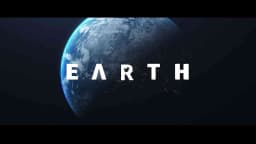
The Forest Bank positions conservation as ownership rather than charity. The strategic insight driving 'Church' is that abstract environmental appeals — save the planet, protect biodiversity — consistently underperform against messages that give a donor a concrete, personal stake in the outcome. By assigning each $10 monthly contribution to a precisely mapped 10 square metres of Argentine wild forest, JWT reframed the donor not as a benefactor but as a named guardian with a physical presence in the landscape.
Argentina's native forests have been subject to significant deforestation pressure over the decades preceding this campaign, according to Illusion Co Th. The country enacted the Native Forest Law in 2007, establishing a legal framework for forest protection, according to Argentina Gob Ar, which signals that domestic policy context made conservation a live public issue at the time 'Church' was produced. Against that backdrop, an NGO offering citizens a direct, traceable role in forest protection was not merely a fundraising mechanic — it was a civic proposition.
The digital medium was the natural vehicle for this strategy. The online map that allows donors to follow their designated area makes the abstract tangible and the distant immediate, according to Bbva Com Ar. The wooden stake in the forest mirrors that digital act in physical space, creating a dual layer of connection — one that a donor can see on a screen and one they can, in principle, walk to and touch. This dual-presence model addresses a persistent challenge in environmental fundraising: sustaining emotional engagement after the initial donation. The competitive landscape for conservation NGOs in Argentina is shaped by numerous civil society organisations competing for discretionary donor attention, making the differentiation offered by personal, named stewardship strategically significant.
The Forest Bank's 'Church' uses the documentary and social experiment format to dramatise the relationship between a donor and the forest he has agreed to protect. The spot centres on a character named Martín. In the film's central sequence, the living creatures of the forest — animals that inhabit the 10 square metres Martín has taken responsibility for — gather around him as though in a church congregation, enacting a wordless ceremony of gratitude toward their named human guardian. The scene translates the NGO's abstract stewardship proposition into a moment of profound, almost spiritual reciprocity: the forest acknowledges the person who chose to protect it.
That choice of register — reverence, congregation, the implicit sacredness of the natural world — is embedded in the campaign's title. 'Church' frames the forest not merely as an ecological resource but as a place deserving of the kind of devotion ordinarily reserved for formal worship. The creative device is both emotionally efficient and intellectually precise: it asks viewers to extend their existing vocabulary of commitment and community into the natural world.
The campaign was produced in Spanish for the Argentine market, consistent with the NGO's domestic audience. Production credits for 'Church' are not publicly documented beyond the confirmed agency attribution to JWT, operating as J. Walter Thompson Buenos Aires on this project. The campaign exists as a single media asset in the digital medium, a focused creative statement rather than an extended multichannel deployment. Its documentary register lends it the credibility of observed fact, while the social experiment framing invites the audience to imagine themselves in Martín's place — and to consider what the forest's creatures might owe them in return.
Archive engagement data for 'Church' provides a partial window into the campaign's reception. The film accumulated 8,945 views, 21 likes, and 1 comment in the period documented in available archive records. These figures reflect the campaign's footprint within a specialist advertising archive context rather than its total reach across the Argentine public, and should be read accordingly.
No independently verified performance data — covering donor acquisition rates, monthly contribution volumes, or forest area protected as a direct result of the campaign — is publicly available for 'Church'. What the structural evidence does support is a campaign built for durability rather than virality. The donor model, in which a $10 monthly commitment creates an ongoing, map-verified relationship with a named piece of forest, generates retention incentives that most single-donation environmental campaigns do not. Each new donor becomes a stakeholder with a reason to remain engaged, to visit the website, and to share their named location — behaviours that extend the campaign's reach organically.
The documentary and social experiment format positions 'Church' as content designed to earn attention through emotional authenticity rather than paid amplification alone. In Argentina's NGO sector, where donor budgets for media placement are typically constrained, that orientation toward earned engagement is both a creative and an economic strategy. The campaign's classification within the public interest sector, combined with its digital-first execution, suggests a brief oriented toward maximum storytelling impact within modest production parameters — a constraint the creative approach appears to have embraced rather than resisted.
'Church' is a 2014 digital campaign by The Forest Bank, produced by JWT in Argentina. It invites donors to contribute $10 per month to become named guardians of 10 square metres of wild forest, tracked via an online map and marked physically by a wooden stake bearing the donor's name at the actual forest location.
JWT, operating as J. Walter Thompson Buenos Aires, created 'Church' for The Forest Bank in Argentina. The campaign was published in April 2014 in the digital medium and is classified within the public interest sector. It represents the most fully documented creative direction for the NGO from that period.
The film follows a donor named Martín whose designated forest animals gather around him in a congregation-like scene, expressing wordless gratitude for his guardianship. The sequence uses the metaphor of a church to frame the forest as a space deserving reverence, translating the NGO's stewardship model into emotional and spiritual terms.
The Forest Bank assigns each donor guardianship of 10 square metres of Argentine wild forest in exchange for $10 per month. Donors track their area on the NGO's website map and are represented on the physical site by a named wooden stake, creating a lasting digital and physical connection to their protected land.
The Forest Bank 'Church' campaign holds a Clapboard Score of 63 out of 100. The campaign is a single-asset digital execution produced in Argentina in 2014 by JWT, combining documentary and social experiment formats to communicate the NGO's personal forest stewardship model to an Argentine audience.
.webp)
Creative Collaboration Platform: The Backbone of Modern Creative WorkWhat is a creative collaboration platform?Clapboard defines a creative collaboration platform as the operational core for today’s distributed creative teams. This is not a collection of digital collaboration tools stitched together; Clapboard’s system


Understanding the Creative Production MarketplaceWhat is a Creative Production Marketplace?Clapboard defines a creative production marketplace as a structured ecosystem where brands, agencies, and production talent converge to execute video, advertising, and branded content at scale. Unlike the legacy agency or freelanREAD FULL ARTICLE

The Urgent Need for a Creative Production Operating SystemWhy Traditional Creative Production Models Break DownClapboard sees the creative production landscape shifting under pressure. Content velocity is no longer a buzzword—it’s a mandate. Modern advertising demands relentless output across dozens of channels, each wREAD FULL ARTICLE